
Car Review
Lagos contemplates Flying Cars as a solutions to traffic Congestion


Urban traffic congestion is a significant challenge facing cities worldwide, with Lagos, Nigeria, being no exception.
As populations swell and urbanization accelerates, traditional ground transportation systems struggle to cope with the increasing demand.
In the pursuit of innovative solutions, the concept of flying cars has emerged as a futuristic possibility.
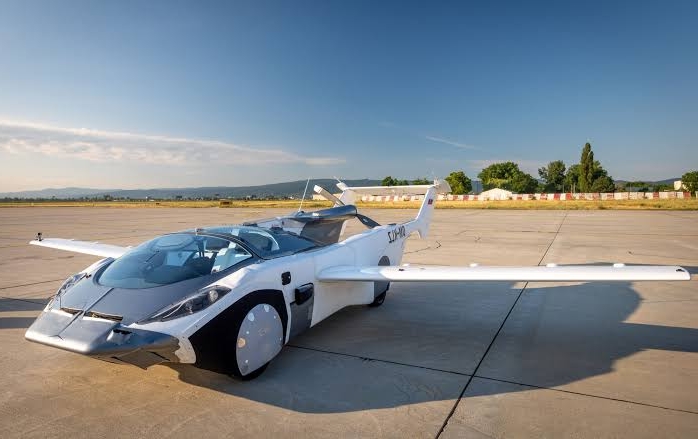
However, the question persists: are flying cars a feasible remedy to alleviate traffic congestion in cities like Lagos, or are they merely a utopian fantasy?
Current State of Traffic in Lagos
Lagos, Nigeria’s largest city and economic hub, grapples with notorious gridlock, resulting in lengthy commutes and productivity losses.
The city’s rapid population growth, coupled with insufficient road infrastructure and a reliance on personal vehicles, exacerbates congestion.
This Congestion not only wastes time but also imposes significant economic and environmental costs on the city and its inhabitants.
The Promise of Flying Cars
Flying cars, often depicted in science fiction, offer the tantalizing prospect of revolutionizing urban transportation by taking to the skies.
Advocates argue that these aerial vehicles could circumvent ground-level congestion, reducing travel times and alleviating strain on road networks.
Additionally, flying cars have the potential to access previously inaccessible areas, expanding mobility options for residents.
Challenges and Realities
Despite their allure, the practical implementation of flying cars in cities like Lagos faces formidable challenges:
- Infrastructure: Developing the necessary infrastructure, including landing pads and air traffic management systems, would necessitate substantial investment and meticulous planning.
- Regulation: Establishing regulations governing airspace usage, pilot licensing, and safety standards is essential to ensure the safe integration of flying cars into urban environments.
- Cost and Accessibility: Initially, flying cars are likely to be prohibitively expensive and inaccessible to the majority of Lagos residents, exacerbating existing transportation inequalities.
- Environmental Impact: Flying cars could introduce new environmental concerns, such as noise pollution and increased energy consumption, if not properly regulated and designed.
While the concept of flying cars captures the imagination and offers a glimpse of a futuristic transportation solution, its practical realization in cities like Lagos remains uncertain.
While efforts to advance flying car technology should continue, policymakers must prioritize investments in immediate and sustainable solutions to urban traffic congestion.
These include public transit expansion, road infrastructure improvements, and the promotion of alternative transportation modes.
By adopting a comprehensive approach, Lagos and other urban centers can effectively address their transportation challenges and enhance the quality of life for their residents.




Five Die as Truck, Car Collide on Badagry Expressway

Two Killed as Trucks Collide, Burst Into Flames on Anambra Road

Stakeholders Raise Alarm Over Safety Gaps in Nigeria’s CNG and Electric Vehicle Transition

Female Driver Dies in Tragic Road Crash at Mongoro, Ile-Zik Area of Lagos

Physically Challenged Beggar Killed in Multi-Vehicle Crash on Lagos-Ibadan Expressway

Court Bars FRSC Officials From State Roads

24 Pupils Killed in Tragic Bus Crash During School Excursion in Uganda

Tyre Blowouts on Heavy Trucks

BYD Seal EV: Can It Challenge Traditional Sedans?

Colorado to Strengthen Driver Education Requirements

Slow Down: Man got his Family Killed by neglecting road signs

Which Bridge is the Tallest in the World?
Impatient Driving Cause Road Accident
How Roads are Constructed on the Mountain

Texas, USA suffers heavy flooding