
News Update
Enugu Drivers Express Discontent as Residents Opt for Walking

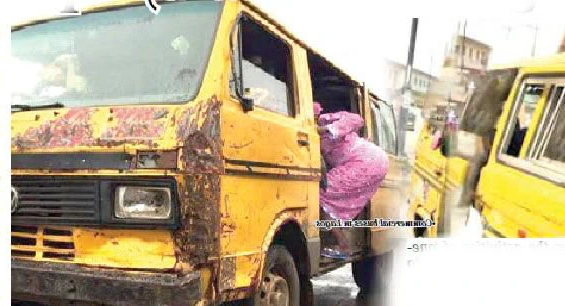
In recent developments within the Enugu metropolis, a number of commercial drivers have articulated their concerns regarding a significant decline in patronage from local residents.
This downturn in business has been attributed to the prevailing economic challenges that are currently afflicting the nation.
These sentiments were expressed during a series of interviews conducted by the News Agency of Nigeria (NAN) in Enugu on the previous day.
The drivers have pointed to a particularly troubling factor contributing to their plight: the recent escalation in the pump price of Premium Motor Spirit (PMS), commonly referred to as petrol, as instituted by the Nigerian National Petroleum Company Limited (NNPCL).
This increase has exacerbated the already precarious situation faced by those in the transportation sector, leading to a further reduction in their customer base.
Mr. Okwy Ozor, a commercial driver who shared his insights with NAN, indicated that the profitability of his transport business has diminished considerably since the Federal Government’s announcement regarding the removal of the fuel subsidy.
This policy shift, coupled with the subsequent rise in fuel prices, has created a challenging environment for drivers who rely heavily on fuel for their operations.
“Driving business has not been moving fine since the removal of fuel subsidy and the subsequent increase in the price of fuel,” he said.
Additionally, a tricycle operator, who requested anonymity, conveyed that the surge in fuel prices has compelled him to raise transportation fares.
This adjustment, while necessary for maintaining operational viability, may further deter potential passengers, thereby contributing to the overall decline in ridership within the region.
“When we started buying petrol for N650, 00, we only increased transport fare a little and passengers were finding it difficult to pay. Where we used to collect N100 we increased it to N150, 00 or N200 depending on the distance, but passengers will still wanted to pay the old fare.
“That is why these days many people prefer to enter the big commercial buses, popularly called 911 which is cheaper than the tricycle while many have resorted to trekking,” he told NAN.
In summary, the combination of economic hardship and rising fuel costs has led to a notable shift in transportation dynamics in Enugu, prompting residents to resort to walking as a means of navigating the city.
The implications of these changes are significant, not only for the commercial drivers but also for the broader community, as they reflect the ongoing challenges faced by many in the current economic climate.
Mr Felix Ujah, a mini-bus driver, said; “that it was not the fault of the commercial drivers that the transportation fare had increase. It is not that we, commercial drivers, do not understand the plight of the passengers, but because sometimes if you buy N7000 worth of fuel it will not take you for more than one or two days. So business has been bad for us since they increased fuel price.
“Sometimes you will only go two rounds in the morning due school hours and after that, one can only pick few passengers until closing school hours,” he said.





Five Die as Truck, Car Collide on Badagry Expressway

Two Killed as Trucks Collide, Burst Into Flames on Anambra Road

Stakeholders Raise Alarm Over Safety Gaps in Nigeria’s CNG and Electric Vehicle Transition

Female Driver Dies in Tragic Road Crash at Mongoro, Ile-Zik Area of Lagos

Physically Challenged Beggar Killed in Multi-Vehicle Crash on Lagos-Ibadan Expressway

Court Bars FRSC Officials From State Roads

24 Pupils Killed in Tragic Bus Crash During School Excursion in Uganda

Tyre Blowouts on Heavy Trucks

BYD Seal EV: Can It Challenge Traditional Sedans?

Colorado to Strengthen Driver Education Requirements
Two Killed as Trucks Collide, Burst Into Flames on Anambra Road
Five Die as Truck, Car Collide on Badagry Expressway

Slow Down: Man got his Family Killed by neglecting road signs

Which Bridge is the Tallest in the World?
Impatient Driving Cause Road Accident
How Roads are Constructed on the Mountain

Texas, USA suffers heavy flooding