
Driving Tips
Why do Cars somersaults during Accidents

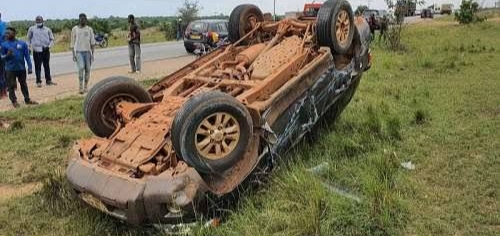
Car accidents can be dramatic events, and in some cases, vehicles may exhibit somersaults-like motions during a collision.
To comprehend the underlying reasons behind this phenomenon, one must delve into the intricate interplay of various factors, namely the principles of physics, the intricacies of vehicle design, and the dynamics inherent in a collision.
When a car is subjected to a collision, the forces at play can be quite substantial.
These forces act upon the vehicle, causing it to experience a sudden and violent change in momentum.
As a result, the car may undergo a series of complex movements, including somersault-like rotations.
This occurrence can be attributed to the distribution of forces acting on the vehicle, which can cause it to lose stability and ultimately flip over.
Furthermore, the design of the vehicle itself plays a crucial role in determining its behavior during a collision.
Factors such as the center of gravity, weight distribution, and structural integrity all contribute to the vehicle’s response to external forces.
In cases where these factors are not optimized, the likelihood of somersault-like motions occurring increases significantly.
Cars may somersault during accidents due to several factors, including

Car somersaults
1. Collision Dynamics
When two vehicles collide, the forces involved can cause various types of motion, including rotation.
The direction and intensity of these forces depend on factors such as speed, angle of impact, and the mass of the vehicles.
2. Center of Mass and Rollover Risk
Cars are designed with a center of mass (CoM) typically located above the ground.
In certain collisions, especially those involving a high impact on one side of the vehicle, the forces can cause the car to pivot around its CoM, initiating a somersault or rollover.
3. Vehicle Design and Stability
The design of a car plays a crucial role in its stability during a collision.
Factors like the width of the wheelbase, the height of the center of mass, and the distribution of weight all contribute to a vehicle’s resistance or susceptibility to somersaulting.
4. Speed and Angular Momentum
Higher speeds increase the kinetic energy involved in a collision.
This energy can manifest as rotational motion, leading to somersaults.
The angular momentum imparted to the vehicle can overcome its stability, especially if the collision forces are unevenly distributed.
5. Impact Angle and Tumbling Forces
The angle at which two vehicles collide can influence the tendency for somersaulting.
An impact that generates a torque or twisting force is more likely to induce rotational motion.
This can occur if the forces act off-center, creating a turning effect.
6. Safety Systems and Rollover Prevention
Modern vehicles incorporate safety systems designed to mitigate the risk of rollovers.
Electronic Stability Control (ESC) and rollover sensors work to detect and counteract conditions that could lead to somersaulting, enhancing overall vehicle stability.
Car somersaults during accidents are a result of the intricate physics involved in collisions. From the distribution of mass to the impact angle and vehicle design, numerous factors contribute to the likelihood of a car exhibiting rotational motion. Understanding these dynamics is crucial for improving vehicle safety features and designing measures to reduce the risk of somersaults during accidents.








Five Die as Truck, Car Collide on Badagry Expressway

Two Killed as Trucks Collide, Burst Into Flames on Anambra Road

Stakeholders Raise Alarm Over Safety Gaps in Nigeria’s CNG and Electric Vehicle Transition

Female Driver Dies in Tragic Road Crash at Mongoro, Ile-Zik Area of Lagos

Physically Challenged Beggar Killed in Multi-Vehicle Crash on Lagos-Ibadan Expressway

Court Bars FRSC Officials From State Roads

24 Pupils Killed in Tragic Bus Crash During School Excursion in Uganda

Tyre Blowouts on Heavy Trucks

BYD Seal EV: Can It Challenge Traditional Sedans?

Colorado to Strengthen Driver Education Requirements
Two Killed as Trucks Collide, Burst Into Flames on Anambra Road
Five Die as Truck, Car Collide on Badagry Expressway

Slow Down: Man got his Family Killed by neglecting road signs

Which Bridge is the Tallest in the World?
Impatient Driving Cause Road Accident
How Roads are Constructed on the Mountain

Texas, USA suffers heavy flooding