Driving Tips
Tips for Driving during night time

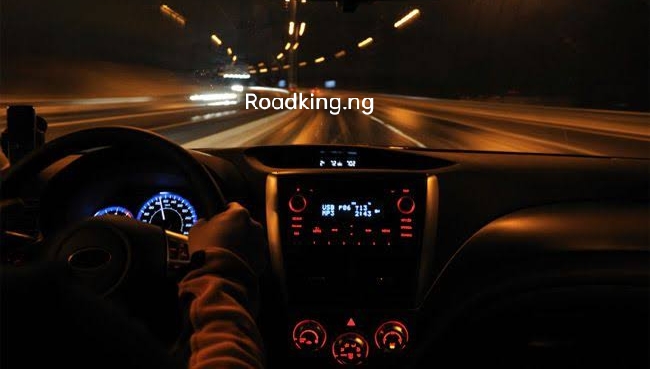
Night driving can be extremely dangerous and ignorant. The ability to plan ahead is as important as your ability to drive carefully.
Roadking.ng has identified important tips that will help you get through any unavoidable overnight trips.
We strongly advice against night driving, however, this guide will help you when it happens by chance;
1. Direct your headlights
Whether you have a new or old car, you should take the time to calibrate your headlights. Make sure your light is pointing to the right direction.
Car headlights can deform over time. Accidents are the most obvious cause, and even a minor accident can shift the headlights enough to affect the direction of the light.
Your vehicle owner’s manual may provide instructions on how to properly aim your vehicle’s headlights. This task can also be performed by a store or dealer.
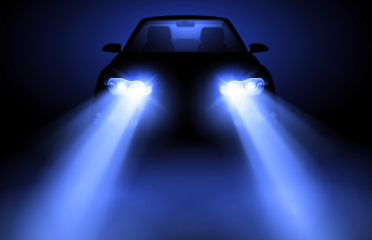
Headlights should be adjusted to maximize brightness without dazzling on oncoming traffic.
2. Dim interior lights
If you can reduce the amount of light on your dashboard and console, your eyes will naturally pay more attention to light from outside.
This is doubly important as many new cars are equipped with large, well-lit infotainment screens.
It’s not always clear how to dim these displays, as many have a night mode, so check your owner’s manual if you’re having trouble dimming the light from your screen.
Dim these lights and the control panel enough to reduce glare, making sure the information you need is still readable at night.
For example, professional drivers place great importance on avoiding all distractions inside the car.
3. Use glasses if necessary
If you use prescription glasses, remember to only wear clear lenses at night. However, the glare from the dashboard and headlights of oncoming vehicles can make it difficult to see clearly.
The AOA recommends making sure your lenses have an anti-reflective coating. This coating can help you see better when driving at night.
If you need eyeglasses, you should keep a pair in your car while driving at night, even if you don’t wear them regularly.
Sunglasses and all other colored glasses are ineffective because they change the color of incoming light.
However, regular glasses will help you improve contrast and distinguish objects better.
4. Avoid staring at lights
Staring at bright oncoming lights can disrupt your ability to concentrate just like staring into the sun.
Many cars today use high-intensity discharge (HID) headlights and powerful light-emitting diodes (LED). These headlights are highly aesthetic and also provide much better illumination compared to previous headlights.
However, compared to older halogen headlights, these newer headlights can cause glare, causing discomfort to you. This leaves you less time to respond.
If you are surprised by oncoming light, look away for a moment to regain perfect vision.
5. Keep windshield, windows and mirrors clean
A dirty windshield can distract light from other vehicles, limiting your vision and giving you less time to react.
Maintain a safe speed and slow down when you see bright lights heading towards you.C lean windows and mirrors will contribute to improved situational awareness.
The last thing you want is to be unable to see or distinguish incoming light because the mirrors are angled or the windows are foggy.









Five Die as Truck, Car Collide on Badagry Expressway

Two Killed as Trucks Collide, Burst Into Flames on Anambra Road

Stakeholders Raise Alarm Over Safety Gaps in Nigeria’s CNG and Electric Vehicle Transition

Female Driver Dies in Tragic Road Crash at Mongoro, Ile-Zik Area of Lagos

Physically Challenged Beggar Killed in Multi-Vehicle Crash on Lagos-Ibadan Expressway

Court Bars FRSC Officials From State Roads

24 Pupils Killed in Tragic Bus Crash During School Excursion in Uganda

Tyre Blowouts on Heavy Trucks

BYD Seal EV: Can It Challenge Traditional Sedans?

Colorado to Strengthen Driver Education Requirements

Slow Down: Man got his Family Killed by neglecting road signs

Which Bridge is the Tallest in the World?
Impatient Driving Cause Road Accident
How Roads are Constructed on the Mountain

Texas, USA suffers heavy flooding