
Roads & Governance / Infrastructure Policy
Delhi Road Safety Experts Advocate 30 km/h Limits in High-Risk Zones

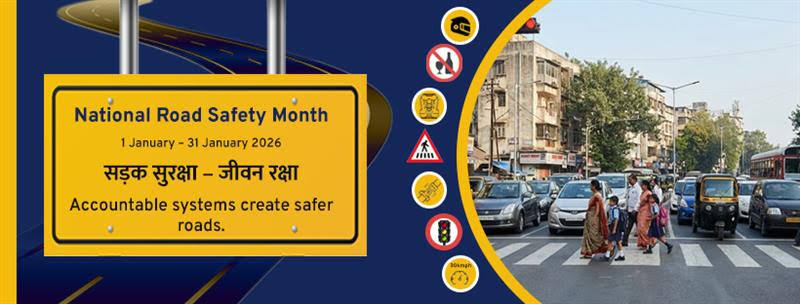
New road safety data and expert analysis have renewed calls for lower speed limits in New Delhi’s urban and high-risk traffic zones, as fatal road crashes continue to challenge city authorities and safety advocates.
Also Read:
1. Three Family Members Killed in Bus–Bike Crash on East Midnapore Highway
2. English Teacher Killed in Water Tanker Collision on 51-Foot Road, Delhi
3. Heavy Snowstorm Triggers Multi-Vehicle Crashes Across U.S. Midwest
At a recent seminar organised by the Road Safety Network (RSN) in collaboration with IIT Delhi and IIT Kharagpur, experts highlighted that 1,578 fatal crashes were recorded in Delhi in 2025, a figure that reflects persistent risks on city roads.
Transport specialists argue that speed is one of the most significant factors in road crash severity.
Research shows that even a small increase in average vehicle speed can raise the risk of injury and fatal collisions because:
- Drivers have less time to react to hazards.
- Stopping distances increase rapidly as speed rises.
- Crash forces grow exponentially, increasing the likelihood of serious injury or death.
In the context of Delhi, where traffic mixes heavy vehicles, cars, two-wheelers, and pedestrians, controlling speed is especially vital.
Experts at the seminar proposed a tiered speed framework to improve road safety:
- 30 km/h in residential streets, school zones, and areas with heavy pedestrian activity.
- 40 km/h on mixed-use urban roads.
- 50 km/h on major city arterials where appropriate.
They argued that lower limits in “red zones”, areas with high crash rates can reduce fatalities without significantly increasing travel times in the already congested city.
Although some road safety reports indicate slight declines in crash numbers over long periods, Delhi’s fatal crashes remain unacceptably high, especially in dense zones and key transport corridors.
Additional traffic police data show that hundreds of pedestrians and other vulnerable road users are killed each year in Delhi, a strong indication that improved speed management could save lives.
Experts emphasise that speed reduction is not just a rule change, it must be paired with better enforcement, road design changes, and public education.
Road Design and Enforcement
Safety authorities stress that lower speed limits should go hand-in-hand with:
- Clear road signs and city planning that supports safe speeds.
- Technology-assisted enforcement such as speed cameras and automated tickets.
- Traffic calming designs, such as speed humps and narrower lanes, which physically encourage slower driving.
These measures work together to reduce risky behaviours and protect vulnerable users especially pedestrians and cyclists.
What This Means for Road Users
If adopted, the proposed speed framework could:
- Reduce crash severity in high-risk zones.
- Lower the number of fatalities and serious injuries.
- Improve livability and pedestrian safety in urban communities.
Road safety professionals stress that speed management is one of the fastest and most effective ways to save lives on busy roads.







Five Die as Truck, Car Collide on Badagry Expressway

Two Killed as Trucks Collide, Burst Into Flames on Anambra Road

Stakeholders Raise Alarm Over Safety Gaps in Nigeria’s CNG and Electric Vehicle Transition

Female Driver Dies in Tragic Road Crash at Mongoro, Ile-Zik Area of Lagos

Physically Challenged Beggar Killed in Multi-Vehicle Crash on Lagos-Ibadan Expressway

Court Bars FRSC Officials From State Roads

24 Pupils Killed in Tragic Bus Crash During School Excursion in Uganda

Tyre Blowouts on Heavy Trucks

BYD Seal EV: Can It Challenge Traditional Sedans?

Colorado to Strengthen Driver Education Requirements

Slow Down: Man got his Family Killed by neglecting road signs

Which Bridge is the Tallest in the World?
Impatient Driving Cause Road Accident
How Roads are Constructed on the Mountain

Texas, USA suffers heavy flooding