
Roads & Governance / Infrastructure Policy
Bhutan Launches Real-Time Crash Data System to Improve Road Safety


The Bhutan Construction and Transport Authority (BCTA), under the Ministry of Infrastructure and Transport has formally launched the Motor Vehicle Crash Data System (MVCDS), a cutting-edge digital platform designed to collect, analyse and report road crash data in real time.
Also Read:
1. Heavy Snowstorm Triggers Multi-Vehicle Crashes Across U.S. Midwest
2. Migrant Worker Lorry Crash in Singapore Prompts Renewed Calls for Ban
3. Two Passengers Killed After Car Crashes Into Pole in Ferntree Gully
The system, which replaced fragmented and manual record-keeping methods previously used for crash statistics, became operational on 1 January 2026 and is set to transform how road safety is managed across the Kingdom.
Until now, traffic crash information in Bhutan was maintained in disparate formats by different agencies, making coordinated road safety planning difficult.
With the introduction of MVCDS, authorities now have a centralised, standardised database that brings together detailed information on collisions, injuries, vehicle involvement, and contributing factors, a major step toward evidence-based decision-making, enforcement, and infrastructure improvement.
Why the MVCDS Matters for Road Safety
📊 Accurate Real-Time Crash Tracking
The MVCDS replaces paper-based and isolated reporting systems with a digital, centralised platform that captures crash data from across the country.
This enables authorities to identify emerging trends, high-risk locations, and causative factors much faster than before.
🤝 Collaboration Between Agencies
The project was implemented in collaboration with the Traffic Division of the Royal Bhutan Police (RBP) and supported by the Japan International Cooperation Agency (JICA), ensuring that crash data from law enforcement and transport authorities are synchronised and accessible.
📈 Data-Driven Decision Making
With robust data now available, policymakers, road engineers, and safety advocates can analyse patterns and devise targeted interventions such as infrastructure upgrades, enforcement crackdowns, and public education campaigns to reduce crashes and save lives.
Research shows that consolidated crash data helps stakeholders develop accurate diagnoses and choose effective countermeasures based on historical trends.
Benefits for Drivers and Road Users
- Improved Enforcement: Real-time crash data allows traffic police to allocate resources more effectively and prioritise high-risk areas.
- Safer Planning: Transport planners can use crash data to justify safety enhancements like better signage, improved road geometry, and protected crossings.
- Public Awareness: Crash trends can be shared with the public to inform safer driving habits and highlight risk factors like speeding and poor road conditions.
A Step Toward Modern Road Safety Management
The MVCDS aligns Bhutan with global road safety best practices, which emphasise the importance of systematic crash data collection and analysis as a foundation for reducing collisions and fatalities.
By digitising crash records and enabling real-time reporting, the BCTA is strengthening the nation’s ability to respond quickly to safety challenges, target enforcement efforts where most needed, and monitor the effectiveness of interventions over time.
Officials say the data system will also help in fulfilling international reporting obligations and support long-term planning for sustainable mobility and safer road design.






Five Die as Truck, Car Collide on Badagry Expressway

Two Killed as Trucks Collide, Burst Into Flames on Anambra Road

Stakeholders Raise Alarm Over Safety Gaps in Nigeria’s CNG and Electric Vehicle Transition

Female Driver Dies in Tragic Road Crash at Mongoro, Ile-Zik Area of Lagos

Physically Challenged Beggar Killed in Multi-Vehicle Crash on Lagos-Ibadan Expressway

Court Bars FRSC Officials From State Roads

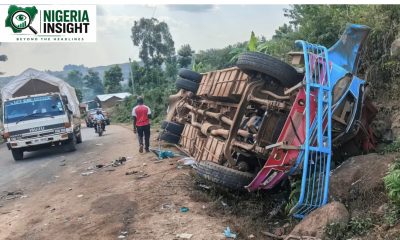
24 Pupils Killed in Tragic Bus Crash During School Excursion in Uganda

Tyre Blowouts on Heavy Trucks

BYD Seal EV: Can It Challenge Traditional Sedans?

Colorado to Strengthen Driver Education Requirements

Slow Down: Man got his Family Killed by neglecting road signs

Which Bridge is the Tallest in the World?
Impatient Driving Cause Road Accident
How Roads are Constructed on the Mountain

Texas, USA suffers heavy flooding