
News Update
Major Multi-Vehicle Collision Blocks Dublin’s Northbound M50


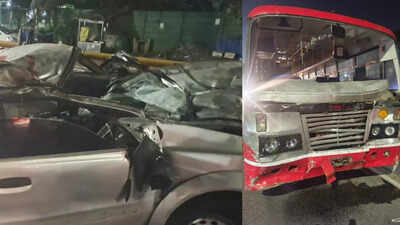
Dublin’s busiest orbital motorway, the M50, is experiencing significant traffic disruptions today after a serious multi-vehicle collision obstructed key northbound lanes during the morning rush hour, authorities and traffic monitors confirm.
Also Read:
- 69-Year-Old Man Killed in Rollover Crash on I-294 Near Des Plaines, Illinois
- Electric Vehicle Accidents Rising in the U.S. as EV Adoption Grows
- Multiple Fatal Road Accidents in Bhubaneswar Kill Several
The crash occurred shortly before 8:00 a.m. local time, between Junction 9 (Red Cow) and Junction 6 on the northbound carriageway, blocking lanes two and three and causing substantial delays for commuters heading towards Dublin from west and southwest suburbs.
Emergency services, including Gardaí and ambulance crews, are on the scene managing the situation and directing traffic.
Transport Infrastructure Ireland (TII) issued traffic alerts urging motorists to exercise extreme caution approaching the collision site, reduce speed, and comply with directions from emergency responders.
Drivers have also been advised to consider alternative routes to avoid the M50 stretch affected by the incident.
The collision has sparked heavy congestion along the northbound M50, with downstream delays reported particularly between Junction 6 (Blanchardstown) and Junction 11 (Tallaght).
Many motorists were stuck in queues as emergency crews cleared debris and attempted to restore traffic flow.
While details about injuries or vehicle counts have not yet been officially released, the blockage of two lanes on a heavily trafficked motorway at peak commute time is causing ripple effects across local roads as drivers seek alternative journeys around the crash.
TII has advised road users to:
- Avoid the affected section of the M50 if possible.
- Reduce speed and drive with caution near emergency scenes.
- Allow extra travel time for delayed journeys.
- Follow official diversion signs and traffic control instructions.
Multi-vehicle accidents on high-speed motorways often escalate traffic risk and delay times even after lanes are reopened due to residual congestion and ongoing recovery operations, particularly on routes like the M50 that serve tens of thousands of vehicles daily.
Why Incidents on the M50 Cause Major Delays
The M50 is Dublin’s key ring road connecting multiple major radial routes, including the M1, M4, N7, and M7/M9 corridors.
Even single incidents can lead to traffic tailbacks extending several kilometres, as there are limited alternative high-capacity routes.
Combined with peak commuter volumes, this often results in widespread delays and cross-traffic congestion.
Traffic safety advocates have argued for ongoing improvements in motorway management, rapid incident clearance, and expanded real-time traffic information systems to minimise the impact of such collisions on daily commuters.



Two Killed in Head-On Collision Between Toyota Corolla and Tricycle in Calabar

Speeding Car Rams Into E-Rickshaw and Cyclist, Killing Three in Chandigarh

Japan Tests Holographic Crossing Guards to Protect Children

Woman Killed in Hit-and-Run Three-Car Crash on N24 Near Limerick

23-Year-Old Woman Dies After Collision Between Airport Shuttle and Car

5 Killed in Horrific Head-On Collision on Tumakuru Road, Bengaluru

Man Killed After Collision on Highway 407 Near Markham
11 Killed in Enugu–Port Harcourt Expressway Collision

Telangana Among India’s States with Highest NH Black Spots

Major Multi-Vehicle Collision Blocks Dublin’s Northbound M50
Man Killed After Collision on Highway 407 Near Markham
Two Killed in Head-On Collision Between Toyota Corolla and Tricycle in Calabar
11 Killed in Enugu–Port Harcourt Expressway Collision
5 Killed in Horrific Head-On Collision on Tumakuru Road, Bengaluru
23-Year-Old Woman Dies After Collision Between Airport Shuttle and Car
Woman Killed in Hit-and-Run Three-Car Crash on N24 Near Limerick
Japan Tests Holographic Crossing Guards to Protect Children
Speeding Car Rams Into E-Rickshaw and Cyclist, Killing Three in Chandigarh

Slow Down: Man got his Family Killed by neglecting road signs

Which Bridge is the Tallest in the World?
Impatient Driving Cause Road Accident
How Roads are Constructed on the Mountain

Texas, USA suffers heavy flooding