
Road Safety / Heavy Vehicle Awareness
Fighting Drunk Driving with Technology

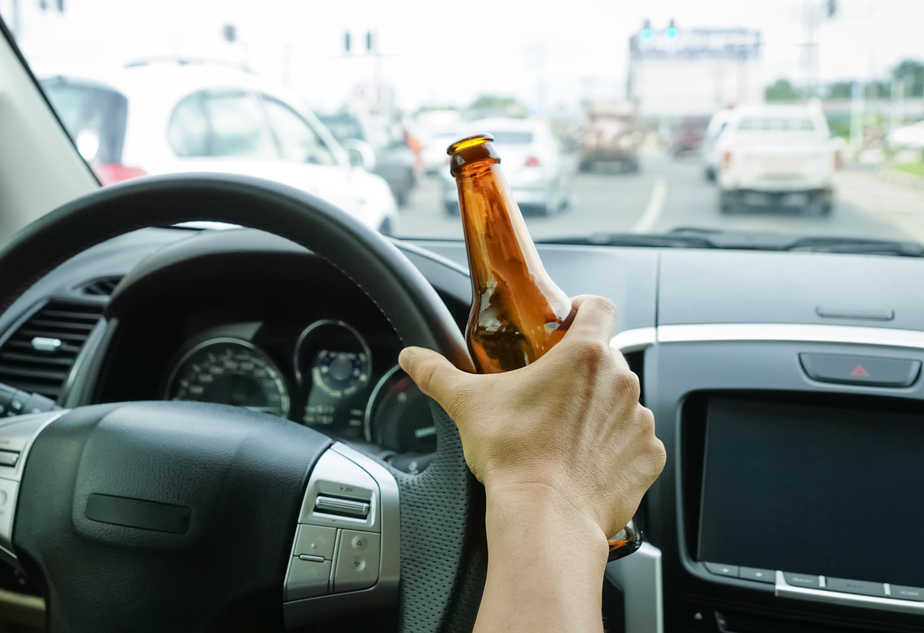
Drunk driving has long been one of the deadliest threats on Nigerian roads. Despite numerous campaigns by the Federal Road Safety Corps (FRSC), countless arrests, and even public awareness jingles, many motorists still ignore the dangers of driving under the influence of alcohol.
Also Read: Drunk Driving in Nigeria: Lives Cut Short by Irresponsible Choices
Each year, families are torn apart by crashes that could have been avoided if drivers simply obeyed the law.
But what if technology could step in catching risky driving before tragedy strikes? That is the promise of a new dataset developed by Nigerian researchers, which uses mobile phone sensors to detect alcohol-influenced driving behavior. This breakthrough could change the face of road safety in Nigeria, and potentially across Africa.
The Research Breakthrough
According to a September 2025 study published on arXiv, Nigerian scientists collected real-world driving data from local motorists using smartphones. The devices captured sensor readings such as:
- Accelerometer data (to measure sudden acceleration or swerving)
- Gyroscope data (to detect vehicle tilt and erratic maneuvers)
- GPS tracking (to analyze speed variation, lane deviation, and route choices)
The dataset was then used to train a machine learning model capable of identifying driving patterns influenced by alcohol.
The results were remarkable:
- 100% recall — the system detected every single instance of alcohol-influenced driving.
- 90.9% accuracy overall — meaning it got 9 out of 10 classifications right.
- ~60% precision — meaning that while it caught all risky drivers, some safe drivers were also flagged.
In simple terms: the model never misses a drunk driver, though it may sometimes wrongly accuse a sober one.
Why This Matters for Nigeria
Drunk driving is not just a Western problem. In Nigeria, alcohol is easily accessible, widely consumed, and often underestimated as a risk factor. Nighttime crashes particularly along major expressways like Abuja–Kaduna, Lagos–Ibadan, and Benin–Ore are frequently linked to drivers under the influence.
The FRSC has often lamented that alcohol-related crashes account for a significant percentage of nighttime road accidents in Nigeria. Yet, unlike in many developed countries, Nigeria lacks widespread breathalyzer enforcement or in-car safety systems that can detect impairment.
This new technology could change that. With smartphone penetration rising steadily in Nigeria (over 45% of the population owns a smartphone as of 2025), such a system could be deployed cheaply and widely without requiring expensive roadside equipment.
To understand how such technology might work in practice, RoadKing.ng spoke with a cross-section of drivers and transport union leaders:
- Chinedu, a commercial bus driver in Lagos, was skeptical:
“Will this app also feed us when passengers are rushing us to make quick trips? People will still drink and drive because they think nothing will happen.”
- Fatima, a Bolt driver in Abuja, welcomed the idea:
“If this app warns me that my driving is unsafe, I would stop. Many accidents I have seen are from tired or drunk drivers. Maybe this can save lives.”
- FRSC Sector Commander in Ogun (name withheld) suggested integration with existing enforcement:
“If drivers can be warned in real time and road marshals can receive alerts, it will boost our capacity to prevent crashes rather than just responding after the fact.”
While the innovation is promising, experts caution that several challenges must be addressed:
- False Positives: With precision at 60%, some sober drivers may be flagged unfairly. This raises concerns about harassment or misuse.
- Data Privacy: Drivers may resist sharing location or behavior data with third parties.
- Enforcement Linkage: The system must be tied to a legal or union framework to have real impact — otherwise drivers may simply ignore warnings.
- Infrastructure: Continuous data collection requires stable mobile networks and sufficient battery life, which may not always be available in rural Nigeria.
Nigeria is not alone in exploring this technology. Countries like the United States and Japan are already testing in-car AI that detects drunk drivers by monitoring eye movement, steering pressure, and reaction time. But Nigeria’s approach using affordable smartphones instead of expensive embedded systems could be a more accessible solution for developing economies.
Experts suggest the following steps for making this technology a reality:
- Partnership with FRSC and NURTW to ensure integration into driver education and enforcement.
- Mobile app pilot projects in high-risk states (Lagos, Ogun, Edo, Abuja).
- Public-private collaboration with ride-hailing companies like Bolt, Uber, and InDrive.
- Awareness campaigns to build trust and encourage voluntary adoption.
If scaled properly, this tool could prevent thousands of deaths annually and finally give Nigeria a technological edge in the fight against road indiscipline.
Conclusion
Drunk driving is preventable. With new smartphone sensor technology, Nigerian roads may soon have an early-warning system capable of saving lives before disaster strikes. But for it to succeed, both government and citizens must embrace the change.
As one researcher put it:
“Technology can only warn you, the decision to drive responsibly remains yours.”

Six Passengers Killed in Fatal Road Crash Along Keffi–Akwanga

Pedestrian Struck & Killed on Kamo Road in Whangārei, New Zealand

UAE Road Safety Alert During Ramadan 2026
Five Killed as Fuel Tanker Crushes Tricycle in Bayelsa

Traffic Delays Hit North Texas After Multiple Highway Accidents
Mother, Son Survive Horrific SUV Overturn Crash in Lagos

Dozens Injured in Two Separate Bus Crashes in Israel’s Negev

Minibus Drivers Block Roads in Calabar Over ₦700 Daily Ticket Fees

Essential Road Safety Tips Every Traveler Must Know in 2026

Bad Vehicle Maintenance: The Silent Killer on Roads Worldwide
Three Killed in Multi-Vehicle Crash in Northern Ireland

Fatal Drunk Driving Crash Claims Woman’s Life on Clay Road

Lansdale Residents Lead Local Road Safety Initiative to Protect Community

How Turkey Is Using Real Wrecked Cars to Warn Drivers
Sixteen Killed in Fiery Bus–Truck Collision in Yemen
Motorcyclist Crash Shuts Down M40 Motorway in UK, Causes Major Traffic Disruption

Delhi Introduces Safety Reward Scheme for Citizens Who Assist Road Accident Victims

Major Multi-Vehicle Collision Shuts Down M25 in Both Directions
Dozens Injured in Two Separate Bus Crashes in Israel’s Negev

Senior Police Officer Dies in Fatal Road Crash in Borno

Slow Down: Man got his Family Killed by neglecting road signs

Which Bridge is the Tallest in the World?
Impatient Driving Cause Road Accident
How Roads are Constructed on the Mountain

Texas, USA suffers heavy flooding