
Petrol Price Update
Dangote Slams NUPENG Over ₦50,000 Hidden Levies Per Truck, Says Charges Worsen Fuel Prices


Nigeria’s fuel supply chain is once again under the spotlight, as Aliko Dangote, Africa’s richest man and owner of the Dangote Refinery, raises alarm over hidden levies allegedly imposed by members of the Nigeria Union of Petroleum and Natural Gas Workers (NUPENG).
Also Read: Dangote Refinery Deploys 4,000 CNG-Powered Trucks for Fuel Distribution
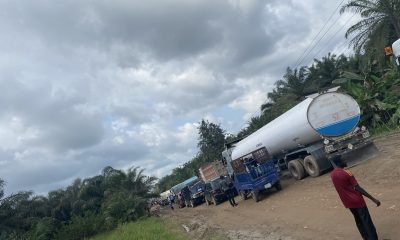
According to Dangote, truck owners are being forced to pay ₦50,000 per truck in unofficial charges, a cost he describes as “unsustainable” and one that ultimately inflates the price of fuel for ordinary Nigerians.
This revelation comes at a time when Nigerians are grappling with rising fuel costs, subsidy debates, and economic hardship, sparking urgent questions about the integrity of the petroleum transport chain.
Dangote’s Claim: A System Rigged with Hidden Costs
Speaking during a high-level industry dialogue, Dangote emphasized that these unofficial levies are crippling distribution networks and making the refinery’s efforts to stabilize fuel prices almost impossible.
“Every truck that leaves with products is forced to pay ₦50,000 in hidden levies. How can this be sustained? These costs are not borne by transporters—they are passed directly to consumers. This is why pump prices remain unstable,” Dangote lamented.
His words echo broader frustrations within the downstream oil sector, where middlemen, unions, and cartels are often accused of manipulating systems for profit.
NUPENG’s Role and the Allegations of ‘Extortion’
The Nigeria Union of Petroleum and Natural Gas Workers (NUPENG) is a powerful body, often at the center of labor negotiations, strikes, and nationwide fuel distribution. While the union officially denies sanctioning extortion, industry insiders claim certain factions within the transport chain enforce “mandatory payments” before trucks can load or move products.
For truck operators, the ₦50,000 charge is non-negotiable, effectively becoming a shadow tax on every tanker carrying fuel across the country.
The Ripple Effect: Nigerians Bear the Brunt
The impact of these hidden charges goes beyond the trucking companies — it lands directly on the pockets of ordinary Nigerians.
- Higher Pump Prices – Costs added to logistics eventually inflate fuel prices at filling stations.
- Supply Disruptions – Truckers unable to pay are sometimes delayed or blocked, worsening scarcity.
- Economic Strain – Transport costs affect not only fuel but also goods and services across sectors.
For a nation where fuel drives virtually every aspect of the economy, such hidden levies amount to a national economic sabotage.
Industry Reactions
Transport unions, depot owners, and regulatory bodies have all weighed in:
- Independent marketers argue that the ₦50,000 levy makes it nearly impossible to operate profitably.
- Regulatory agencies maintain they are unaware of such practices but have pledged to investigate.
- Civil society groups accuse both government and unions of deliberately turning a blind eye to extortion.
The Larger Picture: Transparency in the Oil and Gas Supply Chain
Dangote’s allegations highlight deeper systemic failures in Nigeria’s petroleum industry. For decades, the supply chain has been plagued by:
- Unregulated charges
- Poor monitoring of unions and transport operators
- Corruption at depots and loading points
Until these leakages are addressed, Nigerians will continue paying more than necessary for petroleum products, regardless of refinery efficiency or subsidy policies.
The Way Forward
Experts suggest several urgent measures:
- Independent monitoring of truck movements and depot operations
- Strict penalties for extortion or illegal levies
- Transparent union accountability
- Digital payment systems to reduce cash-based transactions
If implemented, these measures could help dismantle entrenched systems of corruption and bring genuine relief to Nigerians at the pump.
Conclusion
The fight for affordable fuel in Nigeria is not only about subsidies or refining capacity, it is also about cleaning up the opaque transport chain that delivers fuel to the people. Dangote’s revelations may be uncomfortable for industry players, but they shine a necessary light on practices that silently rob Nigerians daily.
Until the ₦50,000-per-truck “hidden tax” is addressed, the dream of affordable and stable fuel pricing may remain out of reach.








Five Die as Truck, Car Collide on Badagry Expressway

Two Killed as Trucks Collide, Burst Into Flames on Anambra Road

Stakeholders Raise Alarm Over Safety Gaps in Nigeria’s CNG and Electric Vehicle Transition

Female Driver Dies in Tragic Road Crash at Mongoro, Ile-Zik Area of Lagos

Physically Challenged Beggar Killed in Multi-Vehicle Crash on Lagos-Ibadan Expressway

Court Bars FRSC Officials From State Roads

24 Pupils Killed in Tragic Bus Crash During School Excursion in Uganda

Tyre Blowouts on Heavy Trucks

BYD Seal EV: Can It Challenge Traditional Sedans?

Colorado to Strengthen Driver Education Requirements

Slow Down: Man got his Family Killed by neglecting road signs

Which Bridge is the Tallest in the World?
Impatient Driving Cause Road Accident
How Roads are Constructed on the Mountain

Texas, USA suffers heavy flooding