
Roads & Governance / Infrastructure Policy
Port Harcourt-Eleme Road: The Oil City Lifeline in Ruins

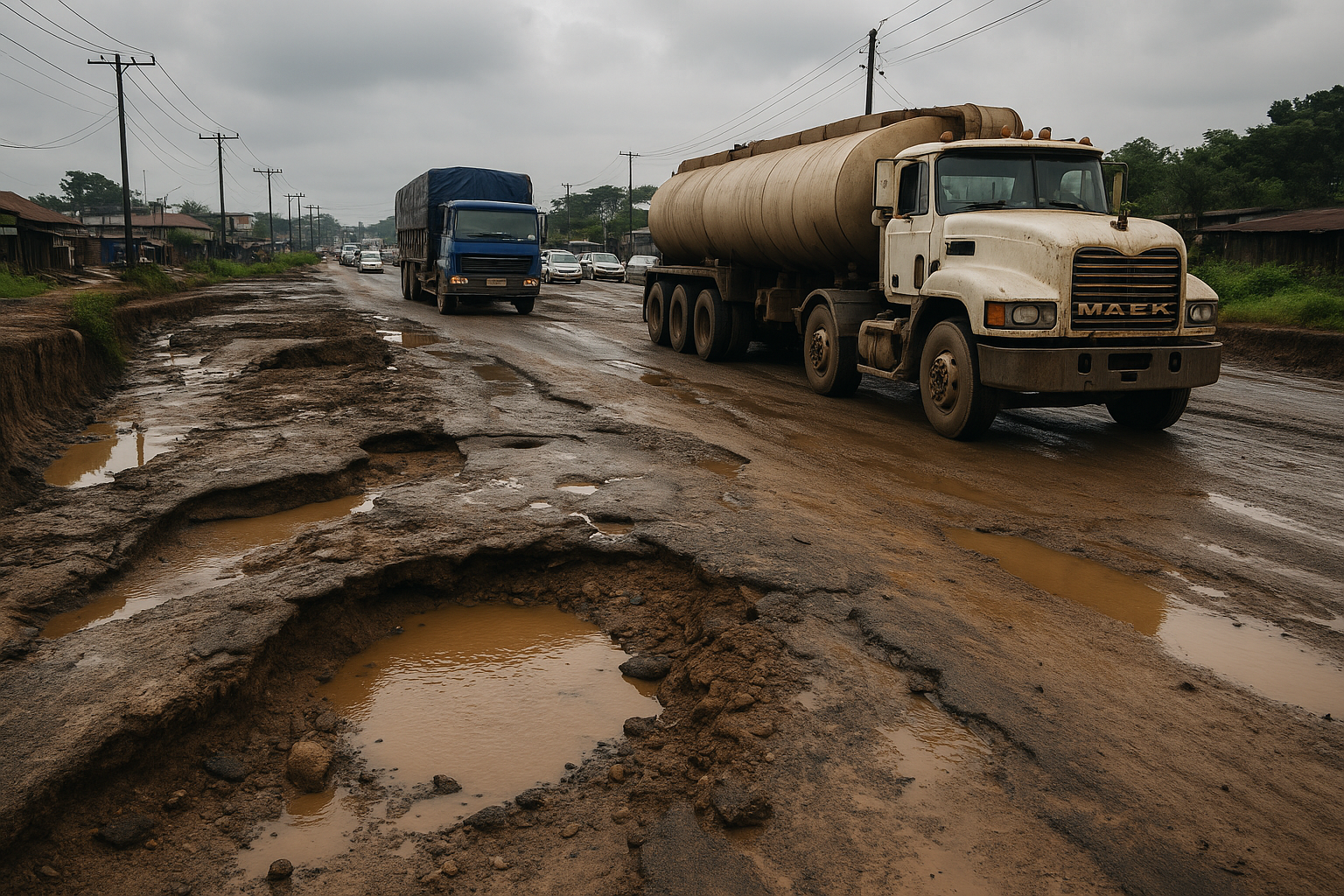
The Port Harcourt-Eleme Road in Rivers State, a vital link to Nigeria’s largest oil and gas operations, has fallen into such disrepair that commuters now call it “the road to hell.
Also Read: Enugu-Port Harcourt Expressway Repairs Lagging
Despite being the main route to Indorama Petrochemicals, the Port Harcourt Refinery, and Onne Port, it is riddled with gaping potholes, stagnant floodwater, and collapsed sections that turn every trip into a battle for survival.
Economic Importance vs. Neglect
This road is not just a commuter route, it’s the economic artery of Rivers State and beyond. It handles:
- Heavy-duty trucks carrying petroleum products
- Export containers from Onne Port
- Commuter traffic linking Port Harcourt to Eleme, Ogoni, and Akwa Ibom
Yet, despite its strategic importance, it remains in a deplorable state. Drivers lose hours each day in standstill traffic caused by broken-down trucks stuck in craters.
“Sometimes you spend four hours to cover just 15 kilometers,” says Chibueze Nwogu, a truck driver. “By the time you get to the refinery, you’re already exhausted.”
Daily Struggles on the Road
From Eleme Junction to Refinery Road, the surface is broken, uneven, and in many places submerged. The worst sections are near Aleto Bridge, where erosion has eaten away one side of the road entirely.
Motorists describe:
- Tankers tipping dangerously when maneuvering potholes
- Smaller cars getting stuck in flooded gullies
- Okada riders losing balance and skidding into moving traffic
- Pedestrians wading through knee-deep water to cross certain stretches
Safety Hazards
The hazards go beyond vehicle damage:
- Increased accidents: Sudden swerves to avoid potholes often lead to collisions.
- Security risks: Slow-moving traffic has become a hotspot for armed robberies.
- Environmental damage: Oil spills from overturned tankers contaminate surrounding soil and waterways.
Official Promises, Limited Action
In 2023, the Federal Ministry of Works announced an N80 billion contract for rehabilitation. While some earth-moving equipment was seen on site, work stalled within months.
The Eleme Local Government Chairman, in an interview with RoadKing.ng, claimed:
“Funding delays and contractor disputes have slowed progress. But the road’s importance means we must find a way forward.”
Local residents, however, are losing patience, citing decades of broken promises.
The Human Toll
Beyond delays and frustration, the road is claiming lives. On July 5, 2025, a mini-bus carrying refinery workers overturned after hitting a water-filled pothole, killing two and injuring eight. Witnesses say the driver lost control when the bus’s rear wheel dipped into the crater at high speed.
Economic Fallout
The bad road directly impacts:
- Logistics costs – Transporters now charge double for goods moving to and from Onne Port.
- Product delivery times – Petrochemical exports face delays, risking penalties in international contracts.
- Small businesses – Roadside markets lose customers who avoid the route entirely.
Recommendations
1. Emergency Repairs Now
Critical sections must be patched immediately to restore basic usability while waiting for full reconstruction.
2. Heavy-Duty Lanes
Given the constant movement of 60–90-ton trucks, specialized lanes for heavy vehicles are essential to prevent future deterioration.
3. Drainage Overhaul
Flooding is a major cause of road collapse here; without functional drains, repairs won’t last.
4. Continuous Monitoring
A public road project tracker, accessible online, could hold contractors accountable for meeting deadlines.
Community Response
Civil society groups like the Eleme Youth Movement have staged peaceful protests, demanding urgent government intervention. Petitions have also been sent to Niger Delta Development Commission (NDDC), which has yet to issue a statement on the matter.
Conclusion
The Port Harcourt-Eleme Road is more than a transportation route, it’s a lifeline for Nigeria’s oil economy. Every day it remains in ruins costs lives, livelihoods, and billions in lost productivity. Fixing it is not just a matter of local convenience; it’s a national economic priority.

Five Die as Truck, Car Collide on Badagry Expressway

Two Killed as Trucks Collide, Burst Into Flames on Anambra Road

Stakeholders Raise Alarm Over Safety Gaps in Nigeria’s CNG and Electric Vehicle Transition

Female Driver Dies in Tragic Road Crash at Mongoro, Ile-Zik Area of Lagos

Physically Challenged Beggar Killed in Multi-Vehicle Crash on Lagos-Ibadan Expressway

Court Bars FRSC Officials From State Roads

24 Pupils Killed in Tragic Bus Crash During School Excursion in Uganda

Tyre Blowouts on Heavy Trucks

BYD Seal EV: Can It Challenge Traditional Sedans?

Colorado to Strengthen Driver Education Requirements

Slow Down: Man got his Family Killed by neglecting road signs

Which Bridge is the Tallest in the World?
Impatient Driving Cause Road Accident
How Roads are Constructed on the Mountain

Texas, USA suffers heavy flooding