
Articles
Why Nigerian Pedestrians Face the Highest Risk on the Roads


In a country where public transport is inconsistent and sidewalks are a luxury, millions of Nigerians walk daily, to school, church, market, work. But data shows: the simple act of walking in Nigeria may be more dangerous than driving.
According to the FRSC 2024 Road Traffic Report, pedestrians made up 32% of all road traffic fatalities, a number even higher in cities like Lagos, Enugu, Kano, and Port Harcourt.
Why are pedestrians, often the most vulnerable road users, so dangerously exposed in Nigeria?
1. No Safe Walking Infrastructure
Sidewalks are virtually nonexistent on most Nigerian roads. In high-traffic areas like:
- Ikorodu Road, Lagos
- Bori–Port Harcourt Expressway
- Kano’s Zaria Road
- Akure–Ado Road
…pedestrians walk inches from speeding buses, motorcycles, and trailers.
Most roads lack:
- Paved sidewalks or footpaths
- Zebra crossings or pedestrian bridges
- Buffers between roads and walkways
And where pedestrian bridges exist, they’re often:
- Far apart
- Unlit at night
- In disrepair or unsafe due to crime
2. Reckless Driver Behavior Toward Pedestrians
Drivers often fail to:
- Yield at junctions
- Slow down in school zones
- Obey speed limits near crossings or populated areas
Commercial drivers and okada riders frequently swerve onto walkways to beat traffic, endangering walkers. In many parts of Nigeria, drivers treat pedestrians as obstacles, not as protected road users.
3. Inconsistent Law Enforcement
Though Nigeria’s National Road Traffic Regulations mandate pedestrian rights at crossings:
- Enforcement is rare
- No clear right-of-way penalties exist
- Awareness among traffic police is limited
Even in areas with traffic lights and zebra crossings, drivers routinely ignore them.
Data Snapshot: Who’s at Highest Risk?
From January to June 2025, FRSC reports show:
- Over 3,800 pedestrian casualties recorded nationwide
- 56% were children or elderly
- 75% occurred during daylight hours
- Lagos alone recorded over 400 pedestrian fatalities between Jan–May 2025 ([FRSC Lagos Command Brief, June 2025])
Case Study: School Children in Danger
In Ogun and Oyo states, students walking to school must:
- Cross 4–6 lane highways
- Navigate markets spilling onto roads
- Avoid motorcycles riding against traffic
In July 2025, four children were killed by a reckless driver at Ijaye Junction in Ogun while trying to cross a busy highway with no traffic light or crossing signal.
Community members protested, yet no speed bumps or zebra lines were added to date.
RoadKing.ng Solutions & Call to Action
| Issue | Recommendation |
|---|---|
| No sidewalks or buffers | Mandate all new roads to include pedestrian walkways |
| Unsafe school routes | Designated “safe school routes” with patrols & signage |
| Lack of crossings | Build zebra crossings every 400m in urban zones |
| Drivers don’t yield | Launch nationwide pedestrian respect campaigns |
| No streetlights | Install solar lighting in high foot-traffic zones |
What Other Countries Are Doing Right
- Sweden’s Vision Zero Plan includes pedestrian-only phases at intersections and elevated sidewalks.
- South Africa introduced pedestrian bridges every 2 km on highways passing through townships.
- Kenya now mandates school zone signage, crossing guards, and 30 km/h zones around all government primary schools.
What You Can Do as a Pedestrian
- Always walk facing traffic when sidewalks are unavailable
- Wear reflective material if walking at night
- Avoid using phones or headphones when crossing roads
- Teach children not to dash across roads, always stop, look, and listen
Final Take from RoadKing.ng
No one should risk their life to walk to school, buy food, or attend church. Yet, in Nigeria, pedestrians are treated as second-class citizens of the road.
If we truly care about lives, then we must:
- Design roads for people, not just cars
- Hold reckless drivers accountable
- Prioritize safety for those with no option but to walk
Until then, every pedestrian fatality is not an accident, it’s a failure of policy.
Also Read: The Road Isn’t Just Yours: A Wake-Up Call for Arrogant Drivers




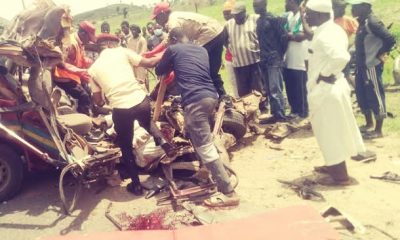


Five Die as Truck, Car Collide on Badagry Expressway

Two Killed as Trucks Collide, Burst Into Flames on Anambra Road

Stakeholders Raise Alarm Over Safety Gaps in Nigeria’s CNG and Electric Vehicle Transition

Female Driver Dies in Tragic Road Crash at Mongoro, Ile-Zik Area of Lagos

Physically Challenged Beggar Killed in Multi-Vehicle Crash on Lagos-Ibadan Expressway

Court Bars FRSC Officials From State Roads

24 Pupils Killed in Tragic Bus Crash During School Excursion in Uganda

Tyre Blowouts on Heavy Trucks

BYD Seal EV: Can It Challenge Traditional Sedans?

Colorado to Strengthen Driver Education Requirements
Two Killed as Trucks Collide, Burst Into Flames on Anambra Road
Five Die as Truck, Car Collide on Badagry Expressway

Slow Down: Man got his Family Killed by neglecting road signs

Which Bridge is the Tallest in the World?
Impatient Driving Cause Road Accident
How Roads are Constructed on the Mountain

Texas, USA suffers heavy flooding