
Crash News
The Most Dangerous Roads in the World and Why They’re So Risky

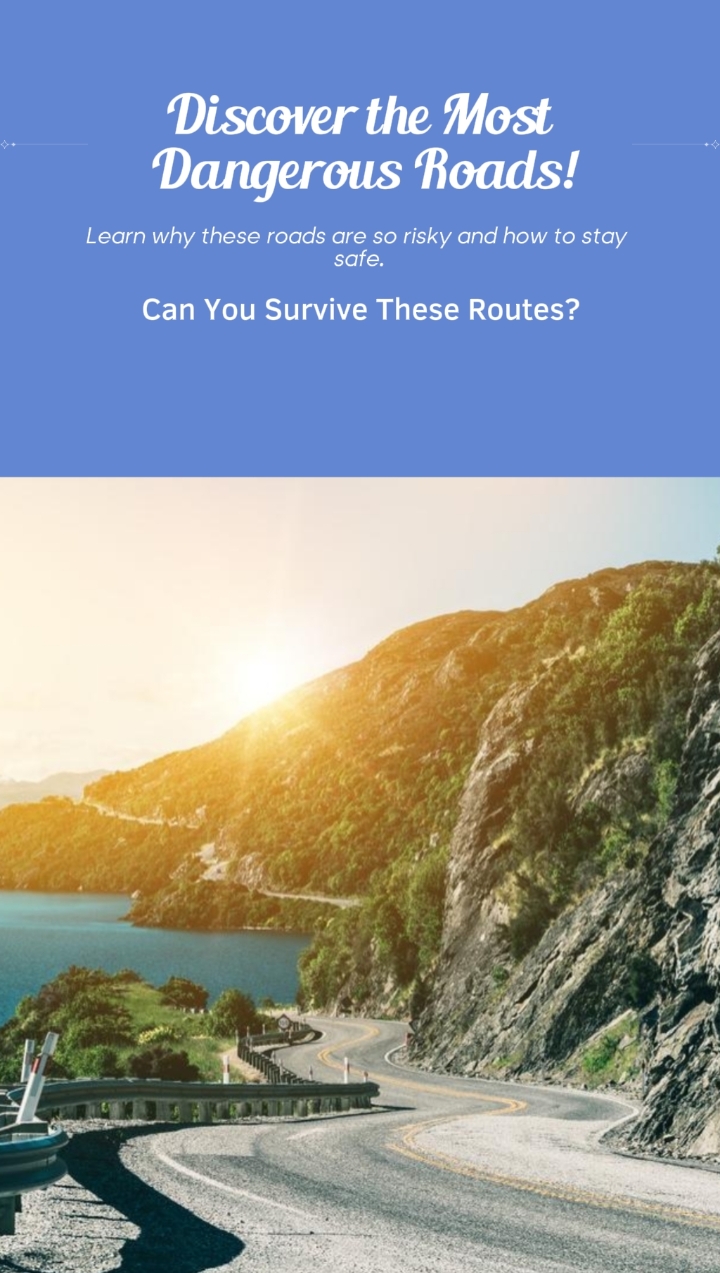
These dangerous roads have claimed numerous lives over the years, earning reputations as treacherous routes that demand extreme caution from motorists.
Driving is one of the most common modes of transportation around the world, but not all roads are created equal.
Some roads pose extreme risks due to their terrain, location, weather conditions, and lack of proper infrastructure.
Below are some of the most dangerous roads in the world and an exploration of what makes them so hazardous.
1. North Yungas Road, Bolivia (Death Road)

The North Yungas Road in Bolivia, often referred to as “Death Road,” is notorious for being one of the most dangerous roads on the planet.
This 60-kilometer stretch of road connects La Paz to Coroico and plunges through the Bolivian Andes.
The road’s most dangerous feature is its sheer cliffs, with drop-offs that reach up to 600 meters (about 2,000 feet) in some areas.
For much of its length, the road is narrow—often no more than 3.2 meters wide—and carved into the side of a mountain with no guardrails to prevent vehicles from falling off the edge.
Factors contributing to the road’s deadly reputation include heavy fog, frequent landslides, and rainfall that turns the dirt path into a slippery mess.
Despite its dangers, the North Yungas Road is popular with adventure seekers, particularly mountain bikers who brave the treacherous descent.
2. Karakoram Highway, Pakistan/China

The Karakoram Highway is the highest paved international road in the world, running through the mountain ranges of Pakistan and China at an elevation of 4,693 meters (15,397 feet).

While the highway offers stunning views of the Karakoram mountain range and is an engineering marvel, it also poses significant risks.
The road is prone to landslides, rockfalls, and extreme weather conditions, including snow and ice in winter and monsoons in summer.
The high altitude also means that drivers must contend with reduced oxygen levels, which can lead to altitude sickness.
Additionally, the narrow and winding paths hug the cliffsides, often without barriers, making any mistake potentially fatal.
The combination of geological instability, unpredictable weather, and the remote location makes the Karakoram Highway one of the most dangerous roads in the world.
3. Guoliang Tunnel Road, China

The Guoliang Tunnel Road is an extraordinary and dangerous road carved through a mountain in China’s Taihang Mountains.
Built by local villagers in the 1970s, the road was constructed to connect the remote village of Guoliang to the outside world.
The tunnel, which is about 1.2 kilometers long and 5 meters high, is notorious for its narrow width, steep drop-offs, and irregular surface.
Drivers must navigate a series of sharp turns and blind corners, with only small windows cut into the mountainside offering occasional glimpses of the sheer drop below.
The road’s minimal lighting and the fact that it was manually carved out of rock without modern engineering techniques contribute to its perilous reputation.
A single mistake while driving on the Guoliang Tunnel Road could lead to a catastrophic fall down the mountainside.
4. James Dalton Highway, Alaska, USA

The James Dalton Highway in Alaska is a 414-mile (666-kilometer) stretch of mostly gravel road that runs from Fairbanks to Prudhoe Bay.
Built as a supply route for the Trans-Alaska Pipeline, this remote road crosses some of the most inhospitable terrain in North America, including tundra, mountains, and river valleys.
The highway is primarily used by truckers, and it is notorious for its isolation, unpredictable weather, and poor road conditions.
In winter, the Dalton Highway becomes even more treacherous due to ice, snow, and freezing temperatures that can drop as low as -40°F (-40°C).
Blizzards can reduce visibility to near-zero, and the absence of guardrails in many areas adds to the danger.
With few services along the route, any breakdown or accident can leave travelers stranded for hours or even days in freezing conditions.
Despite these hazards, the Dalton Highway is popular with adventure tourists seeking an extreme driving experience.
5. Skippers Canyon Road, New Zealand

Skippers Canyon Road, located near Queenstown, New Zealand, is one of the most scenic yet dangerous roads in the world.
This 16.5-mile (26.5-kilometer) road was carved by miners during the 19th-century gold rush and winds through steep, narrow canyons.
The unpaved road is incredibly narrow, with sheer drop-offs into the canyon below. In some sections, it is so narrow that two vehicles cannot pass each other.
What makes Skippers Canyon Road particularly hazardous is its lack of safety barriers, poor surface conditions, and sharp hairpin turns.
Rain and snow can also make the road even more slippery, increasing the risk of sliding off the edge.
Tourists and locals alike are advised to proceed with extreme caution, as the road demands precise navigation skills and nerve.
6. Trollstigen (Troll’s Path), Norway

Trollstigen, or “Troll’s Path,” is a serpentine mountain road in Norway that is as beautiful as it is dangerous.
The road ascends a steep mountain slope, with 11 hairpin turns and an elevation change of about 850 meters (2,789 feet) over a relatively short distance.
While the road is paved and well-maintained, the steep gradient and sharp turns make it a challenging drive, especially for larger vehicles.
Trollstigen is often covered in fog or rain, reducing visibility and making the hairpin bends even more difficult to navigate.
During the winter months, the road is closed due to snow and ice, which would make it impassable.
Drivers who brave Trollstigen in the summer must be extremely cautious, as even a small mistake can send them tumbling down the mountainside.
7. Fairy Meadows Road, Pakistan

Fairy Meadows Road is a narrow, unpaved mountain road leading to Nanga Parbat, one of the highest peaks in the Himalayas.
The road starts at the Karakoram Highway and winds its way up a mountainside, often with steep cliffs on one side and no barriers to prevent falls.
The road is notoriously dangerous due to its width barely wide enough for a single vehicle in some parts and its lack of maintenance.
Landslides and rockfalls are common, and during the rainy season, the road can become muddy and nearly impassable.
Drivers must have nerves of steel to navigate the tight corners and avoid slipping off the edge.
Despite the risks, Fairy Meadows Road attracts adventurers seeking access to the stunning Fairy Meadows, a lush alpine meadow with incredible views of Nanga Parbat.
8. Zoji La Pass, India

Zoji La Pass is a high-altitude mountain pass in the Indian Himalayas, connecting the Kashmir Valley with Ladakh.
At an elevation of 3,528 meters (11,575 feet), the pass is often blanketed in snow for much of the year, and landslides are a constant hazard.
The narrow, winding road hugs the side of the mountain, with steep drop-offs and no guardrails.
The road is frequently closed during the winter due to heavy snowfall, and even during the summer, it remains a challenging and dangerous route.
The combination of high altitude, unpredictable weather, and treacherous road conditions makes Zoji La Pass one of the most perilous roads in India.
These dangerous roads across the globe are a testament to the challenges that geography, weather, and poor infrastructure can pose to drivers.
Whether it’s the sheer cliffs of Bolivia’s Death Road, the high-altitude dangers of the Karakoram Highway, or the icy isolation of Alaska’s Dalton Highway, each of these roads requires caution, skill, and often courage to navigate safely.
For those who brave these routes, the rewards can be spectacular views and a sense of accomplishment, but the risks remain ever-present.






Five Die as Truck, Car Collide on Badagry Expressway

Two Killed as Trucks Collide, Burst Into Flames on Anambra Road

Stakeholders Raise Alarm Over Safety Gaps in Nigeria’s CNG and Electric Vehicle Transition

Female Driver Dies in Tragic Road Crash at Mongoro, Ile-Zik Area of Lagos

Physically Challenged Beggar Killed in Multi-Vehicle Crash on Lagos-Ibadan Expressway

Court Bars FRSC Officials From State Roads

24 Pupils Killed in Tragic Bus Crash During School Excursion in Uganda

Tyre Blowouts on Heavy Trucks

BYD Seal EV: Can It Challenge Traditional Sedans?

Colorado to Strengthen Driver Education Requirements
Two Killed as Trucks Collide, Burst Into Flames on Anambra Road
Five Die as Truck, Car Collide on Badagry Expressway

Slow Down: Man got his Family Killed by neglecting road signs

Which Bridge is the Tallest in the World?
Impatient Driving Cause Road Accident
How Roads are Constructed on the Mountain

Texas, USA suffers heavy flooding