
News Update
Tanker Delays Disrupt Operations at Port Harcourt Refinery


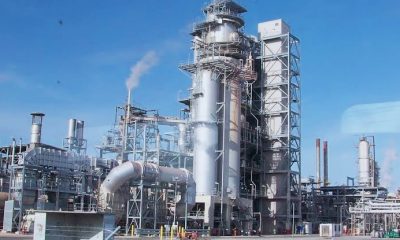
The management of the Port Harcourt Refining Company (PHRC) in Nigeria has spotlighted tanker drivers as a critical bottleneck in the refinery’s loading operations, attributing the sluggish pace of product distribution to their actions.
Despite the refinery operating at optimal capacity and boasting a steady supply of petroleum products, logistical inefficiencies tied to tanker movements are hampering smooth operations.
During a site visit to Area 5 of the refinery on Sunday, it was evident that petroleum refining activities were ongoing, with insiders confirming consistent daily production.
This observation aligns with management’s recent announcement that the refinery is sustaining production and has no technical hindrances affecting output.
However, at the loading bay, only three tankers were actively loading, while seven others idled in the queue, leaving most of the facility’s 18 loading points unutilized.
Curiously, only tankers marked with Nigerian National Petroleum Corporation (NNPC) labels were seen loading, raising questions about access protocols and potential restrictions on other marketers.
While the scene at the refinery was far from chaotic, the subdued activity at the loading bay contrasted sharply with the high productivity reported in the production areas.
Speaking on the issue, Worlu Chike Joel, the Terminal Manager of the refinery, acknowledged that the Petroleum Products Marketing Company (PPMC), a subsidiary of NNPC, has maintained uninterrupted truck-loading operations since Tuesday.
He reassured stakeholders that the refinery is running efficiently and has sufficient products to meet demand.
Joel attributed the slow turnover at the loading bay solely to tanker drivers, urging them to expedite their schedules and arrive promptly for loading.
“The loading infrastructure is underutilized not because of any fault on our part, but due to delays caused by the tanker drivers themselves,” Joel emphasized.
“We urge them to take advantage of the available facilities and ensure seamless product distribution.”
Industry analysts have highlighted that logistical challenges such as these could have broader implications for fuel supply across the region.
With the Port Harcourt Refinery playing a critical role in Nigeria’s downstream petroleum sector, delays at the loading bay could ripple through to fuel marketers and consumers, exacerbating existing pressures on the nation’s energy supply chain.
Stakeholders have called for an investigation into the root causes of these delays, pointing to potential issues such as bureaucratic bottlenecks, access restrictions for non-NNPC tankers, or operational inefficiencies within the transportation network.
Some have also suggested the need for reforms, including a review of the truck-loading protocols, to enhance turnaround times and minimize disruptions.
While the management has reassured the public of the refinery’s operational strength, the underutilization of its loading points underscores the urgent need for improved collaboration between all stakeholders in the petroleum distribution chain.
Without swift action to resolve these delays, the benefits of the refinery’s optimal production may not fully reach the end-users who rely on its products.





Five Die as Truck, Car Collide on Badagry Expressway

Two Killed as Trucks Collide, Burst Into Flames on Anambra Road

Stakeholders Raise Alarm Over Safety Gaps in Nigeria’s CNG and Electric Vehicle Transition

Female Driver Dies in Tragic Road Crash at Mongoro, Ile-Zik Area of Lagos

Physically Challenged Beggar Killed in Multi-Vehicle Crash on Lagos-Ibadan Expressway

Court Bars FRSC Officials From State Roads

24 Pupils Killed in Tragic Bus Crash During School Excursion in Uganda

Tyre Blowouts on Heavy Trucks

BYD Seal EV: Can It Challenge Traditional Sedans?

Colorado to Strengthen Driver Education Requirements

Slow Down: Man got his Family Killed by neglecting road signs

Which Bridge is the Tallest in the World?
Impatient Driving Cause Road Accident
How Roads are Constructed on the Mountain

Texas, USA suffers heavy flooding