
Articles
How fun is Car Drifting

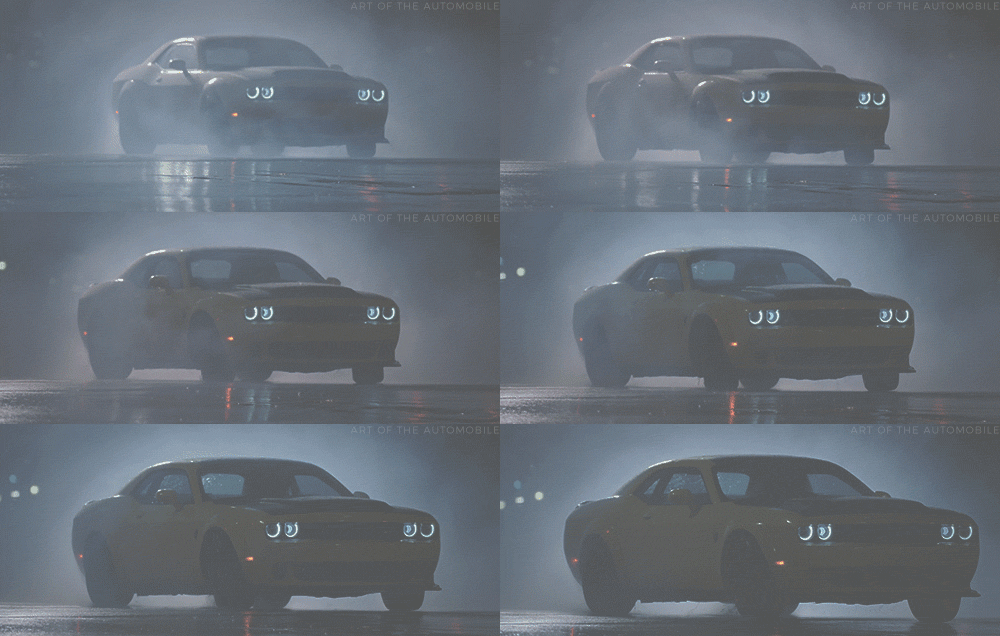
Car drifting, an exhilarating and visually stunning motorsport, has captivated enthusiasts worldwide.
Its roots trace back to Japan in the 1970s, but today, it’s a global phenomenon.
This article delves into the intricacies of car drifting, exploring its history, mechanics, techniques, and cultural impact.
Where Car Drifting Began
Drifting began in the mountains of Japan, where street racers sought to navigate winding roads as quickly as possible.
Kunimitsu Takahashi, a former motorcycle racer turned car driver, is often credited with pioneering the drifting technique.
His ability to maintain high speeds through corners by intentionally oversteering captured the imagination of many, laying the groundwork for modern drifting.
The sport gained formal recognition in the 1980s with the establishment of the D1 Grand Prix in Japan.
It wasn’t long before drifting found its way to the United States and other parts of the world, becoming a staple in motorsport events and car culture.
The Mechanics of Drifting
Drifting involves a delicate balance of control and chaos.
At its core, it’s about intentionally losing traction in the rear wheels while maintaining control of the vehicle.
Here’s a breakdown of the key mechanics:
1. Oversteer and Counter-Steer: The fundamental concept in drifting is oversteer, where the rear tires lose grip before the front tires.
Drivers counter this by steering in the opposite direction of the turn, a technique known as counter-steering.
2. Throttle Control: Managing the throttle is crucial. Too much acceleration can cause the car to spin out, while too little can result in regaining traction and losing the drift.
Skilled drifters modulate the throttle to maintain the desired angle and speed.
3. Weight Transfer: Shifting the car’s weight is essential for initiating and sustaining a drift. Techniques like feint drifting involve swaying the car from side to side to transfer weight and break traction.
4. Clutch Kicking and Handbrake: Clutch kicking involves quickly releasing and re-engaging the clutch to create a sudden burst of power, breaking the rear tires loose.
The handbrake (or e-brake) can also be used to lock the rear wheels and initiate a drift.
Simple Techniques for Drifting
Several techniques are employed in drifting, each with its nuances:
- Power Over: This technique involves applying a significant amount of throttle to break the rear wheels loose and initiate a drift. It’s typically used in high-horsepower cars.
- Handbrake Turn: By pulling the handbrake, the rear wheels lock up, causing the car to slide. This technique is often used to start a drift or adjust the car’s angle mid-drift.
- Clutch Kick: Releasing and quickly re-engaging the clutch while maintaining throttle can induce a drift by sending a shock through the drivetrain.
4. Feint Drift: This involves steering the car in the opposite direction of the turn before quickly steering back, creating a pendulum effect that shifts the weight and initiates a drift.
5. Braking Drift: Entering a corner with heavy braking shifts the weight to the front wheels, reducing rear traction and allowing the car to slide.
Special Cars Built for Drifting
Not all cars are suited for drifting. A proper drift car often includes modifications and features that enhance performance and control:
- Rear-Wheel Drive (RWD): Most drifters prefer RWD cars because they offer better control over oversteer compared to front-wheel drive (FWD) or all-wheel drive (AWD) vehicles.
- Limited-Slip Differential (LSD): An LSD ensures that both rear wheels spin at the same rate, providing better traction and control during drifts.
- Suspension Modifications: Upgraded suspension components, including coilovers and sway bars, help maintain stability and control during aggressive maneuvers.
- Increased Power: Higher horsepower engines provide the necessary power to break traction and maintain high-speed drifts.
- Reinforced Chassis: Drifting puts immense stress on a car’s frame, so reinforcements are often added to prevent damage and ensure durability.
Points to Consider in Car Drifting Competitive
Competitive drifting is judged based on several criteria, making it as much an art form as it is a sport:
1. Line: The ideal path a car should take through a course. Drivers aim to follow a designated line that showcases their control and precision.
2. Angle: The angle at which the car slides. A larger angle is often more impressive but harder to maintain.
3. Speed: Maintaining high speed throughout the drift is crucial for scoring well.
4. Style: The overall flair and execution of the drift. Judges look for smooth transitions, tire smoke, and the driver’s ability to link corners seamlessly.
5. Proximity: In tandem drifting, where two cars drift simultaneously, the proximity between the lead and chase cars is evaluated. Closer proximity demonstrates skill and control.
Cultural Impact
Drifting has transcended motorsports to become a cultural phenomenon.
The “Fast and Furious” film franchise played a significant role in popularizing drifting globally, showcasing it as a thrilling and stylish form of driving.
Video games like the “Need for Speed” series and “Gran Turismo” have further ingrained drifting into popular culture.
In Japan, drifting is more than just a sport; it’s a lifestyle. Events like the D1 Grand Prix and grassroots competitions draw large crowds, and the mountain passes where drifting originated are still popular among enthusiasts.
The cars, the techniques, and the culture have influenced car modifications, fashion, and even music.
In conclusion, drifting is a unique blend of skill, art, and adrenaline.
From its humble beginnings on Japanese mountain roads to its status as a global motorsport, it continues to evolve and captivate audiences.
Whether you’re a driver pushing the limits of control or a spectator mesmerized by the spectacle, drifting offers an unparalleled experience in the world of automotive sports.

Five Die as Truck, Car Collide on Badagry Expressway

Two Killed as Trucks Collide, Burst Into Flames on Anambra Road

Stakeholders Raise Alarm Over Safety Gaps in Nigeria’s CNG and Electric Vehicle Transition

Female Driver Dies in Tragic Road Crash at Mongoro, Ile-Zik Area of Lagos

Physically Challenged Beggar Killed in Multi-Vehicle Crash on Lagos-Ibadan Expressway

Court Bars FRSC Officials From State Roads

24 Pupils Killed in Tragic Bus Crash During School Excursion in Uganda

Tyre Blowouts on Heavy Trucks

BYD Seal EV: Can It Challenge Traditional Sedans?

Colorado to Strengthen Driver Education Requirements

Slow Down: Man got his Family Killed by neglecting road signs

Which Bridge is the Tallest in the World?
Impatient Driving Cause Road Accident
How Roads are Constructed on the Mountain

Texas, USA suffers heavy flooding