
News Update
Fuel subsidy: monthly consumption drops drastically

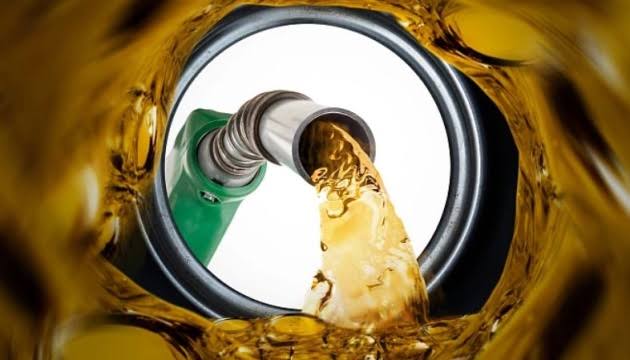
The Minister of Information and National Orientation, Mohammed Idris, stated that the importation of Premium Motor Spirit (PMS) into Nigeria has decreased by 50% following the removal of fuel subsidy on the product.
President Bola Tinubu announced the end of fuel subsidy on May 29, 2023. Subsequently, the Nigerian National Petroleum Company Limited, the country’s exclusive PMS importer, eliminated the subsidy.
Consequently, the price of petrol surged from approximately N198/litre to over N700/litre, varying by location.
Speaking at the third edition of the series of ministerial press conferences in Abuja on Wednesday, where the Minister of Health and Social Welfare addressed journalists, Idris said the removal of subsidies had resulted in a 50% reduction in fuel imports.
The Minister of Information said that oil imports have decreased by 50% since the cancellation of fuel subsidy.
On February 18, 2023, about three months before Tinubu scrapped off the subsidy, NNPCL Group CEO, Mele Kyari, revealed that Nigeria consumes about 66 million liters of PMS daily.
Kyari also said at the time that more than $400 billion was spent monthly for subsidy, noting that the subsidy had a negative impact on NNPCL’s cash flow.
NNPCL is the sole oil importer in Nigeria and has continued to play this role for several years, incurring huge fuel subsidy costs.
Other private oil traders have stopped importing PMS into Nigeria because they are having difficulty obtaining the dollars needed for PMS imports.
“Today, by law and the provisions of the Appropriation Act, there is a subsidy on the supply of petroleum products, particularly PMS imports into our country. In current data terms, three days ago, the landing cost was around N315/litre. Kyari said.
“Our customers are here; we are transferring to each of them at N113/litre. That means there is a difference of close to N202 for every litre of PMS we import into this country. In computation, N202 multiplied by 66.5 million litres, multiplied by 30 will give you over N400bn of subsidy every month.”
According to the latest position of the Minister of Information that oil imports have decreased by 50%, this means that the volume of imports into Nigeria has decreased by about 33 million liters per day, based on NNPCL data from February.
This means that PMS imports decreased by about 990 million liters in one month. Oil traders told one of our correspondents that the depot price of petrol, which is the cost of the commodity from NNPCL, is about 585 naira per litre.
The 33 million liter reduction means the country now saves about 19.3 billion naira daily and 579.1 billion naira monthly after the president eliminated subsidies on petrol services.
What the Minister of Information revealed may not be far from the truth, as oil traders have repeatedly confirmed that gasoline purchases have declined sharply.
“Petrol consumption has fallen to a record low,” said Bennett Kuri, National president of the Nigerian Association of Petroleum and Natural Gas Suppliers. The gas station closed its doors because it was no longer in business.
“The business is now very tough and marketers are struggling to survive. People don’t buy petrol again like before. So most filling stations are locking up because they cannot continue running at a loss.”
Korie also said that NOGASA’s 200-plus members may have to cease operations as oil traders find it increasingly difficult to finance their operations, a development that has led to the closure of 70% of the industry’s trading activities.
“Another issue is that of high bank interest rates. Today if you want to buy one truck of PMS, you will spend N30m. And if you go to a bank to get N30m at over 30 per cent interest rate, you know how much you will pay to the bank, all in the name of inflation.
“So if care is not taken, we will also withdraw our service because there is no way out. 70 per cent of oil traders are out of business, so it is better that the government looks into this issue before it gets out of hand. Many of them (operators) cannot talk but they come to us to complain,” he stated.
This comes as the African Export-Import Bank revealed on Wednesday that it has become the largest financier of oil and gas projects in Africa.
The bank said it invested $30 billion in industrial projects, of which Nigeria obtained 60% ($18 billion), despite the decline in global financing for hydrocarbon projects in Africa.
President of the African Export-Import Bank, Dr. Benedict Oramah believes that Africa must find creative solutions to its huge energy shortage.
Oramah was speaking at the National Oil Companies Forum at the ongoing Nigeria International Energy Summit in Abuja. He was represented by Executive Vice President of Global Commercial Banking, Afrexim, Haitham Al-Maayerji.
Oramah lamented that it is puzzling that on a continent with abundant oil, gas and solar resources, the majority of people still do not have access to reliable and affordable energy.
He explained that the continent lacks a large-scale traditional energy infrastructure, but stressed that this represents an opportunity to make a qualitative leap towards renewable technology more efficiently.
Our aspiration in the area of energy security and energy transition will remain aspiration unless we have access to adequate funding resources that we control. With a lot of international banks withdrawing funding out of the oil and gas sector, the investment in the industry has become severely limited with the corresponding impact on exploration and production.
“Afreximbank has intervened in a big way, quickly becoming the largest financier of oil and gas deals in the continent. The support provided to the sector by the bank is in excess of $30bn. Nigeria has been one of the largest beneficiaries accounting for almost 60 per cent of the total funding of the sector.
“And it’s important to the point that afreximbank has been able to make those modest contributions in the oil and gas sector because the bank is predominantly African in ownership and control,” he stated.
He added, “The strategic goal of the Africa Energy Bank is to play a leadership role in shaping the energy landscape in Africa through strategic partnership with proven African and international financial institutions and investors and also to provide sustainable financing in this area of the oil and gas sector.
“The Africa energy bank will need considerable support to get off the ground. We will need support from member states to achieve the level of capitalization that is adequate to support the energy sector,”




Five Die as Truck, Car Collide on Badagry Expressway

Two Killed as Trucks Collide, Burst Into Flames on Anambra Road

Stakeholders Raise Alarm Over Safety Gaps in Nigeria’s CNG and Electric Vehicle Transition

Female Driver Dies in Tragic Road Crash at Mongoro, Ile-Zik Area of Lagos

Physically Challenged Beggar Killed in Multi-Vehicle Crash on Lagos-Ibadan Expressway

Court Bars FRSC Officials From State Roads

24 Pupils Killed in Tragic Bus Crash During School Excursion in Uganda

Tyre Blowouts on Heavy Trucks

BYD Seal EV: Can It Challenge Traditional Sedans?

Colorado to Strengthen Driver Education Requirements

Slow Down: Man got his Family Killed by neglecting road signs

Which Bridge is the Tallest in the World?
Impatient Driving Cause Road Accident
How Roads are Constructed on the Mountain

Texas, USA suffers heavy flooding