
International Crash Report
Sixteen Killed in Fiery Bus–Truck Collision in Yemen

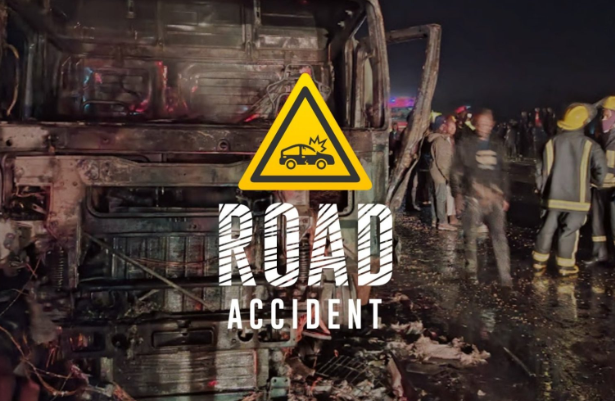
At least 16 people have been confirmed dead following a devastating bus–truck collision that triggered a massive fire along a major highway in Yemen, authorities and emergency responders reported on Tuesday.
- Also Read: Major Multi-Vehicle Collision Shuts Down M25 in Both Directions
- Hazardous Truck Crash Spills Asbestos on Major Highway in Australia
- Indiana Senate Advances Trucking Oversight Bill to Improve Road Safety
The fatal crash occurred when a passenger bus traveling between regional cities reportedly collided head-on with a heavy-duty cargo truck.
Witness accounts indicate that the impact caused both vehicles to erupt into flames almost immediately, trapping several passengers inside before rescue teams could intervene.
Initial reports suggest that many victims died at the scene due to severe burns and injuries sustained during the explosion-like fire that followed the collision.
Fire Turned Crash Into Mass Casualty Incident
Emergency services rushed to the accident location shortly after the crash was reported. However, responders faced significant challenges due to:
- Intense flames engulfing both vehicles
- Fuel leakage accelerating the fire
- Limited emergency infrastructure along the highway
- Delayed access for rescue vehicles
Survivors described scenes of panic as passengers attempted to escape through shattered windows while thick smoke spread rapidly inside the bus.
Medical teams transported injured victims to nearby hospitals, where several remain in critical condition.
While investigations are ongoing, preliminary findings point to several contributing risk factors commonly associated with deadly highway crashes:
- Excessive vehicle speed
- Driver fatigue during long-distance travel
- Poor nighttime visibility
- Aging commercial vehicles
- Weak enforcement of transport safety regulations
Authorities have not yet released the identities of the victims pending notification of families.
A Familiar Pattern Across Developing Road Networks
The Yemen tragedy highlights a recurring global danger involving bus and heavy truck collisions, particularly in regions where:
- Highways lack separation barriers
- Emergency response systems are limited
- Commercial transport vehicles operate under intense economic pressure
According to global transport safety studies by the World Health Organization, road traffic crashes claim approximately 1.19 million lives annually worldwide, with low- and middle-income countries accounting for the majority of fatalities despite having fewer vehicles.
Why This Matters to RoadKing.ng Readers
Although the incident occurred outside Nigeria, the crash mirrors risks frequently observed across African highways, including:
- Fuel tanker and passenger bus collisions
- Overloaded commercial transport vehicles
- Fire outbreaks after impact
- Limited post-crash rescue capacity
Similar crash patterns have been recorded on major Nigerian corridors such as the Lagos–Ibadan Expressway and East-West Road, where vehicle fires often transform survivable crashes into fatal disasters.
The Yemen incident reinforces a critical safety lesson:
When heavy vehicles collide, fire risk becomes the primary killer not the impact itself.
Growing Need for Fire-Resistant Transport Safety Measures
Transportation experts continue to emphasize preventive solutions such as:
- Improved vehicle inspection systems
- Mandatory driver rest enforcement
- Separation of heavy-duty traffic lanes
- Installation of onboard fire suppression technology
- Safer fuel transport standards
Without proactive intervention, similar high-fatality crashes will continue to occur globally.
This latest disaster adds to a growing list of deadly transport incidents recorded worldwide in 2026, underscoring the urgent need for governments and transport operators to prioritize road engineering, vehicle safety, and driver accountability.
Every major crash serves as a reminder that road safety failures are rarely isolated events, they are systemic issues demanding long-term solutions.












Five Die as Truck, Car Collide on Badagry Expressway

Two Killed as Trucks Collide, Burst Into Flames on Anambra Road

Stakeholders Raise Alarm Over Safety Gaps in Nigeria’s CNG and Electric Vehicle Transition

Female Driver Dies in Tragic Road Crash at Mongoro, Ile-Zik Area of Lagos

Physically Challenged Beggar Killed in Multi-Vehicle Crash on Lagos-Ibadan Expressway

Court Bars FRSC Officials From State Roads

24 Pupils Killed in Tragic Bus Crash During School Excursion in Uganda

Tyre Blowouts on Heavy Trucks

BYD Seal EV: Can It Challenge Traditional Sedans?

Colorado to Strengthen Driver Education Requirements
Two Killed as Trucks Collide, Burst Into Flames on Anambra Road
Five Die as Truck, Car Collide on Badagry Expressway

Slow Down: Man got his Family Killed by neglecting road signs

Which Bridge is the Tallest in the World?
Impatient Driving Cause Road Accident
How Roads are Constructed on the Mountain

Texas, USA suffers heavy flooding