
Articles
Deadliest Car Accidents in History: Lessons Learned from Tragedy


Roads connect people, cities, and cultures but they also remain one of the most dangerous places in modern life. Each year, car accidents claim more than 1.3 million lives worldwide, according to the World Health Organization.
Also Read: Nigeria’s Silent Killers: Rising Fatalities from Late-Night Road Accidents
While most collisions are minor, history has seen catastrophic accidents that shocked the world, claimed hundreds of lives, and reshaped how we think about road safety.
In this article, we’ll revisit some of the deadliest car and road accidents in history. More importantly, we’ll examine what caused them and the critical lessons learned to prevent similar tragedies in the future.
Why Study Deadly Accidents?
Discussing fatal accidents is never easy but it’s essential. Each large-scale tragedy serves as a case study in human error, engineering, or policy failure. By analyzing them, we uncover valuable insights into:
- Infrastructure weaknesses (bridges, tunnels, poorly designed highways).
- Human behavior (recklessness, fatigue, impaired driving).
- Vehicle issues (design flaws, overcrowding, poor maintenance).
- Emergency response readiness.
The goal is not morbid fascination—it’s prevention. Every tragedy has contributed to safer roads today.
The Deadliest Car and Road Accidents in History
1. The Salang Tunnel Disaster, Afghanistan (1982)
- Fatalities: Estimated 2,000+
- What Happened: A collision inside the 1.7-mile Salang Tunnel involving fuel trucks sparked explosions and fires. Toxic smoke spread quickly, trapping thousands of motorists.
- Lesson: Infrastructure must have emergency ventilation systems, especially in enclosed environments. The disaster highlighted the lethal combination of poor road design and heavy traffic in confined spaces.
2. The Mecca Tunnel Tragedy, Saudi Arabia (1990)
- Fatalities: 1,426
- What Happened: A ventilation system failure in the Al-Ma’aisim tunnel caused suffocation when a pedestrian stampede coincided with traffic congestion. While primarily a human stampede tragedy, cars trapped in the tunnel played a role.
- Lesson: Mass transportation planning must account for ventilation, crowd control, and emergency exits.
3. The Egypt Road Disaster (2002)
- Fatalities: 50+ (multi-vehicle pileup)
- What Happened: Foggy conditions on a desert highway caused a chain-reaction crash involving dozens of vehicles. Many victims were trapped as cars ignited.
- Lesson: Poor visibility remains one of the deadliest conditions on roads. Improved lighting, weather alerts, and driver education on fog driving could save lives.
4. Lagos Fuel Tanker Explosion, Nigeria (2018)
- Fatalities: 9 confirmed, but dozens injured and vehicles destroyed
- What Happened: A tanker carrying petroleum overturned on Otedola Bridge, sparking an inferno that consumed 50+ cars.
- Lesson: Strict regulation of fuel transport vehicles and emergency containment measures are essential, particularly in densely populated urban areas.
5. The United States’ Worst Pileups
The U.S. has seen numerous deadly pileups:
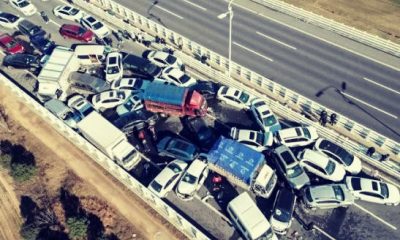
- Tennessee, 1990: 12 killed, 42 injured in a fog-induced crash on I-75 involving 99 vehicles.
- California, 2002: Dense fog led to a 216-car pileup near Los Angeles, killing 2 and injuring dozens.
- Texas, 2021: 130-vehicle crash during icy conditions in Fort Worth killed 6 and injured 65.
Lesson: Weather-related pileups demand better infrastructure design (barriers, warning systems) and stricter speed enforcement in hazardous conditions.
6. Philippine Bus and Truck Collision (2013)
- Fatalities: 22+
- What Happened: An overloaded passenger bus collided with a truck in Nueva Ecija, plunging into a ravine.
- Lesson: Overcrowding, speeding, and poor vehicle maintenance combine into deadly outcomes. Enforcement of passenger limits and inspections is critical.
7. The Car Ferry and Road Hybrid Tragedies
Though technically road-ferry accidents, events like the MV Doña Paz disaster (1987, Philippines), where over 4,000 people died highlight how poor regulation of passenger vehicles (cars, buses, trucks) boarding ferries can lead to catastrophic results.
Lesson: Safety doesn’t end on the road, regulation must extend to all interconnected transportation modes.
Common Patterns in Deadly Road Accidents
Across these tragedies, several recurring factors emerge:
- Human Error – Speeding, fatigue, distraction, or negligence often spark the initial event.
- Overcrowding – Buses, vans, and ferries carrying more passengers than allowed amplify the scale of disasters.
- Poor Infrastructure – Tunnels without ventilation, highways without barriers, and roads without lighting magnify risks.
- Hazardous Materials – Fuel trucks and chemical transports turn collisions into infernos.
- Delayed Emergency Response – In many cases, lack of quick medical intervention increased fatalities.
Lessons Learned and Safety Improvements
From these tragedies came reforms that save lives today.
Infrastructure Reforms
- Installation of tunnel ventilation systems and emergency exits.
- Improved road design with barriers, rumble strips, and wider lanes.
- Weather detection systems that trigger electronic road signs warning drivers of hazards.
Policy and Regulation
- Stricter enforcement of passenger capacity in buses and public transport.
- Mandatory rest periods for truck and bus drivers to combat fatigue.
- Stricter licensing for fuel and hazardous material transport.
Technology
- Modern cars come equipped with collision avoidance systems and automatic emergency braking, reducing pileup risks.
- Dashcams and CCTV now provide evidence for investigations, improving accountability.
- Connected vehicle technology allows real-time traffic updates to avoid dangerous conditions.
Remembering the Human Cost
Behind every statistic is a human story, families torn apart, communities scarred. For example:
- Survivors of the Salang Tunnel disaster recall helplessly gasping for air as smoke filled the tunnel.
- In Nigeria, families trapped on Otedola Bridge watched loved ones perish in flames.
- American families driving on seemingly ordinary foggy highways suddenly found themselves in 100-car pileups.
These stories remind us that road safety isn’t just about numbers, it’s about lives.
Preventing Future Tragedies
While we can’t erase the past, we can act on its lessons:
- For Governments: Invest in safer infrastructure, enforce vehicle regulations, and train emergency responders.
- For Automakers: Continue innovating safety features that protect against both human error and environmental hazards.
- For Drivers: Stay alert, respect weather conditions, and avoid risky behaviors like speeding or overloading vehicles.
Every individual and institution has a role in ensuring that history doesn’t repeat itself.
Conclusion: From Tragedy to Transformation
The deadliest car accidents in history may be haunting, but they also serve as turning points. Each disaster spurred reforms, innovations, and awareness campaigns that make modern driving safer. From tunnel ventilation systems to advanced crash-prevention technologies, today’s safety measures are often born from yesterday’s pain.
The lesson is clear: road safety is never finished. It evolves with every tragedy, every reform, and every technological leap. By learning from the past, we can build a future where such large-scale road disasters become relics of history.







Five Die as Truck, Car Collide on Badagry Expressway

Two Killed as Trucks Collide, Burst Into Flames on Anambra Road

Stakeholders Raise Alarm Over Safety Gaps in Nigeria’s CNG and Electric Vehicle Transition

Female Driver Dies in Tragic Road Crash at Mongoro, Ile-Zik Area of Lagos

Physically Challenged Beggar Killed in Multi-Vehicle Crash on Lagos-Ibadan Expressway

Court Bars FRSC Officials From State Roads

24 Pupils Killed in Tragic Bus Crash During School Excursion in Uganda

Tyre Blowouts on Heavy Trucks

BYD Seal EV: Can It Challenge Traditional Sedans?

Colorado to Strengthen Driver Education Requirements

Slow Down: Man got his Family Killed by neglecting road signs

Which Bridge is the Tallest in the World?
Impatient Driving Cause Road Accident
How Roads are Constructed on the Mountain

Texas, USA suffers heavy flooding