
International Crash Report
Good Samaritans Turn Victims: Fiery Multi-Vehicle Crash on I-295

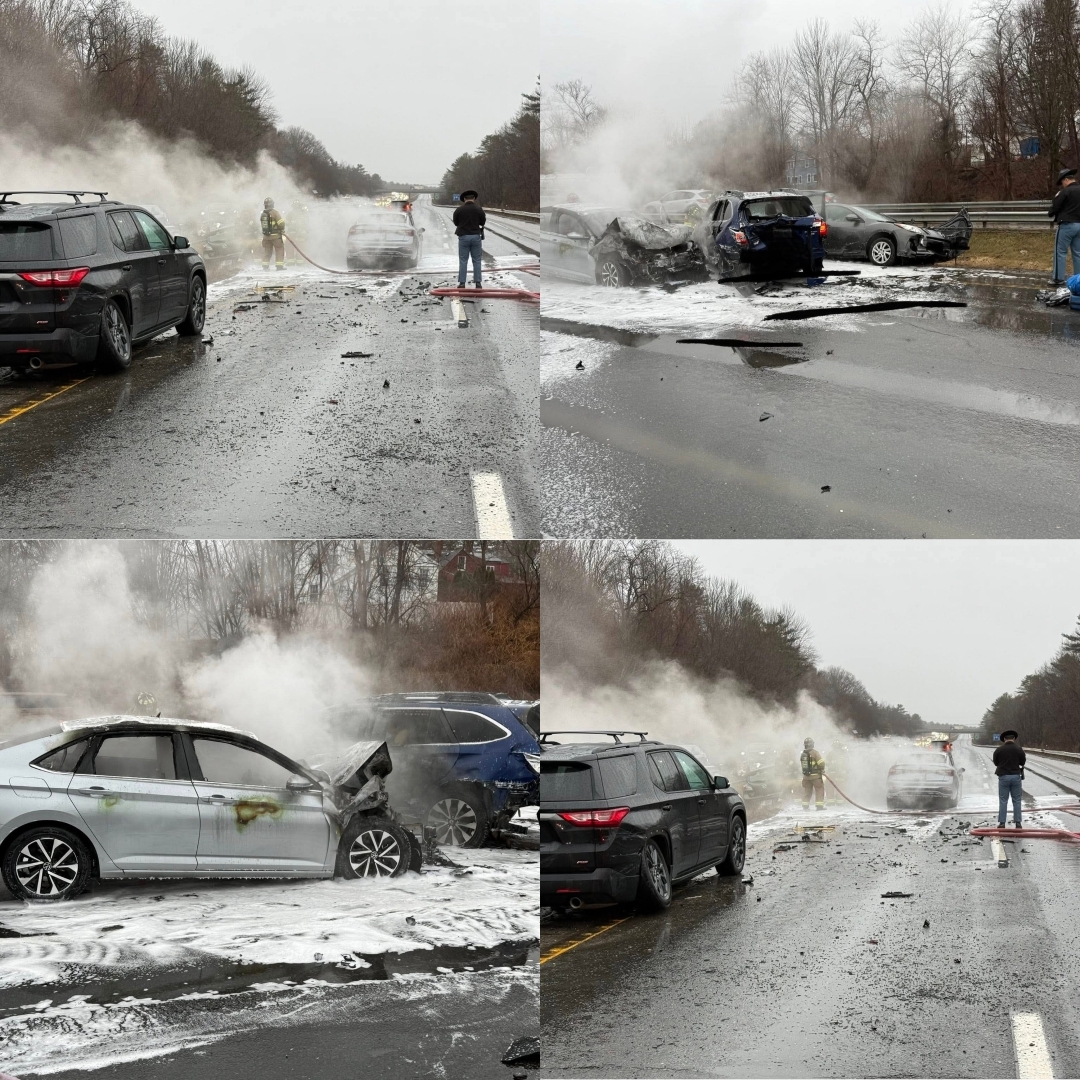
A routine act of kindness turned into a devastating roadside tragedy after a vehicle crashed into two cars that had pulled over to assist a stranded driver on Interstate 295 in Yarmouth, before bursting into flames.
Authorities confirmed that the collision occurred when the assisting vehicles were stationary on the roadside, creating a vulnerable situation that ultimately escalated into a high-impact, multi-vehicle crash followed by fire.
Emergency crews responded swiftly to the chaotic scene, battling flames and working to rescue victims amid thick smoke and wreckage.
According to preliminary reports:
A driver had reportedly stopped along the highway due to distress or vehicle trouble.
Two separate vehicles pulled over in a Good Samaritan effort to offer assistance.
Moments later, a third vehicle traveling at speed failed to stop or avoid the stationary cars, crashing directly into them.
The impact triggered a sudden fire outbreak, engulfing at least one of the vehicles.
The crash highlights one of the most dangerous realities of highway travel, stationary vehicles on high-speed roads are extremely exposed to secondary collisions.
Fire Outbreak and Emergency Response
The post-impact fire significantly complicated rescue operations.
Firefighters arriving at the scene had to:
- Contain the flames quickly to prevent spread to nearby vehicles
- Extract victims from damaged cars
- Secure the highway to prevent additional crashes
Paramedics treated injured victims on-site before transporting them to nearby medical facilities.
The severity of injuries has not been fully disclosed, but officials indicated that the situation was serious due to both impact trauma and fire exposure.
Why This Crash Is Especially Concerning
This incident falls into a dangerous category known as secondary crashes, collisions that occur after an initial stop or incident.
Key risk factors identified:
- High-speed highway environment
- Poor visibility or late driver reaction
- Lack of hazard warning (cones, flares, reflective signs)
- Drivers not slowing down near roadside activity
In many cases, drivers approaching such scenes underestimate the danger until it is too late.
RoadKing Safety Insight: The Hidden Danger of Helping on Highways
While stopping to help others is commendable, this crash underscores a harsh truth:
Highways are not safe zones for roadside assistance without proper precautions.
If you must stop to help:
- Pull far off the roadway, ideally beyond guardrails
- Turn on hazard lights immediately
- Use reflective triangles or flares if available
- Stand away from traffic lanes at all times
- Call emergency services instead of physically intervening when possible
Global Pattern: Good Intentions, Fatal Outcomes
Crashes involving Good Samaritans are not uncommon worldwide. Similar incidents have been recorded across the U.S., Europe, and Africa, often involving:
- Breakdown assistance gone wrong
- Pedestrians helping crash victims
- Vehicles stopping abruptly on highways
These situations frequently lead to chain-reaction crashes, which are often more severe than the initial incident.
Authorities Investigation Ongoing
Law enforcement agencies are currently investigating:
- Whether the driver who caused the crash was speeding or distracted
- Road visibility and lighting conditions at the time
- Whether proper hazard signals were in place
Officials are expected to release a full report once investigations are completed.
RoadKing.ng Editorial Note
This incident sends a powerful message to drivers everywhere:
Not every emergency requires you to stop physically, sometimes the safest help is calling for professional responders.
Acts of kindness should not cost lives.




Five Die as Truck, Car Collide on Badagry Expressway

Two Killed as Trucks Collide, Burst Into Flames on Anambra Road

Stakeholders Raise Alarm Over Safety Gaps in Nigeria’s CNG and Electric Vehicle Transition

Female Driver Dies in Tragic Road Crash at Mongoro, Ile-Zik Area of Lagos

Physically Challenged Beggar Killed in Multi-Vehicle Crash on Lagos-Ibadan Expressway

Court Bars FRSC Officials From State Roads

24 Pupils Killed in Tragic Bus Crash During School Excursion in Uganda

Tyre Blowouts on Heavy Trucks

BYD Seal EV: Can It Challenge Traditional Sedans?

Colorado to Strengthen Driver Education Requirements

Slow Down: Man got his Family Killed by neglecting road signs

Which Bridge is the Tallest in the World?
Impatient Driving Cause Road Accident
How Roads are Constructed on the Mountain

Texas, USA suffers heavy flooding