
International Crash Report
Dozens Injured in Two Separate Bus Crashes in Israel’s Negev

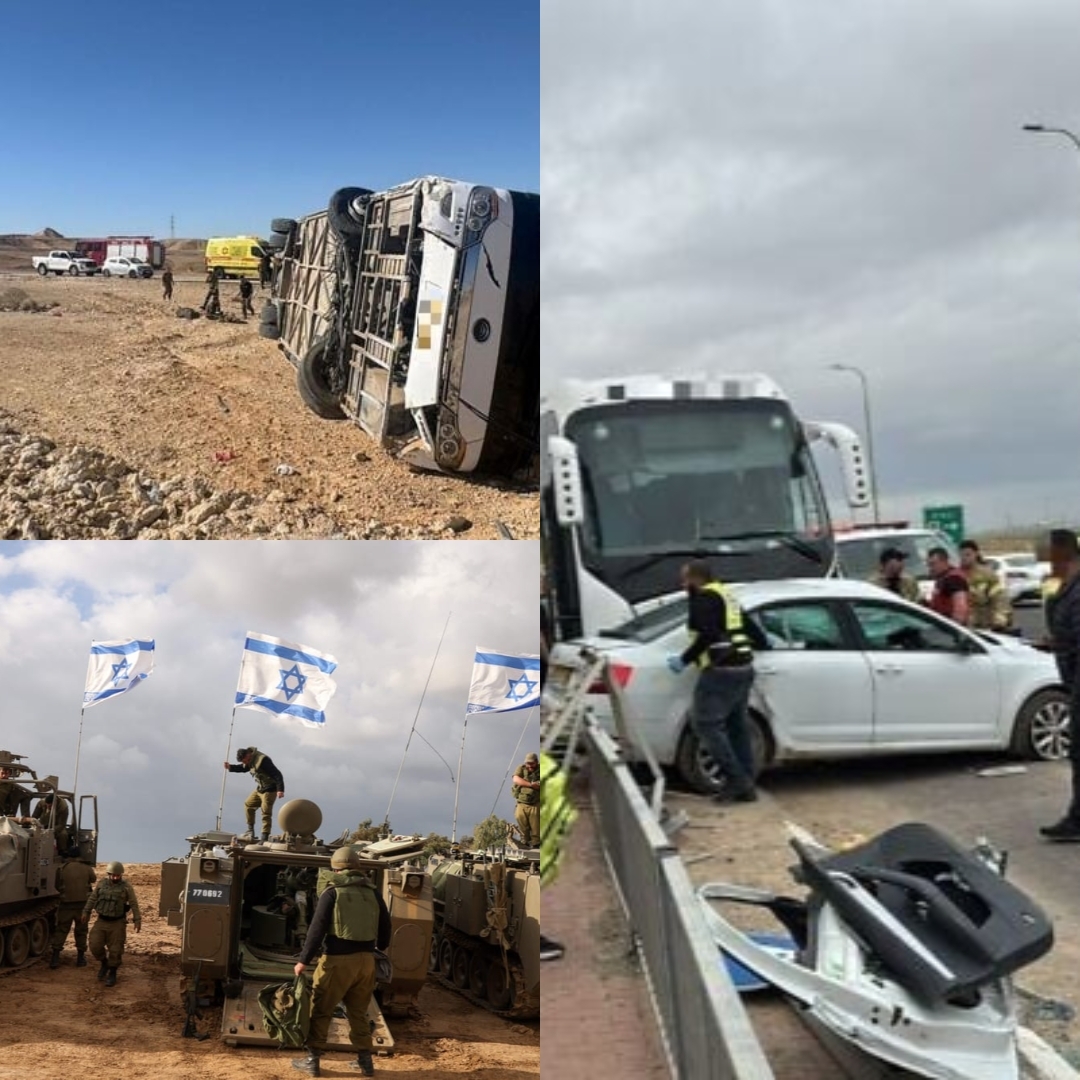
At least 29 people mostly soldiers of the Israel Defence Forces (IDF) were injured in two separate bus accidents on key roadways in Israel’s Negev desert region on Thursday, prompting emergency responses and temporary traffic closures, authorities and local media report.
Also Read:
- Bad Roads Investigation: How Poor Infrastructure Is Causing Global Road Crashes
- Three Dead in Multi-Vehicle Crash on Lagos–Ibadan Expressway
- Minibus Drivers Block Roads in Calabar Over ₦700 Daily Ticket Fees
Both accidents occurred within hours of each other along major transport corridors in the south of the country, highlighting ongoing concerns about bus safety, traffic conditions, and vehicle management on high‑speed rural routes.
What Happened — Two Bus Collisions, Multiple Injuries
1. Nevatim Junction Crash
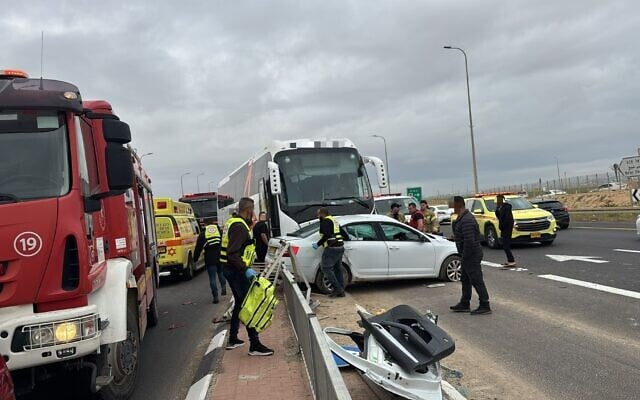
The first incident took place at the Nevatim Junction on Route 40, where a bus filled with trainees was travelling south when it collided with a small commercial vehicle in the early afternoon.
 The force of the impact threw several passengers from their seats, and emergency teams treated multiple injuries ranging from minor bruises to more serious trauma.
2. Bus Rollover Near Mitzpe Ramon
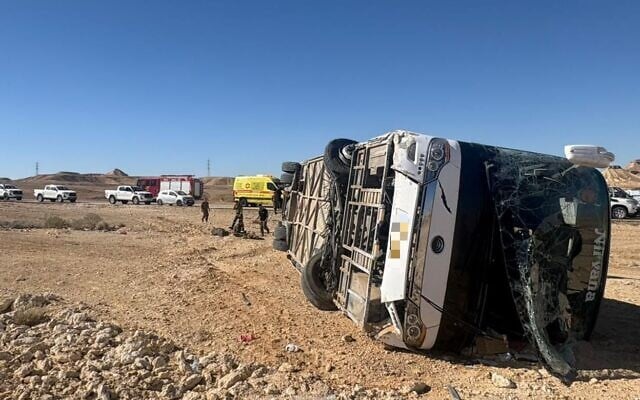
Just hours later, a second bus experienced a rollover accident near Mitzpe Ramon on Highway 25. The bus carrying additional military personnel veered off the road and tipped onto its side.
Passengers described chaotic scenes as the vehicle skidded on gravel and collided with the roadside embankment.
 Paramedics and rescue workers from Magen David Adom and local fire and rescue services rushed to both scenes, treating the injured on‑site and transferring dozens to regional hospitals in Be’er Sheva and surrounding communities.
According to the Israel Ministry of Health, none of the injuries are believed to be life‑threatening, though several passengers were admitted for further observation due to head and neck trauma, fractures, and soft‑tissue injuries.
Medical teams emphasized that quick action by emergency responders helped reduce the potential severity of the outcomes.
Military spokespeople confirmed that most of the injured were IDF soldiers between the ages of 18 and 25, many of whom were on routine transport between bases when the collisions occurred. Family members were notified and counseling services offered.
Police temporarily closed affected sections of the highways to clear wreckage, direct traffic, and investigate the circumstances of both accidents.
Route 40 and Highway 25 saw intermittent delays as debris was removed and traffic flow was restored.
Preliminary Causes Under Investigation
Investigators from the Israel Police National Traffic Unit have begun examining both crash scenes to determine contributing factors.
Early assessments suggest that a combination of speed, road surface conditions, and driver reactions to other vehicles may have played roles.
Authorities are also reviewing whether mechanical issues or passenger movement inside the buses contributed to the severity of the incidents.
Safety experts note that bus collisions and rollovers on highways often stem from:
- Sudden steering corrections at high speed
- Inadequate lane discipline or overtaking manoeuvres
- Loose surface or gravel near road shoulders
- Delayed braking in response to traffic changes
Bus travel remains a widely used means of transporting personnel and civilians across long distances, but highway environments present unique risks:
Higher speeds amplify crash forces, increasing the likelihood of rollovers and serious passenger injuries.
Bus stability diminishes when abrupt manoeuvres are made at speed or with uneven road surfaces.
Passenger behaviour matters, loose items and unrestrained movement inside vehicles can worsen outcomes.
Road safety authorities consistently recommend:
- Reduced speeds for heavy vehicles on rural highways
- Enhanced driver training focused on highway dynamics
- Proper seat restraint usage for all passengers
- Rigorous mechanical inspections before long transport routes






Six Passengers Killed in Fatal Road Crash Along Keffi–Akwanga

Pedestrian Struck & Killed on Kamo Road in Whangārei, New Zealand

UAE Road Safety Alert During Ramadan 2026
Five Killed as Fuel Tanker Crushes Tricycle in Bayelsa

Traffic Delays Hit North Texas After Multiple Highway Accidents
Mother, Son Survive Horrific SUV Overturn Crash in Lagos

Dozens Injured in Two Separate Bus Crashes in Israel’s Negev

Minibus Drivers Block Roads in Calabar Over ₦700 Daily Ticket Fees

Essential Road Safety Tips Every Traveler Must Know in 2026

Bad Vehicle Maintenance: The Silent Killer on Roads Worldwide
Three Killed in Multi-Vehicle Crash in Northern Ireland

Fatal Drunk Driving Crash Claims Woman’s Life on Clay Road

Lansdale Residents Lead Local Road Safety Initiative to Protect Community

How Turkey Is Using Real Wrecked Cars to Warn Drivers
Sixteen Killed in Fiery Bus–Truck Collision in Yemen
Motorcyclist Crash Shuts Down M40 Motorway in UK, Causes Major Traffic Disruption

Major Multi-Vehicle Collision Shuts Down M25 in Both Directions

Delhi Introduces Safety Reward Scheme for Citizens Who Assist Road Accident Victims

Senior Police Officer Dies in Fatal Road Crash in Borno
Dozens Injured in Two Separate Bus Crashes in Israel’s Negev

Slow Down: Man got his Family Killed by neglecting road signs

Which Bridge is the Tallest in the World?
Impatient Driving Cause Road Accident
How Roads are Constructed on the Mountain

Texas, USA suffers heavy flooding