
News Update
Chandigarh Traffic Police Identify Five Major Crash-Prone Road Stretches for Safety Upgrade


In a focused effort to improve mobility and reduce road injuries and fatalities, the Chandigarh Traffic Police, in collaboration with urban planning and engineering agencies, have identified five major traffic-prone and congestion-sensitive road stretches that require urgent intervention across the city.
Also Read:
1. Heavy Snowstorm Triggers Multi-Vehicle Crashes Across U.S. Midwest
2. Minibus Crash in South Africa Kills at Least 11 Pupils, Several Injured
3. Dubai Rolls Out Long-Range Electric Buses in Major Push for Green Public Transport
The initiative was announced on 21 January 2026 as part of an evidence-based approach to tackling road safety and traffic challenges.
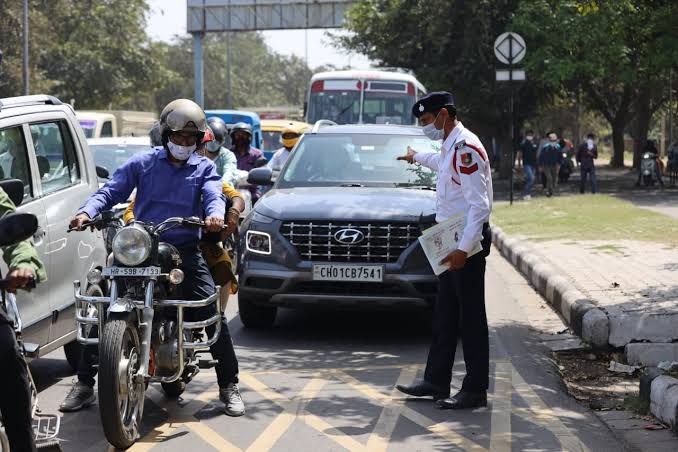 Officials say the identification of these key corridors stems from detailed field surveys and data analyses conducted under the Safe System Approach, a road safety framework that prioritises safer road design, enhanced traffic flow, and better protection of vulnerable users including cyclists and pedestrians.
The stretches flagged as most in need of targeted intervention are:
- Zirakpur Barrier to Hallomajra Light Point (NH-5)
- Hallomajra Light Point to Tribune Chowk (NH-5)
- Housing Board Light Point to Transport Light Point
- Mullanpur Barrier to Sector 25/38 Light Point
- PGI Chowk to Mullanpur Barrier
These segments were singled out due to recurring traffic congestion, conflict between high-speed and local traffic, inadequate infrastructure for pedestrians and cyclists, and a pattern of collisions, including serious and fatal crashes reported over recent years.
 In a coordinated workshop involving traffic police, officials from the UT Engineering Department, Municipal Corporation Chandigarh, the Architecture Department, and planning experts, detailed assessments were shared on road geometry flaws, pedestrian safety gaps, inadequate signalisation, and layout issues that contribute to risk in these corridors.
Police and traffic engineers noted that although Chandigarh’s roads are relatively modern, they still face challenges from heavy commuter volumes, mixed vehicle interactions, and rapid urban growth, factors that can overwhelm existing road infrastructure and enforcement patterns.
One senior traffic official explained that these high-risk stretches are not only bottlenecks for vehicles, but also present dangers for pedestrians and cyclists due to poor pedestrian crossings, mismatched lane usage and inadequate traffic calming measures.
Road safety strategists and traffic planners say interventions on these key corridors could include:
- Redesign of junctions and medians to eliminate hazardous merging points
- Improved pedestrian footpaths and crossing facilities
- Dedicated lanes or tracks for cyclists and two-wheelers
- Traffic signal optimisations and signage upgrades
- Better road markings and rumble strips to alert drivers in high-risk zones
Five special multi-departmental teams, each comprising traffic inspectors, planners, engineers, and representatives from urban development bodies, have been constituted to carry out these measures and oversee implementation.
Chandigarh, known for its sector-based city planning, still records numerous road incidents every year, particularly as traffic volumes have grown with urban expansion and rising vehicle ownership.
Recent data shows that traffic collisions have contributed to dozens of injuries and road delays, reinforcing the need for proactive design and enforcement solutions.
Authorities emphasise that identifying high-risk road stretches is just the first step; investments in infrastructure, along with consistent enforcement and public education, will be vital to reducing crash rates and improving road user safety.




Five Die as Truck, Car Collide on Badagry Expressway

Two Killed as Trucks Collide, Burst Into Flames on Anambra Road

Stakeholders Raise Alarm Over Safety Gaps in Nigeria’s CNG and Electric Vehicle Transition

Female Driver Dies in Tragic Road Crash at Mongoro, Ile-Zik Area of Lagos

Physically Challenged Beggar Killed in Multi-Vehicle Crash on Lagos-Ibadan Expressway

Court Bars FRSC Officials From State Roads

24 Pupils Killed in Tragic Bus Crash During School Excursion in Uganda

Tyre Blowouts on Heavy Trucks

BYD Seal EV: Can It Challenge Traditional Sedans?

Colorado to Strengthen Driver Education Requirements

Slow Down: Man got his Family Killed by neglecting road signs

Which Bridge is the Tallest in the World?
Impatient Driving Cause Road Accident
How Roads are Constructed on the Mountain
