
Update on Road Construction
Senator Asuquo Ekpenyong Facilitates 20km Okomita-Uyanga-Ehom Road Rehabilitation

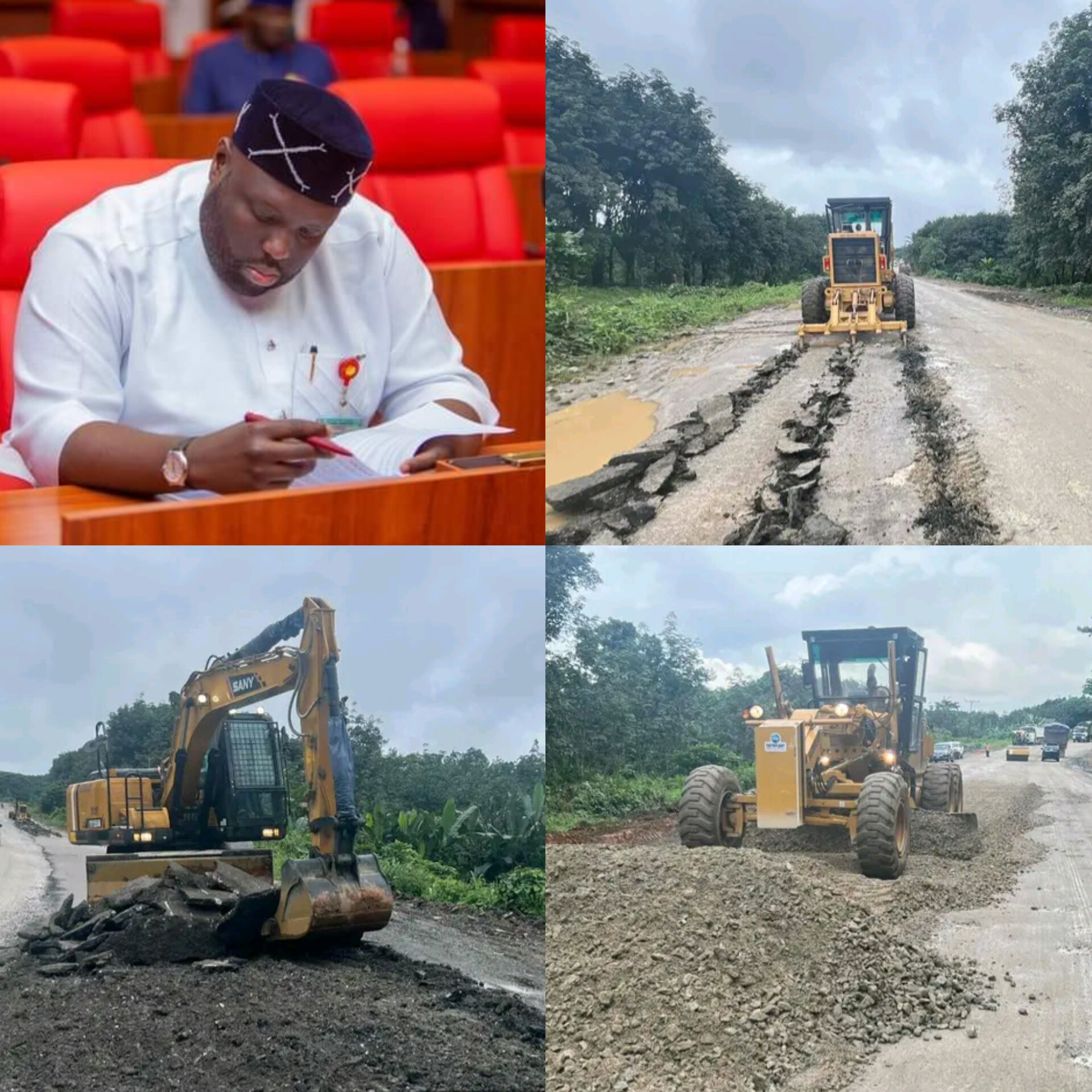
In August 2025, communities in Akamkpa and Biase Local Government Areas, Cross River State, were abuzz with renewed hope, as Senator Asuquo Ekpenyong, acting as Chairman of the Senate Committee on the Niger Delta Development Commission (NDDC), led an inspection of several road reconstruction projects, among which is the Okomita-Uyanga-Ehom road (sometimes referred to in media as Okom Ita-Uyanga-Ehom).

 Also Read: Senate Committee Inspects Ongoing NDDC Road Projects in Cross River State
This stretch of road, measuring about 20 kilometres, connects multiple communities in Akamkpa and Biase LGAs. It has long suffered from neglect and decay, with potholes, flooding, narrow passages, and lack of proper drainage making travel difficult, especially during the rainy season.
Senator Ekpenyong’s involvement, through the NDDC’s Renewed Hope program, signals serious government commitment to turning this vital corridor into a durable, reliable artery for transportation, commerce, health, and everyday human activity. But what does the work involve, what progress has been made, what should local residents expect, and what challenges remain? This article lays it all out.
1. Who is Senator Asuquo Ekpenyong & What Is His Role
 Senator Asuquo Ekpenyong represents Cross River South Senatorial District. Elected to the Senate in 2023, he is among the younger lawmakers in the 10th National Assembly.
As Chairman of the Senate Committee on the Niger Delta Development Commission (NDDC), he has oversight responsibility for the NDDC’s projects, ensuring accountability, inspecting progress, and liaising between communities, contractors, and government institutions. The committee’s mandate includes ensuring projects funded via NDDC are executed transparently, with proper quality, and with timely delivery.
2. Overview of the Okomita-Uyanga-Ehom Road Project


- Location & Scope: The road spans approximately 20 kilometres, connecting Okomita, Uyanga, and Ehom, traversing Akamkpa and Biase LGAs in Cross River State.
- Other Projects Inspected Simultaneously: Alongside this, the NDDC committee also inspected the 1.5 km Idundu Junction-Idundu Bridge Road in Akpabuyo LGA, and 10.8 km of the Aking-Osomba Road in Akamkpa.
- Contractor: Messrs Faith Plant Nigeria Ltd. is executing the project.
- Objectives: Rehabilitate the road, improve drainage, ensure durability, open up communities which have been cut off during rainy periods, reduce travel times, boost trade, facilitate access to markets, schools, healthcare, and generally improve the quality of life for residents along the corridor.
3. Why This Road Matters: Socio-economic and Human Impact

 The importance of this road cannot be overstated. Below are key reasons why the Okomita-Uyanga-Ehom project is critical:
- Accessibility & Mobility: For years, poor road conditions, deep potholes, washed-off sections, poor gutters have hampered movement of people and goods. Difficult terrain during rainy seasons isolates communities, hindering school attendance, emergency healthcare access, and access to markets.
- Trade and Agriculture: Many communities along this route engage in subsistence and small-scale farming. With bad roads, transporting farm produce is expensive, perishable goods spoil, and market access is reduced. Improved roads boost incomes.
- Education and Health: Students and teachers traverse rough paths; ambulances and clinic supplies are delayed or damaged. Reliable road linkages improve response times for emergencies.
- Economic Multiplier: A good road opens up opportunities, businesses, services, supplies, commuters, logistics. Fuel costs lower, vehicle maintenance less frequent, time lost reduced, all contributing to economic benefit.
- Government Credibility & Community Trust: Successful delivery of this project under Senator Ekpenyong and NDDC helps build trust in public institutions, especially in the Niger Delta where communities often feel left out or neglected.
4. Key Players & Execution: Who’s Doing What
| Actor | Role & Responsibility |
|---|---|
| Senator Asuquo Ekpenyong (Chairman, Senate Committee on NDDC) | Oversight, inspection, stakeholder engagement, ensuring legislative support, ensuring quality and accountability. |
| NDDC (Niger Delta Development Commission) | Funding, project planning, supervision, monitoring of contractor, ensuring compliance with quality standards. |
| Faith Plant Nigeria Ltd. (Contractor) | Execution of the physical works — earthworks, drainage, paving, surfacing, etc. Quality of work, timeliness, local labour use. |
| Cross River State & Local Governments | Facilitation: land/right of way, community mobilization, local stakeholder engagement, sometimes cost contribution or oversight. Representatives (Local Government Chairmen, Councillors) are part of inspections. |
| Communities & Users | Input: reports of road sections in bad condition, usage patterns; feedback during inspection tours; expected beneficiaries. |
5. Progress Report: What Has Been Done

 Based on the inspection reports and statements from the NDDC and Senator Ekpenyong:
- Physical inspection carried out by the Senate Committee and NDDC to assess current state and progress of works.
- Some earthworks, drainage works, and preparatory work (grading, removal of debris, bush clearing) are reported to be underway. (While precise stages weren’t always detailed, photos from the site and comments from officials hinted at visible initial works in many problematic sections.)
- Commitments by NDDC MD Dr. Samuel Ogbuku and Executive Director Projects Obong Victor Antai that quality will be maintained, transparency upheld, and that the project is considered a lifeline for commerce, agriculture, education, and healthcare.
- Full backing from Senate leadership. The leadership of the 10th Senate under President of the Senate, Senator God’swill Akpabio, is said to support this and similar infrastructure projects.
6. What Remains to Be Done & Projected Timeline
While work has begun, there is still much that remains before the road is fully serviceable:
- Complete all grading and earthworks for the full 20 km stretch. Some sections are worse than others and may need full rebuilding of subgrade.
- Construct or rehabilitate drainage systems: culverts, side drains, ensuring erosion control. Without proper drainage, road foundations degrade quickly.
- Paving / surfacing with asphalt (or other durable material) to make the road all-weather and reduce dust, mud, and travel delays.
- Installation of road furniture: signage, markings, guardrails where necessary, shoulders, possibly pedestrian walkways or safety zones near schools.
- Regular oversight and mid-project quality reviews to address defects early.
- Final testing and commissioning of road.

 Projected Timeline: While no official completion date has been universally given in the public statements, the pace of work and the level of commitment (from inspection visits, oversight, NDDC statements) suggest that the project may take 12-18 months from the date of visible commencement to reach practical completion, assuming there are no major delays (rain, funding, logistical, land/right‐of-way).
7. Challenges & Risks Ahead
Even with high-level support, several challenges could stall or reduce the impact of the project.
- Funding Delays or Insufficient Disbursement
- Even though the NDDC is funding, there must be regular, full payments to contractor; delays can halt work.
- Inflation could raise the cost of materials (bitumen, aggregate, etc.), making original budgets tight.
- Weather and Climate & Environmental Factors
- Heavy rain could delay paving, degrade earthworks, wash away drainage structures.
- Erosion and flooding, if not properly managed, can damage new works.
- Quality Control
- Substandard materials or poor workmanship could lead to early road failure.
- Monitoring must be consistent and ensure contractor compliance with required standards.
- Land Acquisition / Right of Way Issues
- Some stretches may pass through private farms, properties. Disagreements, compensation issues or delays could arise.
- Utilities (power lines, water pipes) may need relocation.
- Community Disruption
- While construction is ongoing, residents may suffer from roadblocks, detours, dust, damage to vehicles, business disruption. Managing this will require good communication and mitigation.
- Corruption & Accountability
- As with many public works, there is a risk of cost inflation, kickbacks, misprocurement, or contracts awarded without full competitiveness.
- Oversight from Senate Committee, NDDC, civil society, media will be essential to prevent misuse of funds.
- Maintenance Post-Completion
- Once finished, regular maintenance (especially drainage, patches, shoulders) must be budgeted; otherwise, road will deteriorate again.
8. Community Voices: Expectations, Concerns, and Hope
From interviews, reports and public statements, here are what residents along the route are saying:
- Many households are hopeful: “Finally, travel that used to take hours now may take minutes,” remarks about delivering goods to market smoothly, children going to school without getting shoes ruined, clinics and hospitals more reachable.
- Some are cautious: “We have seen promises before; what we need is asphalt, not dust,” says a trader in Uyanga.
- Local commuters and transporters believe fuel costs and vehicle maintenance will fall, poor roads mean more wear and tear, more fuel used, more time wasted.
- Concern over transparency: requests for published timelines, visible signage at work sites, periodic progress reports, involvement of local leaders.
9. Broader Implications for Cross River State & the Niger Delta
- Economic Growth: Improved roads such as Okomita-Uyanga-Ehom are vital to the Cross River economy — agriculture, tourism, trade. Cross River hosts tourist sites, farm zones; better roads enhance access and increase revenue.
- Linkages to Other Infrastructure Projects: Often roads are the missing piece in leveraging investment whether in agricultural processing, markets, health services, education. Enhanced road networks can unlock value across sectors.
- NDDC’s Renewed Hope Agenda: This project is one of many being inspected under NDDC’s renewed infrastructure push. Success here builds momentum to demand and deliver similar roads across Niger Delta.
- Political Capital / Public Trust: Senator Ekpenyong is staking political credibility on delivery. If executed well, this builds trust; if delayed, could erode it.
- Environmental & Safety Gains: Safer roads, less chance of accidents due to road failure; less dust, better air quality; less risk for pedestrians/motorcycles in bad weather.
10. RoadKing’s Analysis & Recommendations
In evaluating this project, here’s what seems promising and what needs extra attention, plus recommendations to ensure success.
What Looks Promising
- High-level oversight by Senate & NDDC; inspection tours show accountability.
- Identification of contractor and funding source (Faith Plant Nigeria Ltd. via NDDC).
- Clear benefits articulated by Senator Ekpenyong and NDDC leadership, including trade, health, education access.
- Communities are involved in inspections; local governments have roles.
What Needs More Focus
- Clear published timeline for completion, including interim deliverables (road usable, drainage, full paving).
- Transparent budget breakdown and public disclosure of payments to contractor.
- Regular updates to local communities to manage expectations.
- Ensuring environmental and drainage issues are properly handled, especially given heavy rainfall in the region.
Recommendations
- Set up a Community Monitoring Structure: Local committees of community leaders, road users, local government reps to monitor progress, quality, and report issues.
- Ensure Quality Materials: Use of correct grade bitumen, properly compacted subgrade, efficient drainage, good signage.
- Stakeholder Engagement: Regular town hall meetings to inform about disruptions, alternate routes, expected finish-lines.
- Environmental Safeguards: Adequate drainage to avoid flooding; erosion control, maintaining vegetation where necessary.
- Maintenance Plan: NDDC / state government should plan for maintenance budgets post‐completion.
Conclusion
The Okomita-Uyanga-Ehom road rehabilitation project stands as a significant piece of the promise of development for communities in Akamkpa and Biase LGAs. Thanks to the facilitation of Senator Asuquo Ekpenyong and his work with the NDDC, there is real movement from rhetoric to action.
If carried out with honesty, quality, and community involvement, the road will deliver far-reaching benefits: faster trade, safer school runs, better health access, reduced transport costs, and stronger economic growth.
But the real test will be sustained commitment from contractor, from oversight agencies, from the political leadership to see the project through to finish, and not allow premature wear, neglect, or abandonment.
For the people of Uyanga, Okomita, Ehom and neighboring villages, this road could be more than asphalt, it could be an artery of hope.


Five Die as Truck, Car Collide on Badagry Expressway

Two Killed as Trucks Collide, Burst Into Flames on Anambra Road

Stakeholders Raise Alarm Over Safety Gaps in Nigeria’s CNG and Electric Vehicle Transition

Female Driver Dies in Tragic Road Crash at Mongoro, Ile-Zik Area of Lagos

Physically Challenged Beggar Killed in Multi-Vehicle Crash on Lagos-Ibadan Expressway

Court Bars FRSC Officials From State Roads

24 Pupils Killed in Tragic Bus Crash During School Excursion in Uganda

Tyre Blowouts on Heavy Trucks

BYD Seal EV: Can It Challenge Traditional Sedans?

Colorado to Strengthen Driver Education Requirements
Two Killed as Trucks Collide, Burst Into Flames on Anambra Road
Five Die as Truck, Car Collide on Badagry Expressway

Slow Down: Man got his Family Killed by neglecting road signs

Which Bridge is the Tallest in the World?
Impatient Driving Cause Road Accident
How Roads are Constructed on the Mountain

Texas, USA suffers heavy flooding