
Articles
The Importance of Seat Belts Use: Life-Saving Statistics

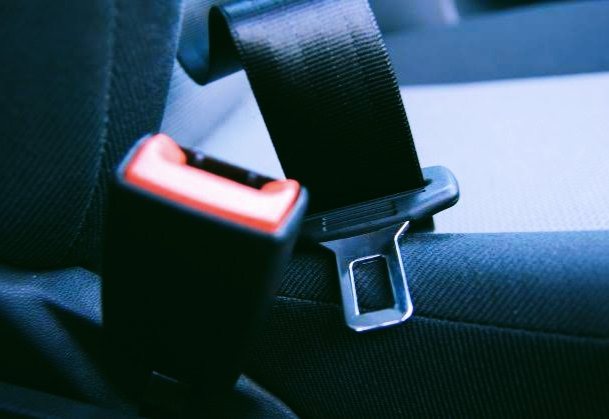
Seat belts are one of the most critical safety features in any vehicle, yet their use is often taken for granted or, worse, ignored.
Despite extensive research, public safety campaigns, and legislation mandating seat belt use in most countries, some drivers and passengers still choose not to buckle up.
This is a risky decision, as seat belts have been proven to reduce the severity of injuries and save lives in the event of an accident.
Understanding the importance of seat belt use, along with the life-saving statistics that back it up, can help drivers and passengers make better, safer choices on the road.

Back seat belts
1. How Seat Belts Work
Seat belts are designed to keep occupants of a vehicle securely in their seats during a collision or sudden stop.
When an accident occurs, the force can throw unrestrained passengers into the dashboard, windshield, or other parts of the car, often resulting in serious injuries or death. Seat belts work by:
- Distributing the force of the collision across the chest, pelvis, and shoulders, which are some of the strongest parts of the body.
- Preventing ejection from the vehicle, which is critical, as being ejected from a vehicle dramatically increases the risk of fatal injuries.
- Slowing the body down gradually, reducing the impact force that the body would otherwise experience from the collision.
By keeping occupants in place, seat belts can also prevent secondary impacts within the vehicle, such as hitting other passengers or interior components, which can be equally dangerous.
2. Life-Saving Statistics on Seat Belt Use
The numbers behind seat belt use speak volumes about its importance in saving lives.
According to data from the National Highway Traffic Safety Administration (NHTSA), seat belts saved approximately 14,955 lives in the United States alone in 2017.
The agency estimates that seat belts reduce the risk of fatal injury to front-seat passengers by 45% and the risk of moderate to critical injury by 50%.
The Centers for Disease Control and Prevention (CDC) has reported that, for drivers and front-seat passengers, using a seat belt reduces the risk of death by about 50%.
Additionally, unbelted rear-seat passengers increase the fatality risk for both themselves and the occupants in front of them, as unrestrained passengers can be thrown forward with tremendous force during a crash.
In global terms, the World Health Organization (WHO) reports that seat belts can reduce the risk of death for drivers and front-seat passengers by 40% to 50% and by 25% to 75% for rear-seat passengers.
3. Seat Belt Laws and Their Impact
Many countries have implemented strict seat belt laws in an effort to reduce road fatalities and injuries.
These laws typically mandate seat belt use for drivers, front-seat passengers, and in some places, rear-seat passengers as well.
Penalties for non-compliance can include fines and even points on a driver’s license, depending on the jurisdiction.
In the United States, the Click It or Ticket campaign, which began in the early 2000s, has played a significant role in increasing seat belt use nationwide.
As of 2020, 90.3% of people in the USA reported using seat belts, up from just 58% in 1994.
Similar campaigns worldwide, such as the European Road Safety Charter, have also contributed to significant improvements in seat belt usage rates.
Seat belt laws not only increase compliance but also reduce healthcare costs associated with traffic accidents.
According to the CDC, seat belt use in the United States saves over $50 billion in medical costs and lost productivity each year.
Countries that have strong enforcement of seat belt laws tend to see lower rates of traffic fatalities and serious injuries.
4. Myths and Misconceptions About Seat Belt Use
Despite the overwhelming evidence supporting the life-saving benefits of seat belts, several myths and misconceptions persist.
Some people believe that seat belts are unnecessary for short trips or when driving at low speeds. However, most accidents occur close to home and at speeds under 40 mph, where seat belts are still crucial.
Another common misconception is that seat belts can trap people in their vehicles in the event of a fire or water submersion.
While these situations are extremely rare, the odds of surviving them are far greater if you are wearing a seat belt, as it helps prevent you from being knocked unconscious or incapacitated in the initial impact.
Some people also believe that airbags alone provide sufficient protection, but this is not true. Airbags are designed to work in conjunction with seat belts.
Without a seat belt, the force of the airbag can cause significant injuries, as it deploys rapidly and with great force.
5. The Importance of Proper Seat Belt Use
Wearing a seat belt improperly can significantly reduce its effectiveness. To maximize safety, follow these steps:
- Position the lap belt low across the hips, not the stomach. This ensures the force of the crash is absorbed by the pelvis, which is a strong part of the body.
- Adjust the shoulder belt so that it fits snugly across the chest and shoulder. The shoulder belt should never be placed behind the back or under the arm, as this can cause severe injury in the event of an accident.
- Make sure the seat belt is free of twists and snug. A loose or twisted belt can reduce the protection it offers in a crash.
It’s also important to ensure that children are properly restrained in age-appropriate car seats or boosters.
According to the CDC, using child safety seats reduces the risk of death by 71% for infants and 54% for toddlers in passenger vehicles.
Seat belts are one of the most effective safety devices in vehicles, reducing the risk of fatal injuries and improving the chances of surviving a crash.
The statistics are clear: seat belts save lives, and the simple act of buckling up can make the difference between life and death in a car accident.
Drivers and passengers alike should make seat belt use a habit, regardless of the distance or speed of travel.
By following proper seat belt usage techniques and ensuring that all passengers are restrained, we can help reduce the devastating impact of traffic accidents worldwide.







Five Die as Truck, Car Collide on Badagry Expressway

Two Killed as Trucks Collide, Burst Into Flames on Anambra Road

Stakeholders Raise Alarm Over Safety Gaps in Nigeria’s CNG and Electric Vehicle Transition

Female Driver Dies in Tragic Road Crash at Mongoro, Ile-Zik Area of Lagos

Physically Challenged Beggar Killed in Multi-Vehicle Crash on Lagos-Ibadan Expressway

Court Bars FRSC Officials From State Roads

24 Pupils Killed in Tragic Bus Crash During School Excursion in Uganda

Tyre Blowouts on Heavy Trucks

BYD Seal EV: Can It Challenge Traditional Sedans?

Colorado to Strengthen Driver Education Requirements

Slow Down: Man got his Family Killed by neglecting road signs

Which Bridge is the Tallest in the World?
Impatient Driving Cause Road Accident
How Roads are Constructed on the Mountain

Texas, USA suffers heavy flooding