
Driver Training
Driver’s Blind Spot: impact on driving


The driver’s blind spot is a critical aspect of road safety that demands careful consideration.
Also known as the “blind zone” or “blind spot area,” this is the region around a vehicle that is not visible to the driver through the rearview and side mirrors.
Awareness of the blind spot is crucial for both experienced and novice drivers, as failure to account for it can lead to accidents, collisions, and other road hazards.
Understanding the Blind Spot
The blinded zones varies among vehicles but is generally located to the rear and sides.
It is particularly pronounced in larger vehicles, such as trucks and SUVs, where the blind spot can extend significantly.
Common blind spots are found on the sides of the vehicle, just behind the driver’s seat and extending towards the rear.
These areas are not easily visible through standard mirrors, making it essential for drivers to adopt specific strategies to mitigate the risks associated with it.
Factors Contributing to Blind Spots
Several factors contribute to the existence of blind spots:
1. Mirror Design
Traditional mirrors are designed to provide a broad view of the road but have inherent limitations.
Adjusting them correctly can minimize blind spots, but it is impossible to eliminate them entirely.
2. Vehicle Design
The physical design of a vehicle influences the size and location of blind spots.
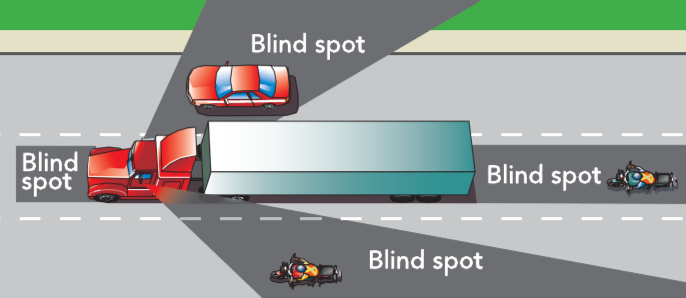
Trucks blind spot
Larger vehicles tend to have more substantial blind spots, requiring drivers to be extra cautious.
3. Obstructions
Elements like passengers, cargo, and window pillars can obstruct a driver’s view and contribute to blind spots.
It is crucial to manage these obstructions to maintain optimal visibility.
Mitigating Blind Spots
1. Adjusting Mirrors
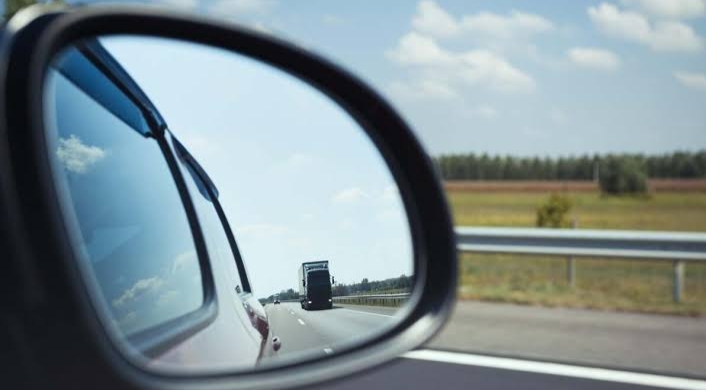
Proper mirror adjustment is crucial for minimizing blind spots.
Drivers should position side mirrors to cover areas not visible in the rearview mirror, ensuring seamless visibility around the vehicle.
2. Checking Blind Spots

Drivers should develop a habit of checking blind spots before changing lanes or making turns.
Quick glances over the shoulder can reveal any vehicles that may be lurking in the blind spot.
3. Blind Spot Detection Systems
Many modern vehicles are equipped with blind spot detection systems that use sensors and alerts to warn drivers of nearby unforseen vehicles. These systems provide an additional layer of safety.
4. Stay Visible to Others
Make an effort to stay visible to other drivers, especially when driving alongside larger vehicles. Avoid lingering in their blind spots and try to maintain a safe distance.
The driver’s blind spot is an inherent challenge in road safety, demanding vigilance and proactive measures from drivers.
By understanding the factors contributing to blind spots and adopting appropriate strategies, motorists can significantly reduce the risks associated with this crucial aspect of driving.
Whether through proper mirror adjustments, regular checks of blind zone, or the assistance of advanced detection systems, drivers play a vital role in ensuring their safety and the safety of others on the road.
Roadking.ng says; Stay alert, stay prepared, and stay safe.









Five Die as Truck, Car Collide on Badagry Expressway

Two Killed as Trucks Collide, Burst Into Flames on Anambra Road

Stakeholders Raise Alarm Over Safety Gaps in Nigeria’s CNG and Electric Vehicle Transition

Female Driver Dies in Tragic Road Crash at Mongoro, Ile-Zik Area of Lagos

Physically Challenged Beggar Killed in Multi-Vehicle Crash on Lagos-Ibadan Expressway

Court Bars FRSC Officials From State Roads

24 Pupils Killed in Tragic Bus Crash During School Excursion in Uganda

Tyre Blowouts on Heavy Trucks

BYD Seal EV: Can It Challenge Traditional Sedans?

Colorado to Strengthen Driver Education Requirements

Slow Down: Man got his Family Killed by neglecting road signs

Which Bridge is the Tallest in the World?
Impatient Driving Cause Road Accident
How Roads are Constructed on the Mountain

Texas, USA suffers heavy flooding