
Articles
Nigerian Man Refuses to Enter Driverless Bus

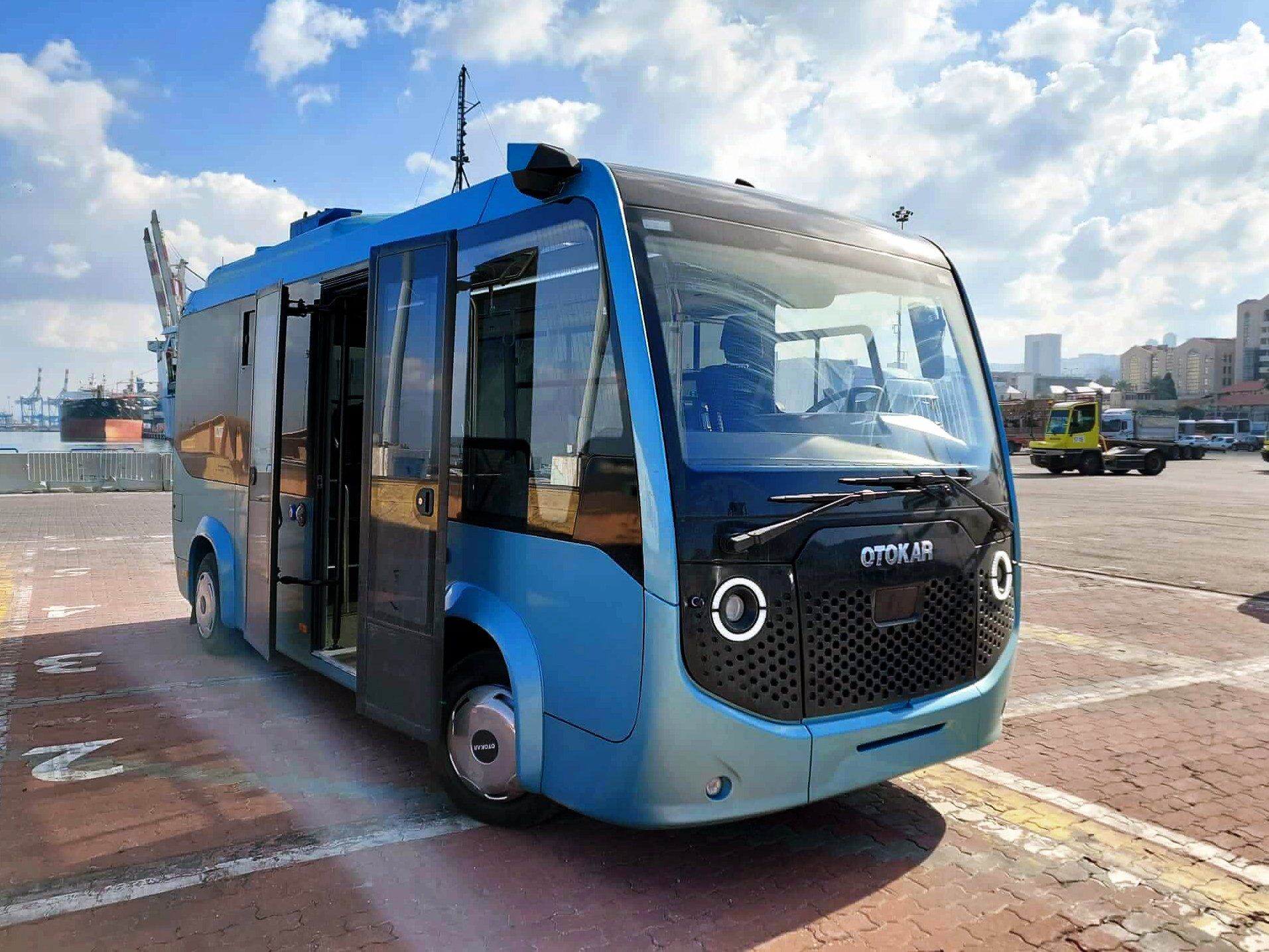
Nigerian Man Refuses to Board Driverless Bus, Sparking Heated Debate on Trust in Technology.
Also Read: The Growing Menace of Touts on Abuja Roads: Risks for Innocent Drivers
A young Nigerian man in the Netherlands refusing to enter a driverless bus, prompting widespread discussion about public trust in autonomous technologies and cultural perceptions of innovation.
A driverless transport service operating in the Rotterdam area, then stepping back after questioning passengers already onboard about the absence of a driver.
The man can be seen engaging riders in conversation, repeatedly asking why people believe in technology and expressing discomfort with the idea of riding in a vehicle without a human operator.
He ultimately chooses to exit and take another transport option, saying he prefers something he feels he can trust.
The vehicle is believed to be ParkShuttle, an autonomous people-mover service that has operated in the Rotterdam–Capelle aan den IJssel region since the late 1990s and early 2000s.
The ParkShuttle system is an electric, autonomous shuttle network that connects the Kralingse Zoom metro station with the Rivium Business Park and surrounding areas.
The vehicles run on a dedicated lane and are controlled by advanced navigation systems without a physical driver. They have been used to safely transport passengers for years, and newer models now also operate with levels of autonomy comparable to those being tested in larger cities globally.
Unlike typical buses, the ParkShuttle operates like a horizontal elevator, with passengers pressing a button to call a vehicle and onboard sensors managing navigation and stop requests.
This form of autonomous transit represents one of the earliest and longest-running deployments of driverless shuttle technology in Europe.
The Viral Encounter: Mistrust Meets Innovation
In the video, the Nigerian man questions passengers about the presence of a driver. He asks why others would trust a vehicle to take them safely to their destination without someone controlling it manually.
After getting reassurances from a seated passenger, he still chooses not to board and instead moves away from the autonomous bus.
“I believe in the electric vehicle,” one version of the viral post quotes him saying, “but I didn’t trust that it will take me to the right place.”
This sentiment reflects a broader hesitancy among some people encountering automation for the first time.
Some commentators defended the man’s skepticism, saying autonomy without visible control can be unsettling for individuals unfamiliar with such technologies.
Others joked, comparing the autonomous shuttle to something out of science fiction or likening it to a “spaceship.”
A portion of online commenters also weighed in with cultural commentary, suggesting that exposure to advanced transportation systems varies widely between countries, affecting how such innovations are perceived.
This digital response underscores how cultural experience and technological familiarity influence public acceptance particularly when individuals encounter innovations outside their home environments.
Why This Matters: Trust, Exposure, and Tech Adoption
Experts in transportation and technology adoption emphasize that the success of autonomous systems depends not just on engineering and safety, but also on user trust and familiarity.
Even in countries where driverless technology is operational and regulated, such systems remain novel to many visitors from regions without similar implementations.
For many Nigerians where driverless vehicles are not yet publicly deployed, the sight of a fully autonomous shuttle might trigger uncertainty or doubt about safety and reliability.
This incident highlights how perceptions of automation are shaped by personal experience, cultural context, and exposure to emerging technologies.
Additionally, discussions prompted by this event shed light on broader debates around the integration of autonomous transportation in daily life from passenger confidence to regulatory frameworks and public education about new tech.
Conclusion
While the incident may appear humorous to some, it reflects real-world tensions around the adoption of advanced technologies. As autonomous transit systems expand across Europe and beyond, public understanding and trust will play a critical role in shaping acceptance.
The viral reaction to a Nigerian man’s refusal to board a driverless shuttle in the Netherlands isn’t just a moment of internet entertainment, it’s a mirror of how global societies navigate the intersection of innovation, culture, and trust in an era of rapid technological change.

Two Major Crashes Shut Down I-85 in Anderson County as Chemical Spill

Collision Closes Highway 2 South of Pouce Coupe, British Columbia

How Innovation Is Saving Lives on the World’s Roads

FG Accelerates Highway Construction to Ease Nationwide Traffic Congestion

Davido Adds Ultra-Luxury 2026 Rolls-Royce Spectre to His Expanding Car Collection

Seven Killed in Early-Morning Lorry and SUV Collision in India’s Karnataka State

Wilson Kidnapping Suspect Arrested After 130+ mph I-95 Chase Ends in Flames

How to Buy a Reliable Car on Any Budget

Fatal Bicycle-Vehicle Collision Claims Life in Ireland

10 Vehicle Maintenance Habits That Can Prevent Costly Repairs
Fatal Bicycle-Vehicle Collision Claims Life in Ireland

Driver Distraction: The Silent Road Killer Demanding Global Attention

Why the Toyota Corolla Remains Nigeria’s Favourite Sedan

14 Killed in Deadly Bus and Truck Collision on Uganda’s Kampala–Gulu Highway
10 Vehicle Maintenance Habits That Can Prevent Costly Repairs

Three Killed as PEI Ambulance Crashes Near Confederation Bridge in New Brunswick
How to Buy a Reliable Car on Any Budget
Wilson Kidnapping Suspect Arrested After 130+ mph I-95 Chase Ends in Flames
Davido Adds Ultra-Luxury 2026 Rolls-Royce Spectre to His Expanding Car Collection

Driver Attitudes That Turn Roads Into Death Traps

Slow Down: Man got his Family Killed by neglecting road signs

Which Bridge is the Tallest in the World?
Impatient Driving Cause Road Accident
How Roads are Constructed on the Mountain

Texas, USA suffers heavy flooding