
Articles
The Evolution of Car Safety: From Seatbelts to Self-Driving Tech

Car safety has come a long way since the first automobiles appeared on dusty roads more than a century ago. What began as an exciting yet dangerous invention has transformed into one of the most sophisticated industries in the world.
Also Read: Stay Alive: Essential Road Safety Tips for Drivers
Modern cars are packed with advanced driver assistance systems, AI-powered sensors, and safety features designed to prevent accidents before they even happen.
But this transformation didn’t happen overnight. It’s the result of decades of innovation, trial and error, government regulations, and the relentless pursuit of saving lives. In this article, we’ll explore the evolution of car safety from the invention of the seatbelt to today’s self-driving technology, while also examining how these developments continue to shape the future of driving.
Whether you’re a car enthusiast, a road safety advocate, or someone who simply wants to understand how we got here, this deep dive will give you a fresh perspective on how cars became safer than ever.
The Early Days of Automobiles: A Dangerous Start
When cars first appeared in the late 19th and early 20th centuries, they were celebrated as revolutionary machines. They allowed people to travel faster than ever before and redefined what freedom of movement meant. However, they were also incredibly dangerous.
- Roads were not designed for cars; they were still built for horses and pedestrians.
- There were no speed limits, no traffic signals, and no standardized safety rules.
- Cars themselves were built for speed and novelty, not safety.
As a result, accidents became increasingly common. The first recorded automobile accident occurred in 1891 in Ohio, USA, when James Lambert lost control of his vehicle and hit a tree root. Thankfully, no one was killed but as cars became more widespread, fatalities soared.
By the 1920s, the U.S. was reporting thousands of car-related deaths every year. Yet, manufacturers weren’t focused on safety. Instead, they emphasized horsepower, design, and performance. The idea that a car should protect its passengers during a crash wasn’t widely considered until much later.
At this point in history, the driver alone was responsible for safety. If you got into a crash, it was your fault, not the car’s. That mindset shaped the industry for decades, until one simple invention started to change everything: the seatbelt.
Seatbelts: The First Major Breakthrough
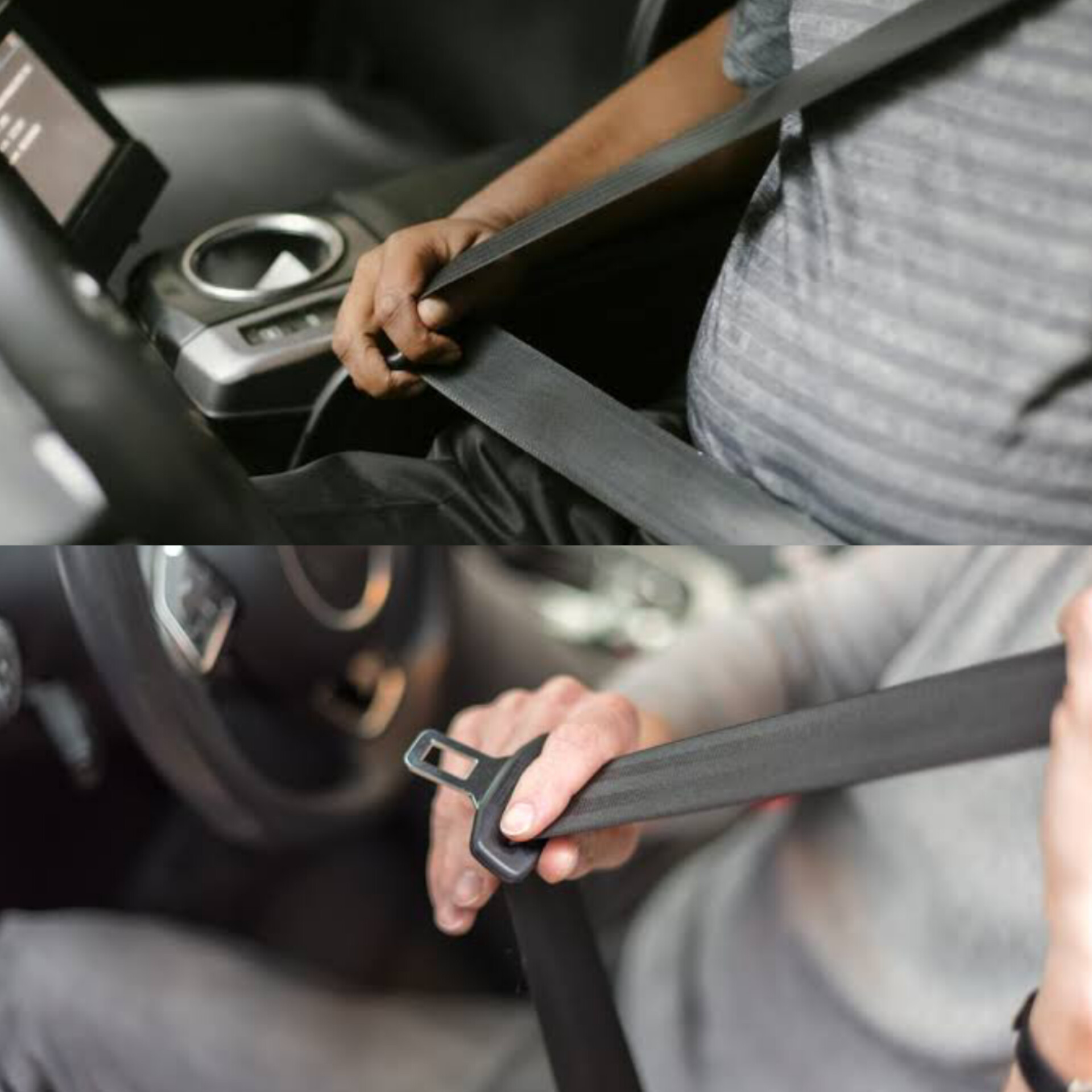
The seatbelt is arguably the most important car safety invention in history. While lap belts had been used in airplanes and occasionally in cars as early as the 1930s, they weren’t standard equipment.
The real breakthrough came in 1959, when Volvo engineer Nils Bohlin invented the three-point seatbelt. Unlike lap belts, the three-point design secured both the upper and lower body, drastically reducing the risk of severe injuries in crashes.
Interestingly, Volvo made the patent open to all car manufacturers, prioritizing public safety over profit. This decision has saved millions of lives worldwide.
Despite this, many drivers resisted wearing seatbelts. Some found them uncomfortable, while others believed they weren’t necessary. In fact, it wasn’t until the 1980s that many countries began passing laws requiring seatbelt use.
The impact has been enormous:
- According to the National Highway Traffic Safety Administration (NHTSA), seatbelts reduce the risk of death for front-seat occupants by 45%.
- Since their widespread adoption, seatbelts are estimated to have saved more than 1 million lives in the U.S. alone.
The seatbelt marked the beginning of a new era: one where car safety was no longer optional. Manufacturers started to recognize the importance of protecting passengers, and consumers began to demand safer vehicles.
Airbags and the Rise of Passive Safety
If seatbelts were the first revolution in safety, airbags were the second.
The concept of the airbag dates back to the 1950s, but the first production car with airbags didn’t arrive until the 1970s. By the 1990s, airbags became standard in most vehicles around the world.
Airbags are designed to inflate in milliseconds during a collision, creating a cushion that reduces the impact on the driver and passengers. They work hand-in-hand with seatbelts to significantly reduce fatalities.
The technology has evolved rapidly:
- Front airbags protect drivers and passengers from dashboard or steering wheel impact.
- Side airbags shield passengers during side collisions.
- Curtain airbags protect the head and upper body in rollover crashes.
However, airbags weren’t perfect. Early versions deployed with such force that they caused injuries particularly to children and smaller adults. Over time, smarter sensors and advanced deployment mechanisms made airbags safer and more effective.
Today, airbags are a legal requirement in most markets, and they’ve become one of the most recognized symbols of car safety.
Crash Testing and Safety Ratings
By the mid-20th century, car manufacturers had begun to understand that safety could be a selling point. But how do you prove that one car is safer than another? That’s where crash testing and safety ratings come in.
Organizations like the NHTSA (U.S.), Euro NCAP (Europe), and IIHS (Insurance Institute for Highway Safety) developed standardized tests to evaluate cars in simulated crashes. Using crash test dummies equipped with sensors, they could measure the forces on the human body in different accident scenarios.
The results were eye-opening:
- Some cars that looked safe on the outside performed poorly in tests.
- Others demonstrated how design innovations (like crumple zones) could save lives.
Crumple zones, introduced by Mercedes-Benz in the 1950s, were a game changer. Instead of making cars rigid, engineers designed them to absorb impact by deforming in a controlled way, protecting passengers inside.
Today, consumers regularly check safety ratings before buying cars. A five-star rating from NCAP or NHTSA is often used as a marketing tool, proving that safety has become just as important as horsepower or design.
Modern Driver Assistance Systems (ADAS)
The 21st century ushered in a new phase of safety innovation: preventing accidents before they happen. This is the philosophy behind Advanced Driver Assistance Systems (ADAS).
Key technologies include:
- Anti-lock Braking System (ABS): Prevents wheels from locking during hard braking.
- Electronic Stability Control (ESC): Helps drivers maintain control in slippery conditions.
- Blind-Spot Monitoring: Alerts drivers to vehicles in adjacent lanes.
- Lane Departure Warning and Lane Keeping Assist: Prevents unintentional lane drifting.
- Automatic Emergency Braking (AEB): Detects imminent collisions and applies brakes automatically.
These systems rely on a combination of sensors, cameras, and radar. In many cases, they can react faster than human drivers.
According to the European Commission, ADAS technologies have already reduced accidents by as much as 20–30% in some regions. In fact, the EU made several ADAS features mandatory for all new cars starting in 2022, marking a significant shift in global road safety standards.
Self-Driving Cars and the Future of Safety
The ultimate vision for car safety is a world where human error is eliminated. Since driver error causes more than 90% of road accidents, self-driving cars promise to drastically reduce crashes.
Companies like Tesla, Waymo, and traditional automakers are investing billions in autonomous vehicle technology. These cars use AI, lidar, radar, and cameras to navigate roads, interpret traffic signs, and avoid collisions.
But the road to fully autonomous vehicles isn’t smooth. Challenges include:
- Technical limitations: Self-driving cars still struggle in bad weather or complex traffic scenarios.
- Ethical dilemmas: How should an AI decide in a no-win situation, like choosing between hitting a pedestrian or swerving into another car?
- Public trust: Many drivers are hesitant to give up control, especially after high-profile autonomous car accidents.
Still, the future looks promising. Research suggests that widespread adoption of autonomous cars could reduce accidents by up to 90%. As the technology matures, we may one day live in a world where traffic fatalities are a thing of the past.
Conclusion: A Safer Road Ahead
From the first crude automobiles to today’s AI-powered vehicles, the journey of car safety is a story of progress, persistence, and human ingenuity.
- The invention of the seatbelt laid the foundation for modern safety.
- Airbags and crumple zones proved that cars could protect passengers during crashes.
- Crash testing and safety ratings gave consumers the tools to make informed choices.
- ADAS technologies began preventing accidents before they happened.
- And now, self-driving cars hint at a future where roads are safer than ever.
While no system can completely eliminate risk, the direction is clear: every generation of vehicles is safer than the last. As technology continues to advance, we move closer to a world where car accidents are rare, not routine.
If you found this history of car safety fascinating, share it with your friends and followers. The more we understand the importance of safety, the more lives we can save.










Five Die as Truck, Car Collide on Badagry Expressway

Two Killed as Trucks Collide, Burst Into Flames on Anambra Road

Stakeholders Raise Alarm Over Safety Gaps in Nigeria’s CNG and Electric Vehicle Transition

Female Driver Dies in Tragic Road Crash at Mongoro, Ile-Zik Area of Lagos

Physically Challenged Beggar Killed in Multi-Vehicle Crash on Lagos-Ibadan Expressway

Court Bars FRSC Officials From State Roads

24 Pupils Killed in Tragic Bus Crash During School Excursion in Uganda

Tyre Blowouts on Heavy Trucks

BYD Seal EV: Can It Challenge Traditional Sedans?

Colorado to Strengthen Driver Education Requirements

Slow Down: Man got his Family Killed by neglecting road signs

Which Bridge is the Tallest in the World?
Impatient Driving Cause Road Accident
How Roads are Constructed on the Mountain

Texas, USA suffers heavy flooding