
Update on Road Construction
Nasarawa Begins 2.6km Twin Flyover to End Mararaba Gridlock


For years, Mararaba has been one of the most notorious choke points along the Abuja-Keffi corridor, a bottleneck that has frustrated millions of commuters, slowed emergency response, crippled business operations, and turned daily movement into a test of endurance.
Also Read: Nasarawa State Gov. Unveils palliative Buses
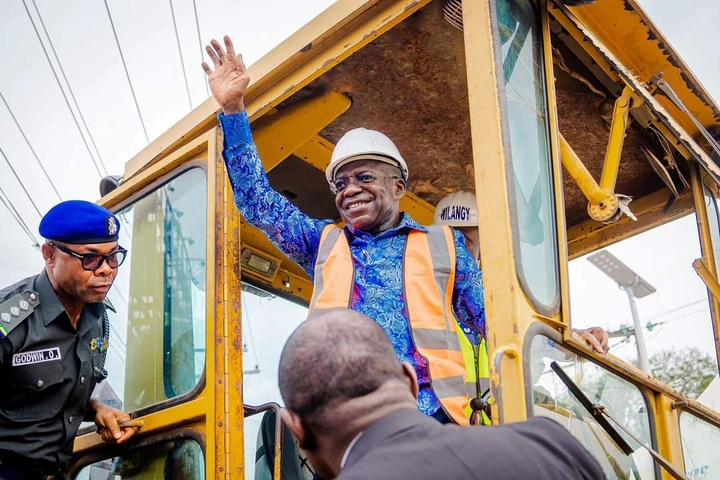
Today, Nasarawa State has taken a historic step toward rewriting that narrative.
The Nasarawa State Government has officially commenced work on a 2.6-kilometre twin flyover, a landmark infrastructure project designed to finally tackle the debilitating gridlock that has defined Mararaba for nearly two decades.
According to state officials, the project is slated for completion within 16 to 18 months, marking one of the most ambitious urban mobility interventions in the region.
If delivered on schedule and to standard, the Mararaba Twin Flyover could become the most transformative infrastructure project connecting the Federal Capital Territory and Nasarawa State in recent memory.
WHY MARARABA GRIDLOCK IS A NATIONAL PROBLEM
Although Mararaba lies in Nasarawa State, its traffic problem is a national mobility crisis. As the primary entry point into Abuja from the east and north-central zones, the corridor carries:
- Civil servants working in Abuja
- Traders commuting daily
- Students, artisans, and business owners
- Heavy trucks supplying goods into the FCT
- Inter-state transit vehicles
- Emergency services
Daily traffic peaks often trap commuters for 2–4 hours, even on short journeys. For many, Mararaba is not just a town — it is a symbol of the worst traffic gridlock in northern Nigeria.
Every weekday morning, the road becomes a parking lot. At night, movement slows to a crawl. RoadKing.ng has previously documented:
- Delayed ambulances stuck in traffic
- Commuters trekking long distances
- Businesses losing productive hours
- Increased accidents from impatient overtaking
- Rising stress and health issues linked to transport delays
The severity of the gridlock has only increased as Abuja expands and more families settle in Karu, Masaka, Ado, New Nyanya, and other satellite communities.
THE PROJECT: A 2.6KM TWIN FLYOVER
According to state officials and project documents, the Mararaba flyover development includes:
✔️ Two separate flyover bridges (twin structure): Designed to handle inbound and outbound traffic independently.
✔️ Stretching across approximately 2.6 kilometres: This is significantly longer than most existing flyovers in the region, making it a major engineering undertaking.
✔️ Goal: Elevate through-traffic and free up ground-level flow. This will allow non-stop movement for vehicles heading into Abuja and exiting toward Keffi, thereby reducing pressure on the congested ground intersections.
✔️ Incorporates service lanes, pedestrian walkways, and updated road furniture. This ensures safer movement for both motorists and pedestrians.
✔️ Expected completion timeline: 16–18 months. A highly ambitious but achievable timeframe if funding and technical coordination remain uninterrupted.
✔️ Focus on modern traffic engineering: The project includes drainage expansion, turning lanes, crash barriers, and night-time illumination systems.
WHAT THE FLYOVER WILL FIX
1. Morning and evening lockdowns: The new structure will allow continuous flow, eliminating the worst bottlenecks historically created by merging lanes and uncontrolled intersections.
2. Dangerous road crossings: Pedestrians, especially schoolchildren and market-goers currently risk their lives navigating chaotic traffic. The redesign promises safer walkways and controlled crossings.
3. High rate of accidents: With clearer lanes, grade separation, and reduced congestion, road traffic collisions are expected to decline sharply.
4. Business delays: Delivery trucks, traders, and transport operators will save countless hours previously wasted in gridlock.
5. Abuja-bound traffic pressure: The flyover will ease the strain on Nyanya, Karu Bridge, and the Abuja gateway corridor.
ECONOMIC AND SOCIAL IMPACT: A TRANSFORMATION YEARS IN THE MAKING
The Abuja–Nasarawa corridor is one of Nigeria’s fastest-growing residential belts. Over 65% of Abuja’s workforce lives outside the FCT with Mararaba and its neighbouring communities taking the largest share.
By addressing the gridlock, the flyover will:
✔️ Boost property value in the corridor. Improved mobility increases demand for housing and commercial spaces.
✔️ Reduce transportation costs for commuters. Time saved is money saved.
✔️ Improve productivity for Abuja civil servants and private workers. Late arrivals caused by traffic delays could reduce dramatically.
✔️ Reduce stress, fatigue, and health complications. Long-term exposure to daily gridlock contributes to hypertension, anxiety, and sleep deprivation.
✔️ Enable smoother logistics. Businesses will enjoy faster access to Abuja markets.
RISKS, CHALLENGES & RED FLAGS ROADKING WILL BE WATCHING
Massive infrastructure projects in Nigeria often face obstacles. RoadKing.ng highlights key concerns:
⚠️ 1. Construction-related traffic escalation: Before relief comes, congestion may temporarily worsen.
⚠️ 2. Funding consistency: Delayed payments to contractors have derailed many ambitious projects historically.
⚠️ 3. Possible relocation of utility lines: Water, telecoms, and electricity infrastructure may need realignment, a common cause of project delays.
⚠️ 4. Weather disruptions: Heavy rains, flooding, or erosion could slow progress during the rainy season.
⚠️ 5. Quality assurance: A flyover of this scale requires strict supervision to ensure durability, adequate drainage, and structural safety.
RoadKing will monitor each phase and provide ongoing updates to the public.
MOTORISTS’ REACTION — HOPE, RELIEF, AND SCEPTICISM
Early street interviews indicate mixed but hopeful emotions:
Relief:
“As long as this solves the nonsense traffic we face every morning, let them start immediately.”
Scepticism:
“Many projects start with noise but die halfway. We hope this one is different.”
Practical concern:
“We are worried traffic will get worse during construction, they must create proper diversions.”
Across Abuja and Nasarawa, one message stands out: people are tired and want real, lasting change.
ROADKING ANALYSIS — WHY THIS FLYOVER COULD BE A GAME-CHANGER
If built to specification, this twin flyover could:
- become one of North Central Nigeria’s most important mobility solutions,
- serve millions of daily road users,
- shorten commute times drastically,
- enhance safety,
- stimulate economic activity,
- and improve quality of life for more than 2.5 million corridor residents.
But its success rests entirely on execution, transparency, supervision, engineering quality, and political will.
RoadKing will continue tracking the construction, reporting progress, delays, safety issues, and public feedback.



Nasarawa Begins 2.6km Twin Flyover to End Mararaba Gridlock

Court of Appeal Bans VIO From Stopping or Impounding Vehicles Nationwide

FRSC Orders Construction Firms to Install Proper Road Signs Nationwide to Curb Rising Highway Deaths

Six Die, Five Injured in Fatal Collision at Nawfia, Anambra

Mali’s Fuel Shortage Eases as Over 300 Tankers Reach Bamako under Alliance of Sahel States (AES) Escort

Three Dead as Tanker Explosion Rocks Kano

5 Reliable Cars You Can Still Buy With ₦3–5 Million In Nigeria

Three Dead in Horror N4 Crash Near Middelburg Dam After Bakkies Collide
How FRSC Targeted Patrols & Special Operations Are Reducing Road Crashes in Nigeria

Over 500 Foreigners Intercepted on Adamawa Highway, Escorted Back by Security Forces
FRSC Orders Construction Firms to Install Proper Road Signs Nationwide to Curb Rising Highway Deaths
Court of Appeal Bans VIO From Stopping or Impounding Vehicles Nationwide
Nasarawa Begins 2.6km Twin Flyover to End Mararaba Gridlock

Slow Down: Man got his Family Killed by neglecting road signs

Which Bridge is the Tallest in the World?
Impatient Driving Cause Road Accident
How Roads are Constructed on the Mountain

Texas, USA suffers heavy flooding