
Crash News
Tragedy on Abeokuta–Sagamu Road: Fuel Tanker Explodes, Many Feared Dead

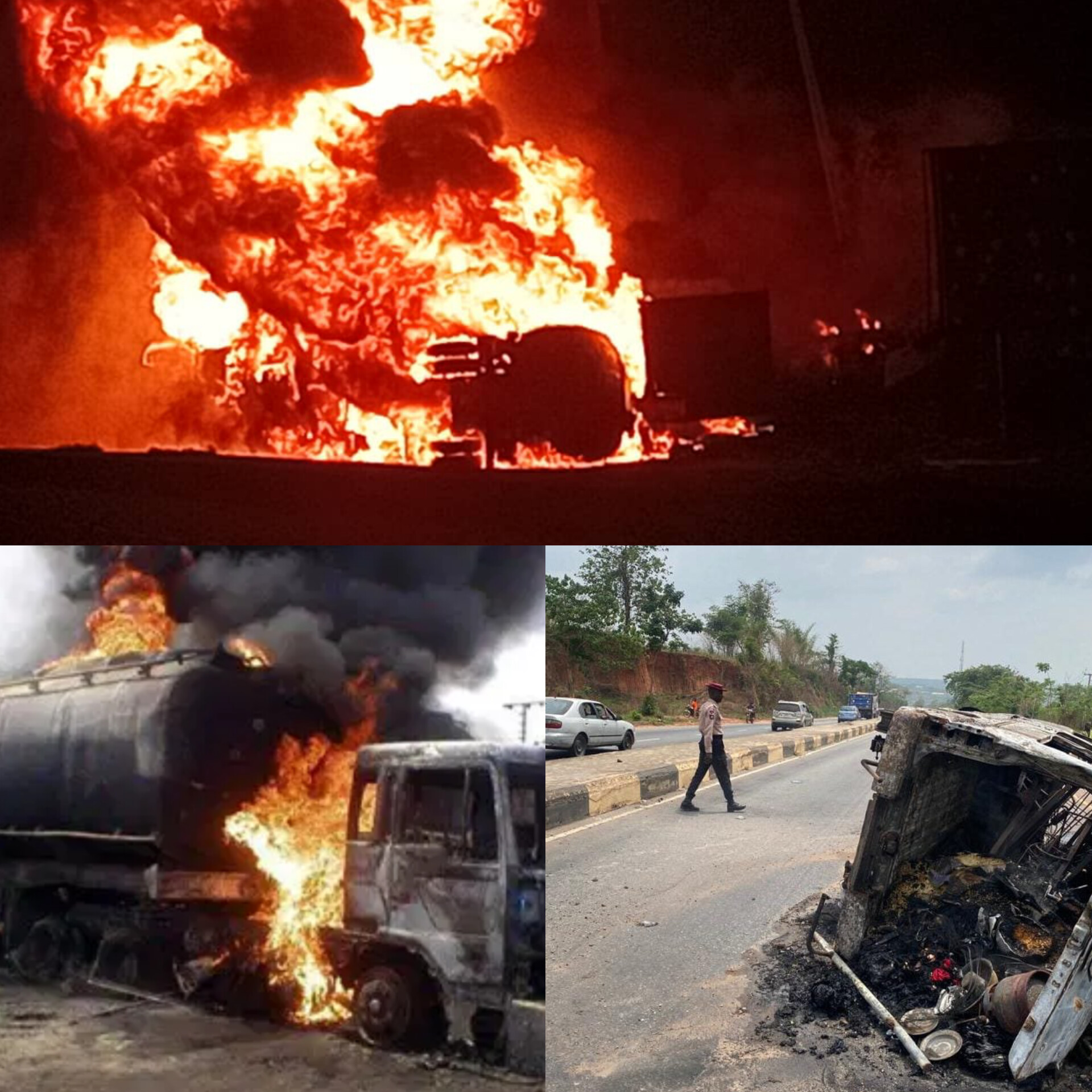
In the early hours of Friday, a petrol-laden tanker overturned and exploded along the Abeokuta–Sagamu Expressway in Ogun State. The inferno erupted at about 1:00 a.m., near the Abeokuta–Kobape–Siun–Sagamu interchange stretch of the PMB expressway.
Also Read: FRSC Corps Marshal Calls for Firearms: Will Guns Make Nigeria’s Highways Safer?
According to TRACE (Ogun State Traffic Compliance & Enforcement Agency) spokesman Babatunde Akinbiyi, the 33,000-litre tanker overturned due to excessive speed and loss of control, spilling its content onto the road before the fire engulfed the scene.
The blaze did not stop with the tanker. It spread to nearby vehicles, including a truck and a tow vehicle, and destroyed a power cable supplying electricity to Mowe and environs, plunging parts of those communities into darkness.
Emergency responders from TRACE, FRSC, Ogun State Fire Service, Nestlé PLC Fire Service, Police, NSCDC, and Amotekun raced to the scene, working to douse the fire and begin fuel decantation.
As of this writing, casualty figures remain unconfirmed. Authorities say “many are feared dead,” and rescue teams are combing through the wreckage.
Traffic has been diverted to a single lane to allow emergency operations. Drivers are urged to comply with detours and exercise patience.
Why This Incident Matters
Scale & Capacity: A 33,000-litre fuel tanker carries a catastrophic potential. A single mistake can trigger mass destruction on highways.
Chain Reaction: The fire spreading to a truck, tow vehicle, and power infrastructure shows how one accident can ripple into multiple crises (blackouts, secondary fires).
Nighttime Risk: Occurring at 1:00 a.m., visibility is low, response time slows, and chances of escape diminish.
Infrastructure vulnerability: The destruction of a PHCN cable underscores how accidents can escalate into local crises (power loss, traffic light failure, panic).
Recurring Pattern: Nigeria has seen many such tanker infernos. This adds to the indictment of lax enforcement, dangerous driving culture, poor maintenance, and weak emergency protocols.
Voices from the Scene
TRACE spokesman Akinbiyi confirmed the overturning, speeding, spill, and inferno, while also acknowledging the ongoing rescue and fire‐control efforts.
Eyewitnesses say the fire was massive, illuminating the night sky, and they heard cries for help. Some motorists close by fled in panic to avoid being trapped.
A local resident in Mowe lamented the blackout, saying: “We woke up to darkness. The blast cut off our light and shook our doors.”
RoadKing’s Analysis: Underlying Factors & Risks
- Excess Speed + Loss of Control
High speeds make tankers harder to manage, especially on curves or inclines. The damage from speed alone is often fatal. - Vehicle Condition & Maintenance
A tanker carrying flammable fuel must be in top mechanical form—brakes, tires, suspension. Any mechanical weakness is a disaster waiting to happen. - Emergency Response Gaps
The speed of fire spread suggests limited buffer zones, delayed fire suppression, and perhaps inadequate safety equipment at the scene initially. - Poor Risk Management of Fuel Transfers
Decantation (removing fuel) under fire conditions is extremely dangerous. This should be done only after full control of the site. - Infrastructure Fragility
The blast taking down power lines shows how close roads and utilities are. That increases the cost and the stakes of such accidents.




Nasarawa Begins 2.6km Twin Flyover to End Mararaba Gridlock

Court of Appeal Bans VIO From Stopping or Impounding Vehicles Nationwide

FRSC Orders Construction Firms to Install Proper Road Signs Nationwide to Curb Rising Highway Deaths

Six Die, Five Injured in Fatal Collision at Nawfia, Anambra

Mali’s Fuel Shortage Eases as Over 300 Tankers Reach Bamako under Alliance of Sahel States (AES) Escort

Three Dead as Tanker Explosion Rocks Kano

5 Reliable Cars You Can Still Buy With ₦3–5 Million In Nigeria

Three Dead in Horror N4 Crash Near Middelburg Dam After Bakkies Collide
How FRSC Targeted Patrols & Special Operations Are Reducing Road Crashes in Nigeria

Over 500 Foreigners Intercepted on Adamawa Highway, Escorted Back by Security Forces
Court of Appeal Bans VIO From Stopping or Impounding Vehicles Nationwide
Nasarawa Begins 2.6km Twin Flyover to End Mararaba Gridlock

Slow Down: Man got his Family Killed by neglecting road signs

Which Bridge is the Tallest in the World?
Impatient Driving Cause Road Accident
How Roads are Constructed on the Mountain

Texas, USA suffers heavy flooding