
Driver Training
The Psychology of Overconfidence in Nigerian Drivers

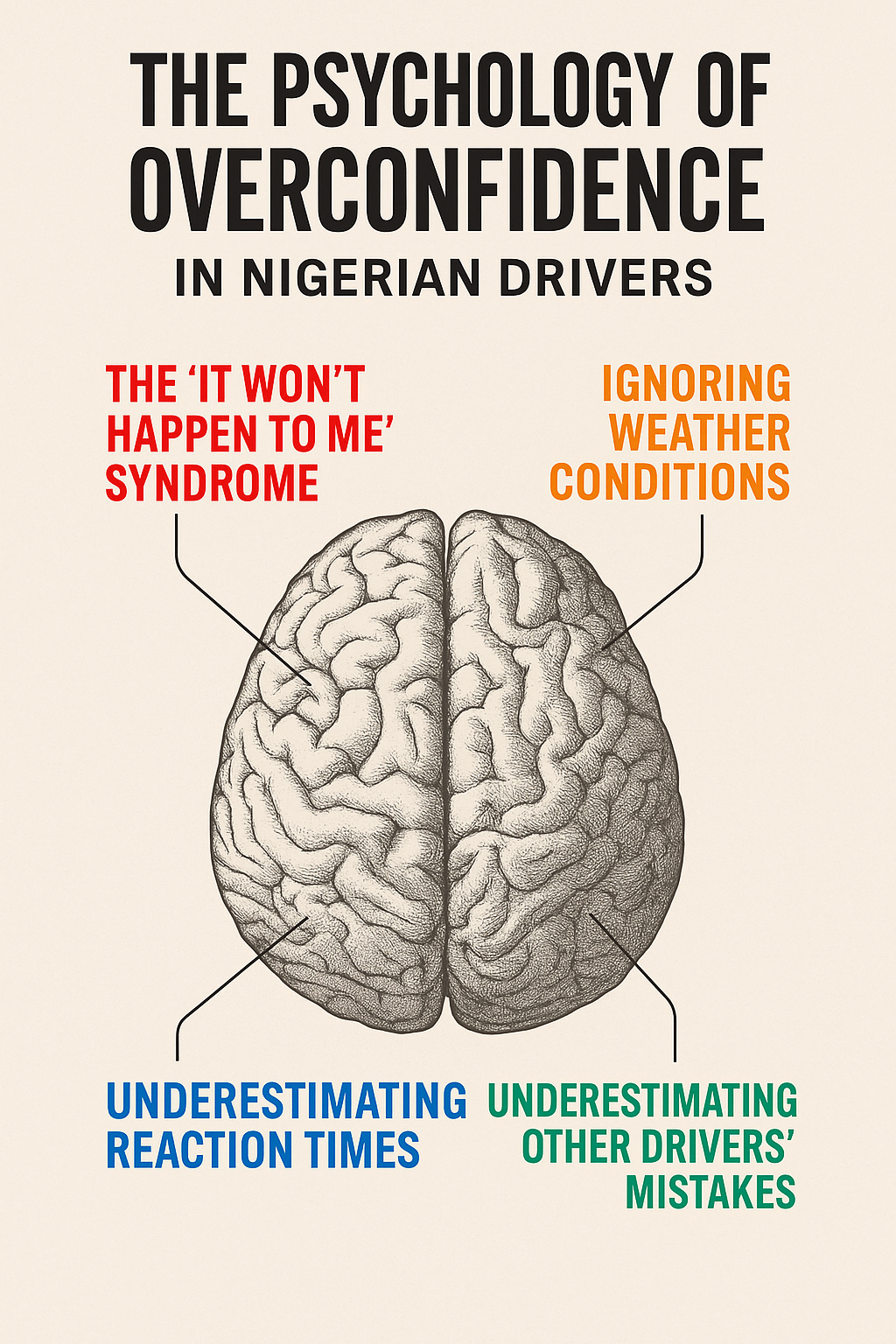
Every day, Nigerian roads witness drivers who speed, weave through traffic, and ignore road signs, not always because they’re in a hurry, but because they believe they can handle it.
Also Read: The Psychology of Car Thieves
This dangerous mindset is rooted in overconfidence bias, a psychological trap where people overestimate their skills and underestimate risks.
From bus drivers who think they can beat an oncoming truck to private car owners swerving through puddles in the rain, overconfidence is silently fueling countless crashes on our roads.
Why Overconfidence is a Killer
1. The Illusion of Control
Many drivers believe that years of driving experience automatically make them immune to accidents. This creates a false sense of security, leading to risky behaviors like tailgating, aggressive overtaking, and ignoring speed limits.
2. Familiarity Breeds Risk
Drivers on familiar routes says, Lagos-Ibadan Expressway or Abuja city roads often let their guard down. Familiarity makes them take shortcuts in judgment, assuming “I know this road; nothing will happen.”
3. Cultural Reinforcement
In Nigeria, risky driving is often seen as a show of skill. Drivers who take dangerous shortcuts without crashing are sometimes celebrated instead of corrected.
4. The “It Won’t Happen to Me” Syndrome
This is the most dangerous mindset, assuming that accidents are for “other people” and not you. Unfortunately, this is the same thinking that lands people in avoidable collisions.
Real-Life Examples from Nigerian Roads
Case 1: The Commercial Bus in Oshodi
A driver swerved across four lanes in rush-hour traffic, narrowly missing a truck. When stopped by LASTMA, he laughed it off: “I’ve been driving for 15 years; nothing go happen.”
A month later, the same driver was involved in a head-on collision.
Case 2: The Young Executive on Lekki-Epe Road
Driving a high-performance SUV at 140 km/h during light rain, he insisted his “car is built for this.” The car hydroplaned, skidded off the road, and crashed into a barrier.
Scientific Insight: The Dunning–Kruger Effect
Psychologists David Dunning and Justin Kruger proved that the least skilled people often overestimate their abilities the most. This applies perfectly to road behavior, the worst drivers often think they’re the best.
How Overconfidence Leads to Accidents
1. Underestimating Reaction Times: A confident driver believes they can stop instantly but ignores the 1-2 seconds of reaction delay.
2. Ignoring Weather Conditions: They think wet roads or poor visibility won’t affect their skills.
3. Underestimating Other Drivers’ Mistakes: Overconfident drivers assume others will drive as “smart” as they do.
Solutions to Combat Overconfidence
Driver Education
Mandatory refresher courses every 3-5 years could reset dangerous mindsets.
Stricter Law Enforcement
Speeding, reckless overtaking, and failure to yield must attract heavier fines and immediate license suspensions.
Public Awareness Campaigns
Government and NGOs can run campaigns showing that experience ≠ invincibility.
Vehicle Technology
Mandatory installation of speed limiters and lane departure warnings in commercial vehicles could help reduce the dangers of overconfidence.
Conclusion
Overconfidence is not just arrogance, it’s a deadly mix of false security, cultural acceptance, and flawed self-assessment. To reduce the carnage on Nigerian roads, drivers must be taught humility behind the wheel, law enforcement must be strict, and road safety education must be ongoing.
Until then, overconfidence will remain one of Nigeria’s most invisible but dangerous road hazards.




Two Separate Highway Crashes Leave One Dead, Several Injured in Katsina

Victor Osimhen Reportedly Buys ₦1.4 Billion Lamborghini Revuelto Supercar

Truck Crash Kills Three After Collision With Parked Trailer in Kano

3 Killed, 6 Injured in Multiple-Vehicle Crash on Lagos–Abeokuta Expressway

Multi-Vehicle Crash Causes Fire and Gridlock on Admiralty Way, Lagos
Two Killed in Multi-Vehicle Crash Involving Truck, Bus and Motorcycle
Seven Killed, Eight Injured in Pakistan Makran Coastal Highway Crash
1 Killed as Speeding Bike Loses Control in Trichy

Kenya Report Reveals Heavy Cost of Road Traffic Injuries on Healthcare System

Serious Two‑Vehicle Crash in South Burnett, Australia
Serious Two‑Vehicle Crash in South Burnett, Australia
Seven Killed, Eight Injured in Pakistan Makran Coastal Highway Crash
Kenya Report Reveals Heavy Cost of Road Traffic Injuries on Healthcare System
Multi-Vehicle Crash Causes Fire and Gridlock on Admiralty Way, Lagos
Victor Osimhen Reportedly Buys ₦1.4 Billion Lamborghini Revuelto Supercar
1 Killed as Speeding Bike Loses Control in Trichy
3 Killed, 6 Injured in Multiple-Vehicle Crash on Lagos–Abeokuta Expressway
Two Killed in Multi-Vehicle Crash Involving Truck, Bus and Motorcycle
Truck Crash Kills Three After Collision With Parked Trailer in Kano
Two Separate Highway Crashes Leave One Dead, Several Injured in Katsina

Slow Down: Man got his Family Killed by neglecting road signs

Which Bridge is the Tallest in the World?
Impatient Driving Cause Road Accident
How Roads are Constructed on the Mountain

Texas, USA suffers heavy flooding