
News Update
FRSC Orders Construction Firms to Install Proper Road Signs Nationwide to Curb Rising Highway Deaths

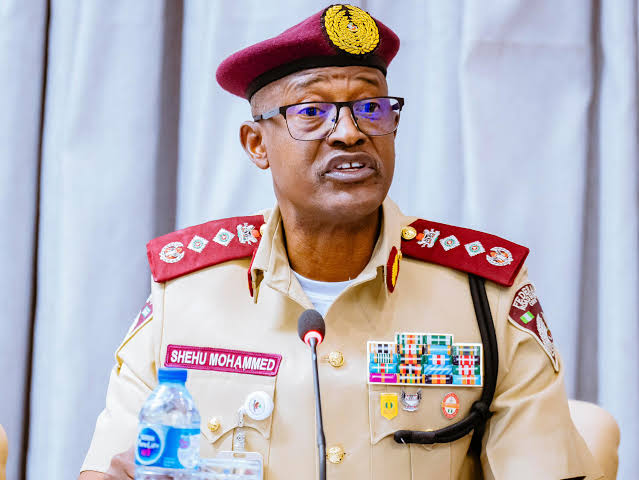
Nigeria’s long-standing battle with road crashes linked to poor signage appears to be entering a decisive phase as the Federal Road Safety Corps (FRSC) has issued a nationwide directive mandating all construction companies to immediately install standard road warning signs on active project sites across the country.
Also Read: How FRSC Targeted Patrols & Special Operations Are Reducing Road Crashes in Nigeria
The order follows a disturbing rise in avoidable accidents linked to unmarked road diversions, sudden lane closures, night-time construction zones without reflectors, and abandoned roadworks left as death traps for unsuspecting motorists.
From Lagos to Abuja, Port Harcourt to Enugu, and Kano to Uyo, drivers have complained for years that Nigeria’s highways are increasingly turning into booby-trapped corridors, where a single unmarked obstruction can mean instant death.
Now, the FRSC says that era must end.
According to the FRSC, hundreds of road crashes recorded annually are directly linked to poor or completely absent road signs at construction zones, especially at night, during rainfall, or on high-speed corridors.
In a nationwide safety bulletin released to contractors and state road agencies, the Corps warned that:
“Any construction firm found operating without visible, reflective, and well-positioned warning signs will face immediate sanctions, site shutdowns, and possible criminal liability in the event of loss of life.”
This marks one of the strongest regulatory positions ever taken against road construction negligence in Nigeria.
RoadKing.ng investigations across multiple states reveal the most dangerous construction-related hazards currently killing Nigerian road users:
- Unmarked road diversions
- Sudden lane drops without warning
- Deep trenches left open overnight
- Broken asphalt edges without reflectors
- Abandoned concrete barriers without signs
- Absence of speed-reduction warnings
- Poorly lit night construction zones
In many cases, victims never see the danger until it is too late.
“You’re driving at 100km/h on a familiar road, suddenly asphalt disappears, no sign, no cone, no warning just darkness and impact,” a commercial driver survivor told RoadKing.ng.
The FRSC order directly affects:
- Federal road contractors
- State road construction firms
- Private real estate developers
- PPP highway concessionaires
- Local government contractors
Under the directive:
All construction zones must display:
- Advance warning signs (at least 200–500m before hazard)
- Reflective cones and barriers
- Flashing hazard beacons at night
- Proper detour direction boards
- Speed-limit reduction signs
- Clearly marked pedestrian routes where applicable
✅ Signs must be visible day and night
✅ Reflectors must work during rainfall
✅ No construction site is allowed to operate blind
The Deadly Cost of Poor Signage in Nigeria
Road safety experts estimate that construction-related crashes cost Nigeria billions of naira annually through:
- Loss of lives
- Medical expenses
- Insurance claims
- Vehicle destruction
- Traffic delays
- Litigation against government agencies
More painful is the human cost:
- Families thrown into poverty
- Breadwinners lost overnight
- Children orphaned by avoidable crashes
- Survivors living with permanent disabilities
Yet, in many crash investigations, no contractor is ever held accountable because signage failures are rarely documented or prosecuted.
FRSC says this new order is designed to end that culture of impunity.
Enforcement Strategy: What FRSC Plans to Do
The FRSC has announced a three-layer enforcement strategy:
- Joint Task Monitoring Teams
Deployed with the police, civil defense, and state traffic agencies to inspect construction sites. - Instant Sanctions
- Site shutdowns
- Sealing of unsafe road sections
- Blacklisting repeat offenders
- Criminal Liability Contractors whose negligence directly leads to death may face manslaughter charges under Nigerian traffic and safety laws.
This marks a shift from “advisory regulation” to criminal accountability enforcement.
More than 70% of construction-zone deaths in Nigeria occur between 7:00 PM and 5:00 AM, when visibility is poor and traffic speeds are higher.
Common night risks include:
- No reflective cones
- Power outages on highway lights
- Workers without reflective jackets
- Black asphalt blending into darkness
- Heavy-duty trucks parked across lanes
FRSC has now made reflective materials compulsory for all night operations.
The Behavioral Angle: Why Drivers Still Die Even When Signs Exist
Even when signs are present, Nigerian driver behavior remains a major risk multiplier:
- Speeding through caution zones
- Overtaking on blind curves
- Tailgating heavy equipment
- Drunk driving at night
- Fatigue and drowsy driving
FRSC warns that:
“Road signs save lives only when drivers obey them.”
This is why the Corps has paired the signage order with a nationwide sensitization campaign on construction-zone driving discipline.
Global Best Practice vs Nigerian Reality
In countries like:
- Germany
- United States
- United Kingdom
- South Africa
- Japan
Construction zones are governed by:
- Mandatory color-coded warning systems
- Automated flashing barriers
- Digital signboards with distance countdowns
- Speed cameras inside work zones
- Heavy penalties for violations
Nigeria, by contrast, has relied heavily on manual compliance, which often collapses under corruption, poor supervision, and cost-cutting by contractors.
The FRSC directive is Nigeria’s attempt to move closer to global road safety standards.
️Government Contracting Now Under Pressure
The order also exposes a deeper governance problem:
Many road contracts approved by federal and state governments do not properly prioritize safety infrastructure funding, focusing instead on asphalt and earthworks alone.
This often leads contractors to:
- Skip safety materials
- Reuse worn-out cones
- Avoid night reflectors
- Ignore pedestrian protection
FRSC is now demanding that no road contract be approved without a clearly funded signage and traffic control plan.
Pedestrians: The Forgotten Victims
Pedestrians account for a huge percentage of construction-zone fatalities in Nigeria because:
- Walkways are blocked without alternatives
- Pedestrians are forced onto highways
- No temporary zebra crossings are created
- No night lighting for foot traffic
FRSC now requires:
✅ Temporary pedestrian paths
✅ Reflective footbridge barriers
✅ Safe crossing points at construction zones
What This Order Changes for Nigerian Road Users
For the average driver, if enforced properly, this order means:
- Fewer “surprise” road hazards
- Reduced night crashes
- Clear detours during roadworks
- Better traffic flow
- Less vehicle damage
- Fewer roadside deaths
For pedestrians:
- Safer crossings
- Reduced roadside panic
- Lower hit-and-run risks
But Will It Truly Be Enforced?
Past experience makes many Nigerians skeptical.
Previous safety regulations have failed due to:
- Weak monitoring
- Contractor bribery
- Political interference
- Lack of prosecution
- Poor documentation of crashes
The success of this new order will depend on:
- Transparency
- Public reporting
- Media visibility
- Civil society pressure
- Real prosecution
What RoadKing.ng Will Be Monitoring Going Forward
RoadKing.ng will actively track:
- Contractors shut down for signage violations
- Crash incidents at construction zones
- Compliance levels across major highways
- Prosecution of negligent firms
- Public feedback from motorists
We will publish verified updates and photo evidence as they emerge nationwide.
Final Word: Safety Is Not a Luxury
Road signs are not decorations.
They are lifelines in motion.
Every unmarked diversion is a loaded gun.
Every dark construction trench is a silent execution ground.
Every ignored warning sign is a countdown to tragedy.
The FRSC’s directive is a strong step but enforcement will decide whether it becomes a life-saving revolution or just another forgotten government announcement.



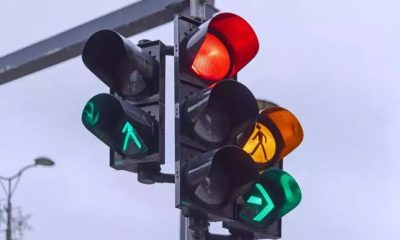


FRSC Orders Construction Firms to Install Proper Road Signs Nationwide to Curb Rising Highway Deaths

Six Die, Five Injured in Fatal Collision at Nawfia, Anambra

Mali’s Fuel Shortage Eases as Over 300 Tankers Reach Bamako under Alliance of Sahel States (AES) Escort

Three Dead as Tanker Explosion Rocks Kano

5 Reliable Cars You Can Still Buy With ₦3–5 Million In Nigeria

Three Dead in Horror N4 Crash Near Middelburg Dam After Bakkies Collide
How FRSC Targeted Patrols & Special Operations Are Reducing Road Crashes in Nigeria

Over 500 Foreigners Intercepted on Adamawa Highway, Escorted Back by Security Forces

Suspect Arrested in Ghana for Ritual Killing of FRSC Officer & Daughter

ISUZU Makes Big Statement as Emeka Offor Endorses JIM Smart Pickup at Abuja Fair
5 Reliable Cars You Can Still Buy With ₦3–5 Million In Nigeria
Three Dead as Tanker Explosion Rocks Kano
Over 500 Foreigners Intercepted on Adamawa Highway, Escorted Back by Security Forces
How FRSC Targeted Patrols & Special Operations Are Reducing Road Crashes in Nigeria
Three Dead in Horror N4 Crash Near Middelburg Dam After Bakkies Collide
FRSC Orders Construction Firms to Install Proper Road Signs Nationwide to Curb Rising Highway Deaths
Mali’s Fuel Shortage Eases as Over 300 Tankers Reach Bamako under Alliance of Sahel States (AES) Escort
Six Die, Five Injured in Fatal Collision at Nawfia, Anambra

Slow Down: Man got his Family Killed by neglecting road signs

Which Bridge is the Tallest in the World?
Impatient Driving Cause Road Accident
How Roads are Constructed on the Mountain

Texas, USA suffers heavy flooding