
News Update
Three Dead as Tanker Explosion Rocks Kano

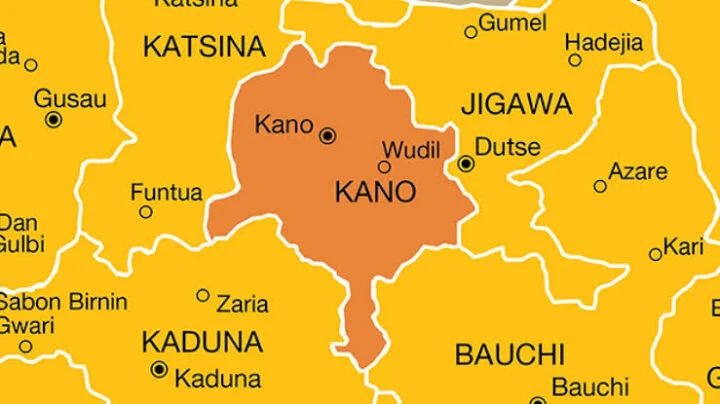
On Friday, November 28, 2025, a petrol tanker carrying some 30,000 litres of fuel overturned and exploded at Kura Market junction along Zaria Road in Kano State.
 Also Read: Tanker Explosion Kills 37 in Niger State as Residents Scoop Fuel from Fallen Truck
The tanker registration number NGZ 250 XA, first struck a cyclist before bursting into flames. Four people were reportedly affected: three were rescued unconscious and later declared dead, while the cyclist survived with injuries.
The emergency call was raised by a retired Civil Defence officer, prompting prompt deployment of firefighters from the headquarters and the local Kura station. Two fire trucks, one from the headquarters and another from the Kura station responded, along with officers from the police and the Federal Road Safety Corps (FRSC).
The blaze was eventually contained and the victims’ bodies handed over to ASP Ahmad Lawan of the Kura Police Division.
Meanwhile, less than two hours later, firefighters also responded to a separate fire at a two-storey commercial building (Hamisu Plaza) on Maiduguri Road in Taruni Local Government Area, but that blaze reportedly destroyed only three shops.
As of now, the exact cause of the tanker crash and explosion remains under investigation.
While the tragic outcome has been reported, the underlying issues behind tanker explosions especially in northern Nigeria often get lost. Here’s why this incident is deeply significant for road safety in Kano, and by extension across Nigeria:
• High-Risk Transport of Fuel — A Recurring Danger
This tanker was carrying 30,000 litres of petrol. Transporting large volumes of flammable fuel on busy roads like Zaria Road which passes through populated and commercial areas multiplies risk. Overturning or collision of such tankers almost always jeopardizes many lives. This isn’t the first time such tragedy has struck; similar disasters in other states have claimed scores of lives.
• Vulnerability of Road Users — Cyclists, Pedestrians, Bystanders
The tanker reportedly knocked down a cyclist before exploding. Cyclists and other vulnerable road users remain disproportionately exposed in Nigerian road traffic disasters. This explosion underscores the urgent need to prioritize safety for everyone not just occupants of cars and trucks.
• Emergency Response vs. Preventive Measures
That firefighters responded swiftly and contained the blaze shows that emergency response capacity exists. But reactive firefighting while important can never fully offset the absence of preventive measures: proper tanker maintenance, safer loading practices, route restrictions for tankers, speed regulation, and enforcement of traffic laws.
• Urban Risk in Residential/Commercial Zones
Zaria Road and Kura Market junction are in or near populated, busy zones. Having fully-loaded fuel tankers pass or worse, crash in such areas is a recipe for mass tragedies. There must be stricter regulation of tanker routes through such sensitive zones.
What Needs to Change — RoadKing’s Safety Imperatives
As a road-safety media platform, RoadKing.ng urges Nigerian authorities, state and federal to consider the following urgent actions to prevent future tanker disasters:
- Enforce strict route regulations for fuel tankers: Fully loaded tankers should avoid densely populated or commercial zones like Kura Market junction. Designated fuel-transport corridors should be established, with bypasses or restricted hours for tanker movement.
- Regular safety inspections of tankers: Inspections should cover mechanical soundness (tyres, brakes, suspension), cargo-tank integrity, and driver licensing/training. Tankers carrying fuel must meet rigorous maintenance and safety standards.
- Public awareness campaigns: Educate Nigerians, especially in high-risk states about the dangers of approaching or loitering near fuel tankers, especially if they are involved in an accident or overturn. This includes discouraging fuel “scooping” behaviour. Past large-scale tanker explosions have often been worsened by crowds gathering to salvage spilled fuel.
- Improve traffic enforcement and driver training: Drivers of tankers should be professionally trained, especially for carrying hazardous loads. Enforcement of speed limits, proper loading and adherence to traffic laws must be prioritized.
- Urban planning and zoning enforcement: Local governments must map out high-risk zones and restrict heavy-load vehicle movement through them. Mixed-use urban zones require careful regulation to prevent disasters.
The Human Cost And What the Loss Means for Kano
The three lives lost in this explosion aren’t just numbers. They are people possibly breadwinners or family members torn away in a moment of tragedy.
Beyond mourning, this should spark a collective reflection: how many more families must we lose before we take fuel-transport safety seriously as a national priority?
In a country where fuel tankers regularly traverse long distances to supply petrol across states, such incidents are not “accidents”, they are preventable disasters waiting to happen. The 2025 tanker explosion in Kano should serve as a wake-up call for urgent, systemic reforms.
Call to Action for Readers
If you drive, transport, or live near major roads, especially in cities like Lagos, Kano, Abuja or Port Harcourt, do not ignore tanker trucks.
- Maintain safe distance when behind or beside them.
- Avoid lingering near overturned or damaged tankers.
- Report any tanker driving recklessly, overloaded or with visible mechanical issues to local authorities.
- Spread awareness: share this article, talk to friends and community members about the risks.
Even one life saved because of caution and awareness makes this message worth sharing.
Our report draws on official confirmation from the Kano State Fire Service, and coverage by national media outlets including The Punch and other respected press agencies.








FRSC Orders Construction Firms to Install Proper Road Signs Nationwide to Curb Rising Highway Deaths

Six Die, Five Injured in Fatal Collision at Nawfia, Anambra

Mali’s Fuel Shortage Eases as Over 300 Tankers Reach Bamako under Alliance of Sahel States (AES) Escort

Three Dead as Tanker Explosion Rocks Kano

5 Reliable Cars You Can Still Buy With ₦3–5 Million In Nigeria

Three Dead in Horror N4 Crash Near Middelburg Dam After Bakkies Collide
How FRSC Targeted Patrols & Special Operations Are Reducing Road Crashes in Nigeria

Over 500 Foreigners Intercepted on Adamawa Highway, Escorted Back by Security Forces

Suspect Arrested in Ghana for Ritual Killing of FRSC Officer & Daughter

ISUZU Makes Big Statement as Emeka Offor Endorses JIM Smart Pickup at Abuja Fair
5 Reliable Cars You Can Still Buy With ₦3–5 Million In Nigeria
Three Dead as Tanker Explosion Rocks Kano
Over 500 Foreigners Intercepted on Adamawa Highway, Escorted Back by Security Forces
Three Dead in Horror N4 Crash Near Middelburg Dam After Bakkies Collide
How FRSC Targeted Patrols & Special Operations Are Reducing Road Crashes in Nigeria
Mali’s Fuel Shortage Eases as Over 300 Tankers Reach Bamako under Alliance of Sahel States (AES) Escort
FRSC Orders Construction Firms to Install Proper Road Signs Nationwide to Curb Rising Highway Deaths
Six Die, Five Injured in Fatal Collision at Nawfia, Anambra

Slow Down: Man got his Family Killed by neglecting road signs

Which Bridge is the Tallest in the World?
Impatient Driving Cause Road Accident
How Roads are Constructed on the Mountain

Texas, USA suffers heavy flooding