
Articles
Understanding Average Speed of a Car

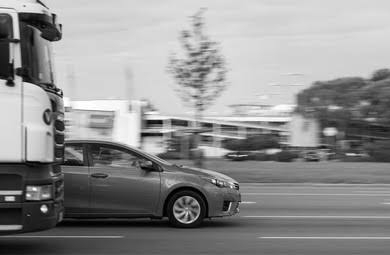
When discussing the average speed of a car, it’s crucial to delve into both the concept and its practical implications.
Average speed is defined as the total distance traveled divided by the total time taken to cover that distance.
This metric helps in understanding how efficiently and swiftly a vehicle completes a journey.
Calculation of Average Speed
To compute the AS of a car, the formula used is:
[ \text{Average Speed} = \frac{\text{Total Distance}}{\text{Total Time}} ]
Total Distance: This refers to the entire length of the journey from start to finish, usually measured in kilometers (km) or miles (mi).
Total Time: This is the duration taken to cover the total distance, typically measured in hours (h), minutes (min), or seconds (s).
For example, if a car travels 100 kilometers in 2 hours, the average speed would be:
\[ \text{Average Speed} = \frac{100 \text{ km}}{2 \text{ h}} = 50 \text{ km/h} \]
Factors Affecting Average Speed
Several factors influence the AS of a car:
1. Road Conditions: Smooth, well-maintained roads generally allow for higher speeds compared to rough or congested roads.
2. Traffic: Heavy traffic can significantly reduce average speed due to frequent stops and slower movement.
3. Weather Conditions: Adverse weather such as rain, snow, or fog can reduce visibility and traction, thus lowering speed.
4. Driver Behavior: Driving habits such as acceleration, braking, and adherence to speed limits affect overall speed.
5. Vehicle Performance: The condition of the car, its engine power, and aerodynamics can impact how efficiently it travels.
Real-World Applications
Understanding AS is not merely theoretical but has practical implications:
Travel Planning: It helps in estimating travel times and planning routes efficiently.
Fuel Efficiency: Cars often achieve optimal fuel consumption at certain speeds, influencing driving strategies.
Traffic Management: Authorities use AS data to optimize traffic flow and improve road safety.
Variations in Average Speed
The AS of a car can vary widely depending on the context:
Highways vs. Urban Areas: Cars tend to travel faster on highways compared to city streets due to fewer stops and higher speed limits.
Long vs. Short Distances: Average speed over longer distances tends to be higher as compared to shorter, more stop-and-go trips.
In conclusion, the AS of a car is a fundamental metric in transportation and daily commuting.
It is influenced by multiple factors including road conditions, traffic, weather, and driver behavior.
Understanding and calculating AS not only aids in journey planning but also contributes to efficient driving practices and road safety measures.
As technology advances, the ability to monitor and optimize average speeds continues to evolve, enhancing both personal travel experiences and broader transportation systems.

Two Separate Highway Crashes Leave One Dead, Several Injured in Katsina

Victor Osimhen Reportedly Buys ₦1.4 Billion Lamborghini Revuelto Supercar

Truck Crash Kills Three After Collision With Parked Trailer in Kano

3 Killed, 6 Injured in Multiple-Vehicle Crash on Lagos–Abeokuta Expressway

Multi-Vehicle Crash Causes Fire and Gridlock on Admiralty Way, Lagos
Two Killed in Multi-Vehicle Crash Involving Truck, Bus and Motorcycle
Seven Killed, Eight Injured in Pakistan Makran Coastal Highway Crash
1 Killed as Speeding Bike Loses Control in Trichy

Kenya Report Reveals Heavy Cost of Road Traffic Injuries on Healthcare System

Serious Two‑Vehicle Crash in South Burnett, Australia
Serious Two‑Vehicle Crash in South Burnett, Australia
Seven Killed, Eight Injured in Pakistan Makran Coastal Highway Crash
Multi-Vehicle Crash Causes Fire and Gridlock on Admiralty Way, Lagos
Kenya Report Reveals Heavy Cost of Road Traffic Injuries on Healthcare System
Victor Osimhen Reportedly Buys ₦1.4 Billion Lamborghini Revuelto Supercar
1 Killed as Speeding Bike Loses Control in Trichy
3 Killed, 6 Injured in Multiple-Vehicle Crash on Lagos–Abeokuta Expressway
Two Killed in Multi-Vehicle Crash Involving Truck, Bus and Motorcycle
Truck Crash Kills Three After Collision With Parked Trailer in Kano
Two Separate Highway Crashes Leave One Dead, Several Injured in Katsina

Slow Down: Man got his Family Killed by neglecting road signs

Which Bridge is the Tallest in the World?
Impatient Driving Cause Road Accident
How Roads are Constructed on the Mountain

Texas, USA suffers heavy flooding